Preparing
Packing, health and money: getting ready for Egypt
What to pack, which vaccinations to consider, how to pay and how much to tip: our Egyptologists gather here everything that is settled before departure, and the few details usually discovered too late.
By Ahmed El Eayeb, English- & Russian-speaking guidePublished on Updated on
In brief
Getting ready for Egypt comes down to three things: what goes in the suitcase, what you take on the health side, and how you pay once you are there. None of the three is complicated, but each holds a small surprise for anyone who has not planned it, usually on the first evening.
- Light but covering clothes, shoulders and knees at religious sites
- Good closed shoes: sand, steps and uneven ground everywhere
- A warm layer for winter evenings and boat decks
- No vaccination required from Europe, but routine vaccinations up to date
- Sealed bottled water only, brushing teeth included
- Local currency: the Egyptian pound, changed locally and never in the street
- Bank card for the major sites, cash for tips
- Type C and F sockets at 220 volts: European devices plug in directly
What should you pack for Egypt?
Light, covering clothes, good closed shoes and a warm layer for the evening. That is the core of it, and the most common mistake is packing only the first half. Egypt is visited in full sun during the day, but winter nights drop noticeably, especially on a boat deck or in the desert, where the gap between midday and midnight surprises everyone.
Shoes deserve real attention. At almost every site you walk on sand, uneven slabs and sloping ramps, often for more than an hour at a time. Closed trainers beat sandals, which let sand in and grip poorly on polished stone. Also bring a pair that slips off easily: you take your shoes off to enter a mosque.
Two items make a real difference on the ground and are systematically forgotten. A water bottle, because you drink far more than expected and plastic bottles pile up fast. And a power bank, because a day of sightseeing with photos and navigation drains a phone long before you are back at the hotel. If you are going on a cruise, finally, prefer a soft bag to a rigid suitcase: cabins are comfortable but their storage is narrow.
- Light cotton or linen clothes, plus a warm layer for the evening
- Closed trainers for the sites, an easy-off pair for mosques
- Hat, sunglasses and high factor sunscreen
- A water bottle and a power bank, the two great forgotten items
- A light scarf, useful for mosques as well as against the sun
- On a cruise: a soft bag rather than a rigid case, storage is narrow
How should you dress at the sites and in town?
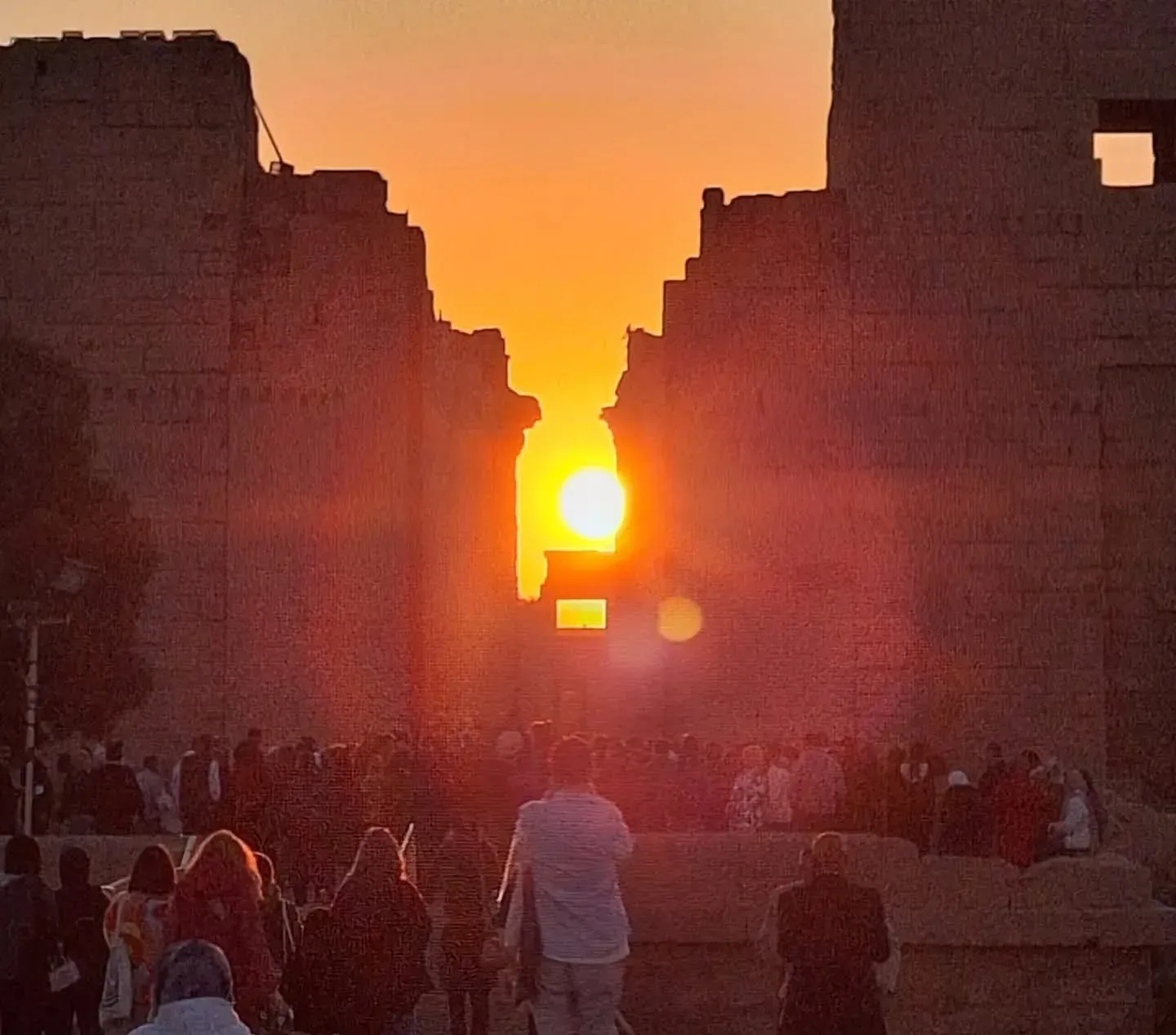
Shoulders and knees covered as soon as you leave the hotel, that is the only rule to remember. It is not imposed by law in tourist areas, but it matches what local people wear and it will spare you most of the lingering looks. In mosques and Coptic churches it becomes a genuine requirement, to which is added a scarf over the hair for women and taking your shoes off.
At the pool, on the beach and on a cruise ship deck, dress is free: swimsuits and bikinis pose no problem at all. The distinction is simply geographical, separating tourist space from public space. A sarong or a light shirt to slip on when leaving the pool settles the question without a second thought.
- Shoulders and knees covered in town and at the sites
- Mosques: a scarf over the hair for women and shoes removed
- Dress entirely free at the pool, on the beach and on deck
- Light-coloured linen and cotton handle the heat better than synthetics
Do you need vaccinations for Egypt?
No vaccination is required to enter Egypt from Europe. The only requirement concerns the yellow fever certificate, asked of travellers arriving from a country where the disease circulates. Routine vaccinations, on the other hand, must be up to date, measles included, and that is the point most often overlooked.
Depending on the length and conditions of your stay, hepatitis A and typhoid are frequently advised, sometimes hepatitis B. These are recommendations rather than requirements, and they depend on your profile, your age and your vaccination record. Book an appointment with your doctor or a travel health clinic about six weeks before departure: some schedules call for several spaced injections.
To check the alerts current at the time of your departure, rely on the NHS Fit for Travel and TravelHealthPro pages for Egypt, or the CDC travel health notices if you are travelling from the United States, which are updated continuously. We do not copy that information here: it changes, and only the official source is authoritative on the day you leave.
- No vaccination required from Europe to enter Egypt
- Yellow fever certificate if arriving from a country where it circulates
- Routine vaccinations up to date, measles included
- Hepatitis A and typhoid often advised depending on the stay
- Medical appointment around six weeks before departure
What first aid kit should you bring and how do you avoid traveller's diarrhoea?
A basic kit is enough: something for a passing bout of diarrhoea, rehydration salts, a painkiller, an antiseptic, plasters and hand sanitiser. It is the most common inconvenience of the trip, rarely serious, and it clears up quickly once treated. Egyptian pharmacies are numerous and well stocked in the cities, but having the essentials in your bag saves going out to find them that same evening.
Prevention comes down to four habits. Sealed bottled water only, including for brushing your teeth. No ice cubes outside the large hotels. Fruit peeled by your own hand and thoroughly cooked dishes, with caution around raw vegetables and lukewarm buffets. And sanitiser on your hands before every meal, because you touch handrails, banknotes and door handles all day long.
Two points to watch. Some medicines that are common in Europe, in particular those containing opioids or classed as psychotropics, are strictly regulated in Egypt: travel with the prescription, in the original packaging, and check with the Egyptian consulate before departure if you are on long-term treatment. Never swim in the Nile or in the canals, because of bilharzia. And insurance covering medical costs and repatriation remains essential: no embassy will pay for treatment.
- Anti-diarrhoeal, rehydration salts, painkiller, antiseptic, plasters
- Sealed water only and no ice cubes outside the large hotels
- Fruit you peel yourself, well-cooked dishes, caution with lukewarm buffets
- Long-term treatment: prescription and original packaging, some products are regulated
- Never swim in the Nile or in the canals
- Medical and repatriation insurance, essential
Which currency should you use and how do you pay there?
The local currency is the Egyptian pound, and that is what you want in your pocket. Hotels, boats and restaurants in the big cities accept bank cards without difficulty, and the ticket desks at the major archaeological sites have even moved to card payment only: bring a card accepted internationally, as cash is no longer taken there.
Change money once you are there rather than before leaving, at a bank, an official exchange office or your hotel reception, never in the street. Cash machines are plentiful in cities and beach resorts, far rarer in the desert and at Siwa: withdraw before leaving a large town. We do not quote a rate here, it moves too much for a written figure to stay true.
The real tip fits in one word: small notes. A large part of daily travel life, tips, porters, taxis, site guardians, toilets, is settled in cash and in small amounts. Arriving with only large notes means asking for change all day long. Explicitly request small denominations when you change money, it does not happen by itself.
- Local currency: the Egyptian pound
- Major archaeological sites: card payment only
- Change at a bank, an official office or the hotel, never in the street
- Cash machines are rare in the desert and at Siwa: withdraw before leaving
- Ask for small denominations when changing money
Tipping: how much, for whom, and when?
The tip, the baksheesh, is part of Egyptian daily life and supplements the income of many trades. It is never compulsory and is not included in our prices, but it is expected, and refusing it systematically goes down badly. The right way to approach it is not as a disguised tax, but as the ordinary currency of small services rendered.
In practice, keep small notes for hotel and boat staff, porters, the guardians who open a room or light up a wall, and drivers on short runs. For your guide and driver over a whole tour, the amount is entirely up to you and is given at the end of the stay. Ask your agency what is already included in the price: on our tours, entry fees and full board are, tips are not.
One useful distinction, so as not to confuse two things. A tip given after a service rendered is normal. Someone who walks with you for three minutes without being asked and then demands payment is running a scam, not following a custom. A polite refusal, stated once and without justifying yourself, is enough and will be perfectly understood.
- The baksheesh is expected but never compulsory
- Small notes for hotel staff, porters and site guardians
- Guide and driver: amount up to you, given at the end of the stay
- Ask the agency what is already included in the price
- An unrequested service followed by a demand is not a tip
Power, connectivity, eSIM: what should you plan for?
Nothing special if you are coming from continental Europe. The Egyptian grid runs at 220 volts, 50 hertz, with type C and F sockets, the two round pin ones: your devices plug in directly, no adapter needed. Travellers from the United Kingdom, Switzerland or North America, on the other hand, do need one.
On connectivity, the mobile network is good in cities, at tourist sites and along the Nile, patchier in the desert. Wifi is available in hotels and on most boats, decent for messages and irregular for video. To be self-sufficient, two options: a local SIM card, bought at the airport or in a shop on presentation of your passport, or an eSIM activated before departure, simpler and with no queue on arrival.
One point not to overlook: drones require prior authorisation in Egypt and are regularly confiscated on arrival, including small recreational models. If you plan to bring one, check with the Egyptian consulate before leaving rather than taking your chances at baggage control.
- 220 volts, type C and F sockets: no adapter needed from continental Europe
- Adapter needed from the United Kingdom, Switzerland or North America
- Mobile network good in town and along the Nile, patchy in the desert
- Local SIM on presentation of your passport, or an eSIM activated before you leave
- Drones require authorisation and are often confiscated on arrival
What do our Egyptologists advise before you close the suitcase?
Pack fewer clothes and more small notes. That is the correction we most often suggest to travellers who show us their list. Hotels and boats have a fast, inexpensive laundry service, which makes taking ten outfits for ten days unnecessary. Small denomination cash, on the other hand, is never available at the moment you need it.
Photograph your passport, your visa and your insurance policy, and keep those images available offline on your phone. It replaces no original, but it settles in thirty seconds most of the situations where you are asked for a number you do not have to hand. Leave the originals in the room safe and carry only a copy.
Finally, leave room for the way back. Between spices, Egyptian cotton, small bazaar pieces and the sand that invites itself everywhere, a suitcase that is full on the outbound leg becomes a problem in Aswan. If you would like us to adapt this list to your season and your itinerary, just tell us your dates and the programme you have in mind.
- Fewer clothes: fast, inexpensive laundry at the hotel and on board
- More small notes: that is what always runs short
- Passport, visa and insurance photographed and available offline
- Originals in the safe, a copy on you
- Room in the suitcase for the way back
Related tours
Our trips that match this theme.

Also worth exploring
Égypte
Got a trip in mind?
Tell us what you're after: we'll craft a tailor-made itinerary and reply within 24h, no commitment.
Request a quote