Luxor
Karnak Temple: what to see and how to plan your visit
Hypostyle hall, Hatshepsut's obelisk, sacred lake, sound and light show, timing: how to visit Karnak, Egypt's largest temple.
By Mostafa Awad, French-speaking guidePublished on
In brief
Karnak is not a temple but a city of temples, enlarged by the pharaohs for nearly two thousand years in honour of the god Amun. It is the largest religious complex of ancient Egypt, and the most impressive visit in Luxor alongside the Valley of the Kings. Here is how to approach it.
- Length: two to three hours, half a day with the open-air museum
- Not to be missed: the great hypostyle hall and its 134 columns
- Best time: at opening, or late afternoon for the light
- Location: Luxor's east bank, a few minutes from the town centre
- In the evening: sound and light show, on a separate ticket
- Prices revised several times a year: check on egymonuments.gov.eg
Why is Karnak Temple so famous?
Because almost every pharaoh wanted to leave his mark there. From the Middle Kingdom to the Ptolemies, kings added pylons, halls, obelisks and chapels to the sanctuary of Amun, the god of Thebes who became king of the gods. The result is not a single plan: it is a pile of centuries, where you move from one era to another by walking through a gateway.
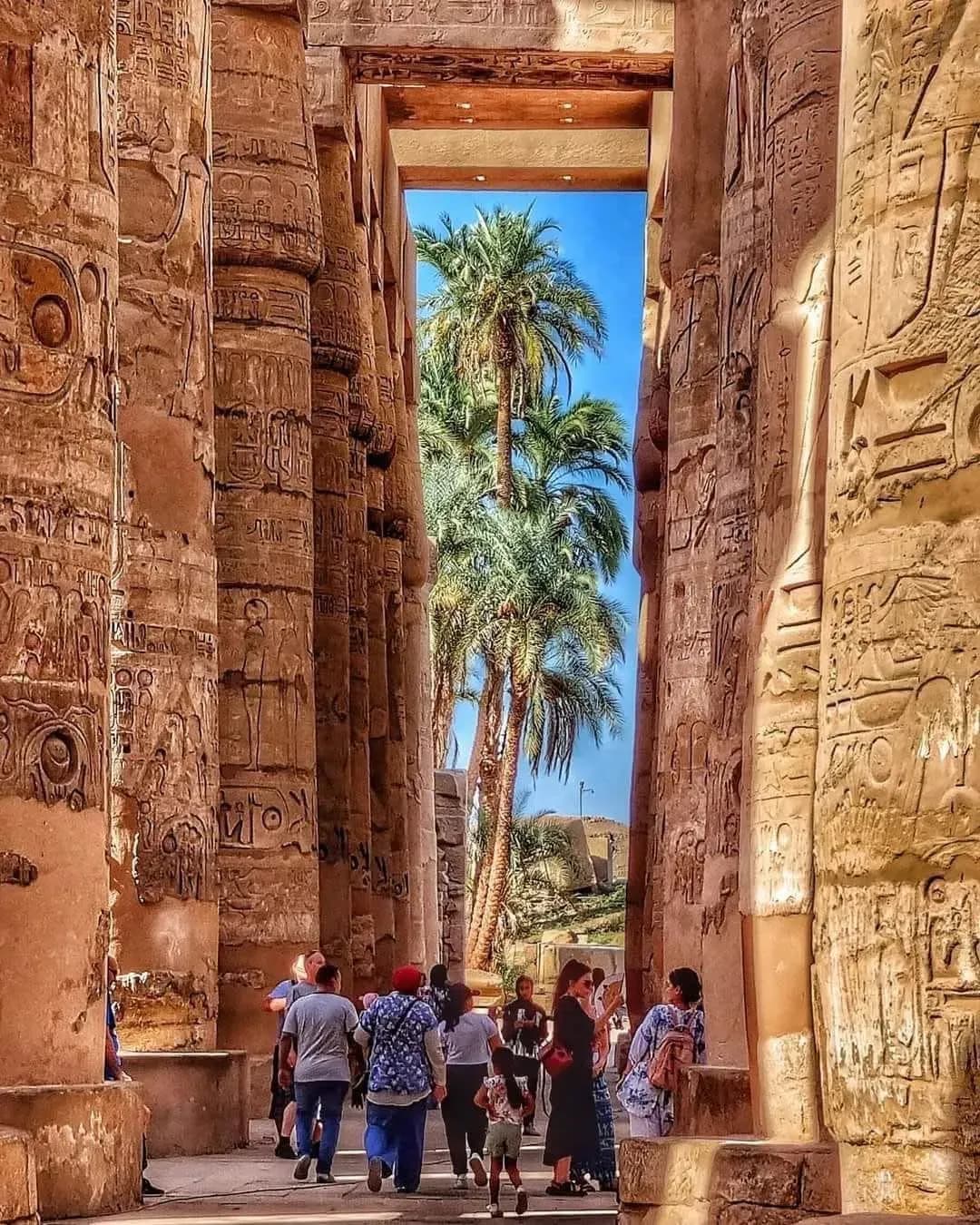
It is also a matter of scale. You feel tiny between the columns, and that is intended: the temple was the god's house on earth, closed to ordinary people. Only the priests and the king went through the inner gates. Understanding this logic, from the great open pylon to an ever darker and narrower sanctuary, completely changes the visit.
What should you not miss at Karnak?
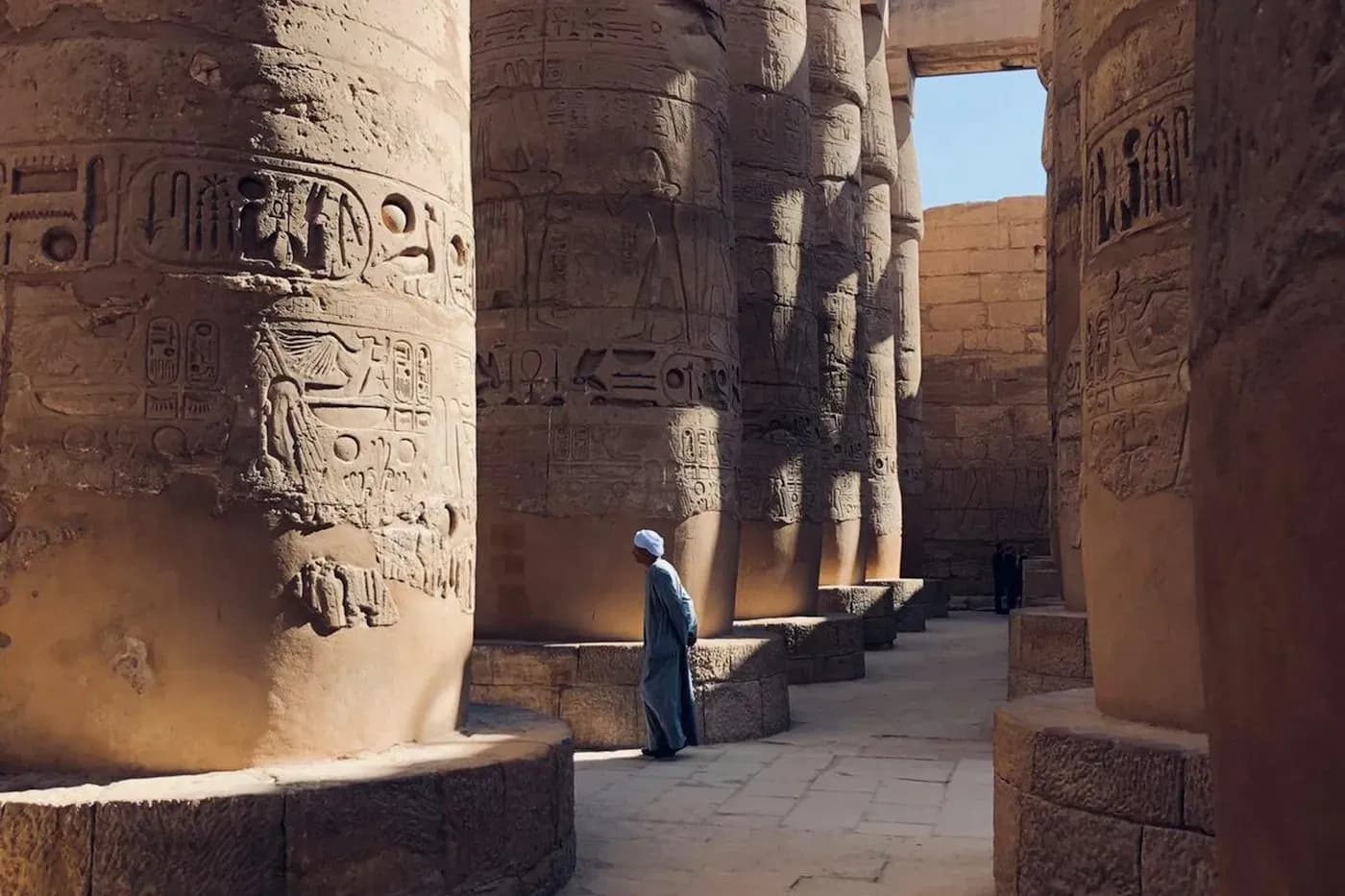
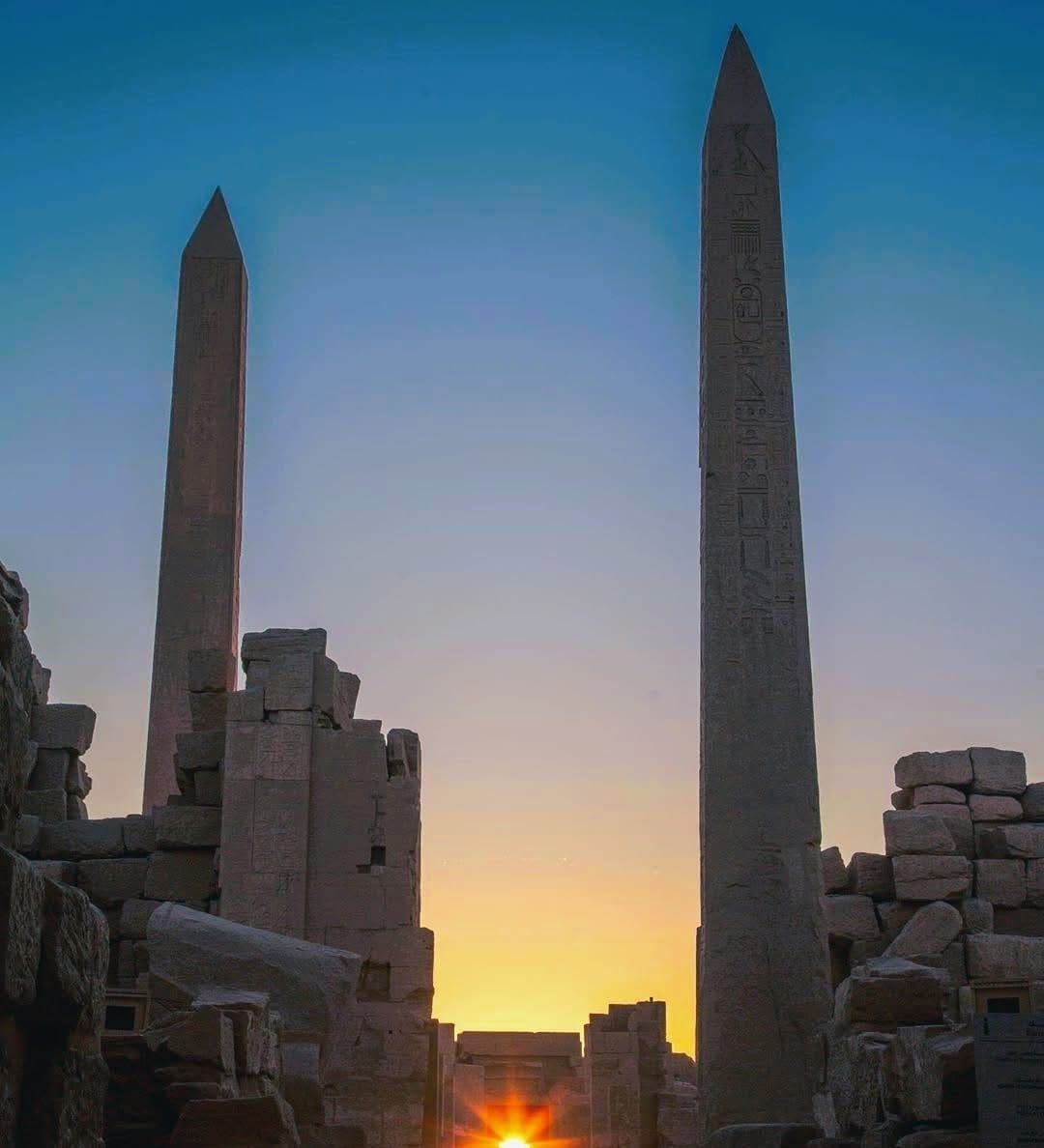
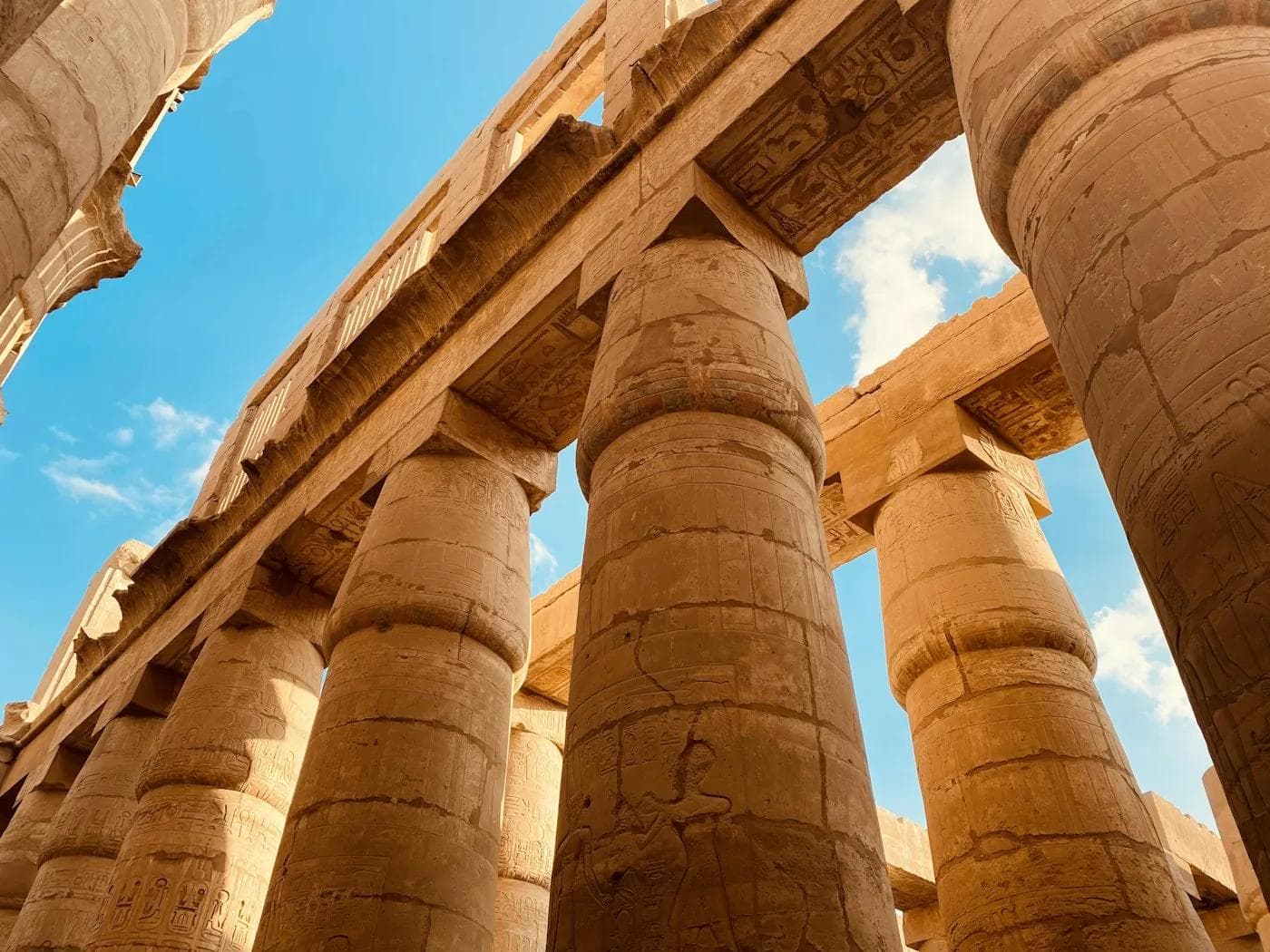
First the great hypostyle hall, the heart of the visit: 134 papyrus shaped columns, the twelve along the central aisle rising more than twenty metres, covered in reliefs of Seti I and Ramesses II. Look up: some architraves still keep their original colours. Just beyond stands Hatshepsut's obelisk, cut from a single block of pink granite, one of the tallest still standing in Egypt.
Finish at the sacred lake, where priests purified themselves before rituals, and at the large granite scarab on its bank: tradition says you walk around it for luck. If you have an extra hour, the open-air museum, on a separate ticket, holds two often overlooked gems, the White Chapel of Senusret I and the Red Chapel of Hatshepsut.
- Great hypostyle hall: 134 columns, the tallest over twenty metres
- Hatshepsut's obelisk, from a single block of pink granite
- Avenue of ram headed sphinxes in front of the first pylon
- Sacred lake and large granite scarab
- Open-air museum: White Chapel and Red Chapel, separate ticket
How long does it take to visit Karnak?
Allow two to three hours for the essentials with a guide: the avenue of rams, the pylons, the hypostyle hall, the obelisk and the sacred lake. Add an hour for the open-air museum. The site is huge and largely exposed: come at opening time for the cool, or late in the afternoon, when the low light gilds the columns and the cruise boat groups have left.
- Essential visit: two to three hours
- With the open-air museum: half a day
- Bring: water, a hat, comfortable shoes
Is the Karnak sound and light show worth it?
Yes, if you have a free evening in Luxor. The show takes place at night, first walking through the illuminated temple, then seated facing the sacred lake for the narration. It is not a visit: the script is theatrical and not very precise. But seeing the hypostyle hall at night, almost empty, is a unique experience. Performances alternate several languages depending on the evening, so check the schedule before booking.
Karnak or Luxor Temple: should you visit both?
Yes, and they complement each other. Karnak is the house of Amun, vast and dense; Luxor Temple, in the heart of the town, is more compact and easier to read, and superb when lit at dusk. The two were linked by an avenue of sphinxes nearly three kilometres long, cleared and reopened to the public in 2021. Our favourite formula: Karnak in the morning, Luxor Temple at sunset.
What do our Egyptologists recommend for Karnak?
Do not visit Karnak without a guide. Without explanation the site looks like a magnificent but silent stone forest; with someone who reads the reliefs, the cartouches and the battle scenes, every wall tells the story of a reign. Also keep a moment to sit down in the hypostyle hall without photographing anything: that is often where the trip takes on its full meaning.
Related tours
Our trips that match this theme.


Also worth exploring
Égypte
Got a trip in mind?
Tell us what you're after: we'll craft a tailor-made itinerary and reply within 24h, no commitment.
Request a quote