Cruise
Luxor or Aswan: where should you start?
Direction of travel, what each city holds, how many nights: our Egyptologists explain which of the two to start a Nile cruise from, and what that choice really changes about your trip.
By Ali Jalal, Spanish- & Italian-speaking guidePublished on Updated on
In brief
Luxor and Aswan are the two ends of the Nile cruise, about two hundred kilometres apart. The question is almost never which one to choose, since a classic cruise links them both: it is which one to start from, and how many nights to give to each.
- Our recommendation: start in Luxor and finish in Aswan
- Both directions visit exactly the same temples
- The Nile flows south to north: from Aswan to Luxor you go downstream
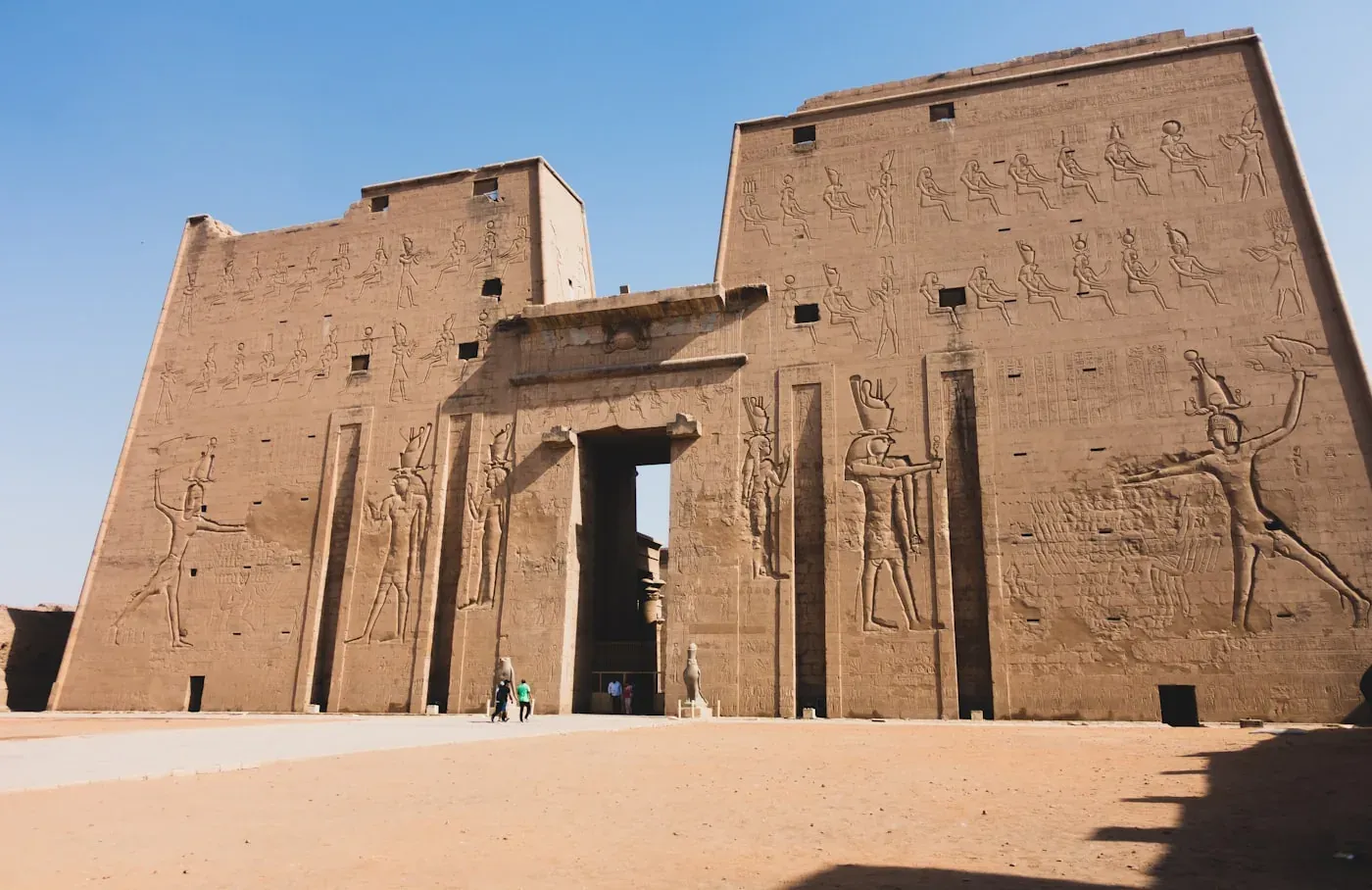
- Luxor: Karnak, Luxor temple, the Valley of the Kings, Deir el-Bahari
- Aswan: Philae, Elephantine island, the felucca, the gateway to Abu Simbel
- Number of nights: 2 to 3 in Luxor, 1 to 2 in Aswan, 2 with Abu Simbel
- Luxor concentrates the monuments, Aswan the atmosphere and the calm
- Without a cruise: a domestic flight, the night train or three to four hours by road
Should you start your cruise in Luxor or in Aswan?
Start in Luxor. That is our recommendation in the vast majority of cases, for one simple reason: Luxor holds the densest and most demanding sites of the whole trip, Karnak and the Valley of the Kings first among them. Tackling them at the start, while you are still fresh and curious, beats saving them for the end, when travel fatigue starts to weigh on your attention.
Two practical advantages come on top. Ships leaving from Luxor often reach Edfu and Kom Ombo at quieter hours, away from the bulk of the groups. And you end in Aswan, the gentler of the two cities, and the departure point for the Abu Simbel excursion: if you add that site to the programme, it falls naturally at the end of the route with no extra travel.
Three situations do justify the opposite direction. If your international flights force an arrival or a departure through Aswan, follow them rather than paying for an extra domestic flight. If you want to finish on a high with the great Theban temples, working your way up to Luxor makes perfect sense. And if you are already devoting a day to Abu Simbel at the start of the trip, leaving from Aswan avoids a pointless round trip.
- Luxor first: the most demanding sites tackled while you are fresh
- Edfu and Kom Ombo often reached at quieter times
- Abu Simbel slots in naturally at the end, from Aswan
- The opposite direction makes sense if your flights impose Aswan
- The direction never changes the list of temples you visit
What does the direction of travel actually change?
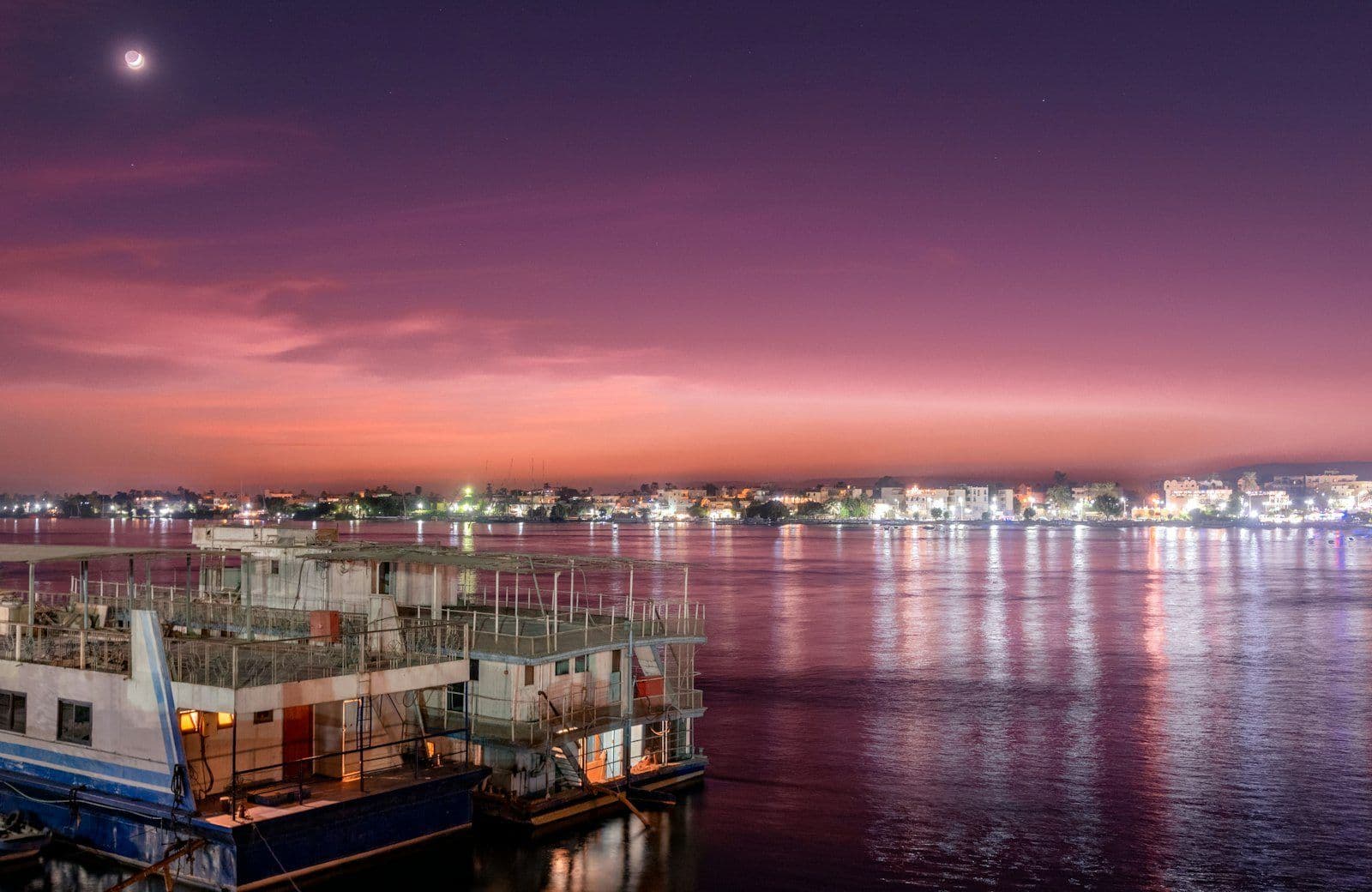
Far less than people imagine. The Nile flows from south to north: Aswan lies upstream, Luxor downstream. Sailing from Aswan to Luxor therefore means going with the current, and the reverse means working against it. On classic ships, all of them motorised, that difference amounts to a slight variation in sailing time, invisible to passengers.
Direction matters more aboard a dahabeya, the small sailing boat that genuinely uses its sail. In the Nile valley the prevailing wind blows from the north, pushing boats southwards while the current carries them back north. That double mechanism is what made navigation possible on the river for thousands of years, and it is still felt today on a sailing boat.
What genuinely changes comes down to three things: the order in which you discover the temples, the time your ship reaches Edfu and Kom Ombo, and how your flights connect. One last useful habit: the duration is not symmetrical from one programme to another. Compare the number of nights advertised rather than the direction, because that is what determines how much you will actually see.
- Aswan is upstream, Luxor downstream: the Nile flows northwards
- On a motorised ship the difference in sailing is not noticeable
- On a dahabeya, the north wind pushes south while the current carries you north
- What changes: the order of the visits and the arrival times at the temples
- Compare the number of nights advertised, not the direction of the route
What is there to see in Luxor?
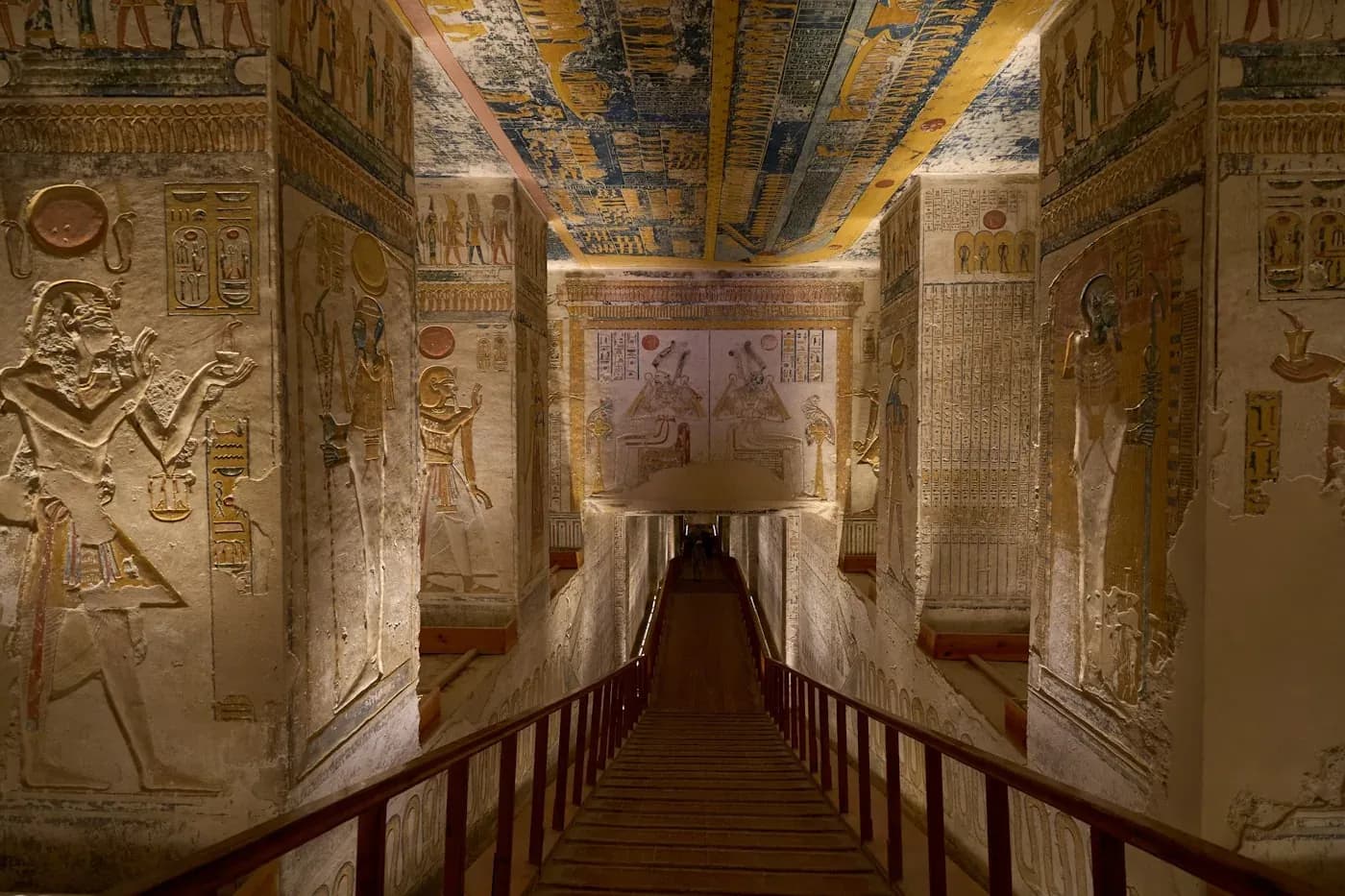
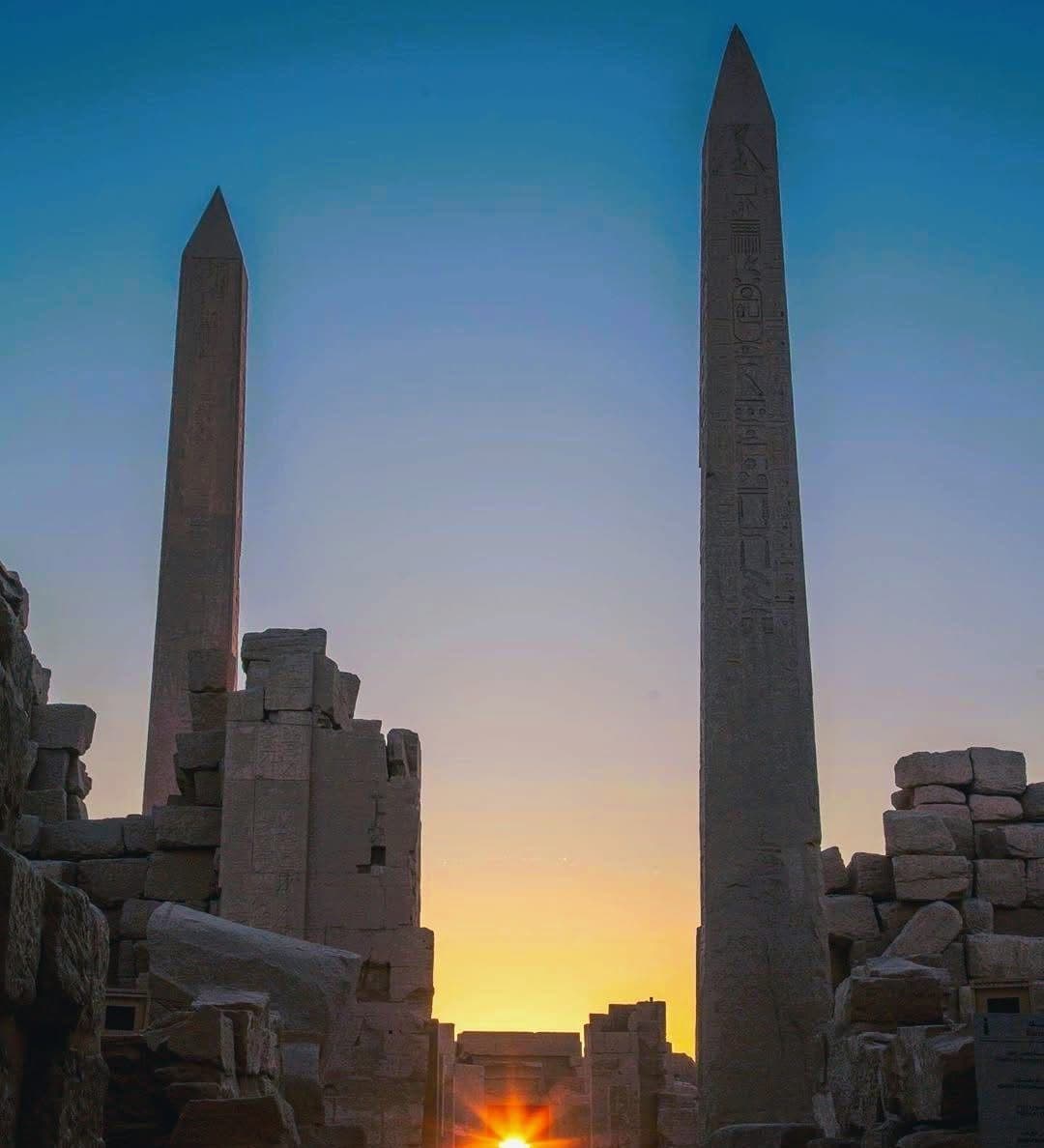
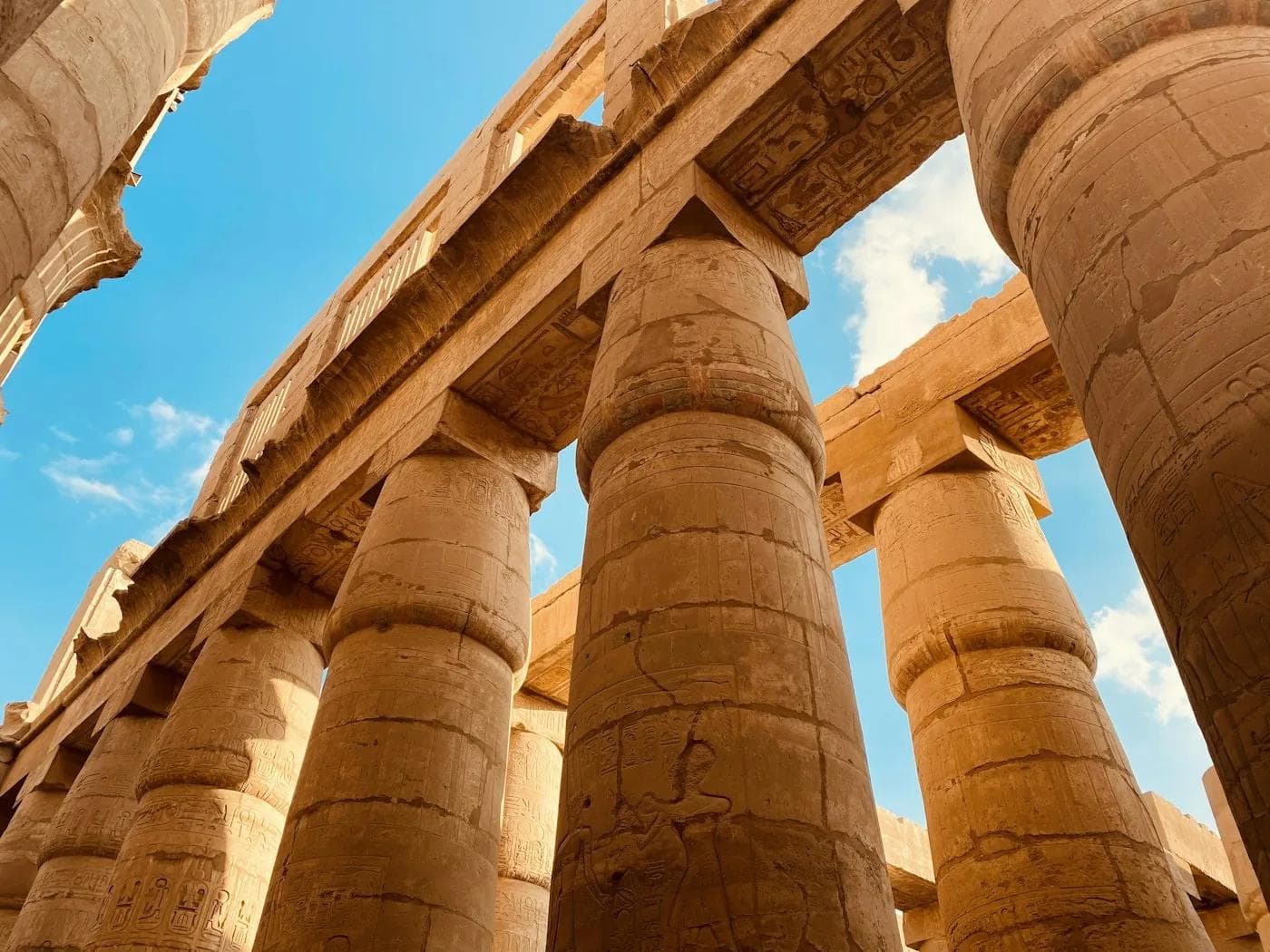
Luxor reads as two banks. On the east bank, the bank of the living, stand the temple of Karnak and the temple of Luxor, once linked by an avenue of sphinxes. On the west bank, the bank of the dead, lie the Valley of the Kings and the Valley of the Queens, the temple of Hatshepsut at Deir el-Bahari and the colossi of Memnon. That density is what earned the city its nickname of the largest open-air museum in the world.
In practice that means at least two half days of sightseeing, one per bank, and they need to be scheduled early in the morning. The west bank is walked in the open with no shade and becomes difficult from mid-morning onwards during the hot half of the year. Karnak, on the other hand, takes late afternoon well, when the low light enters the hypostyle hall.
Luxor is also the balloon city. The flight takes place at sunrise over the west bank, lasts about an hour and needs booking in advance: it is one of the rare activities of the trip you cannot catch up on if you push it to the next day, simply because there is no room left.
- East bank: the temple of Karnak and the temple of Luxor
- West bank: Valley of the Kings, Valley of the Queens, Deir el-Bahari
- The colossi of Memnon, on the road along the west bank
- Two half days minimum, to be scheduled early in the morning
- The sunrise balloon flight, to be booked in advance
What is there to see in Aswan?
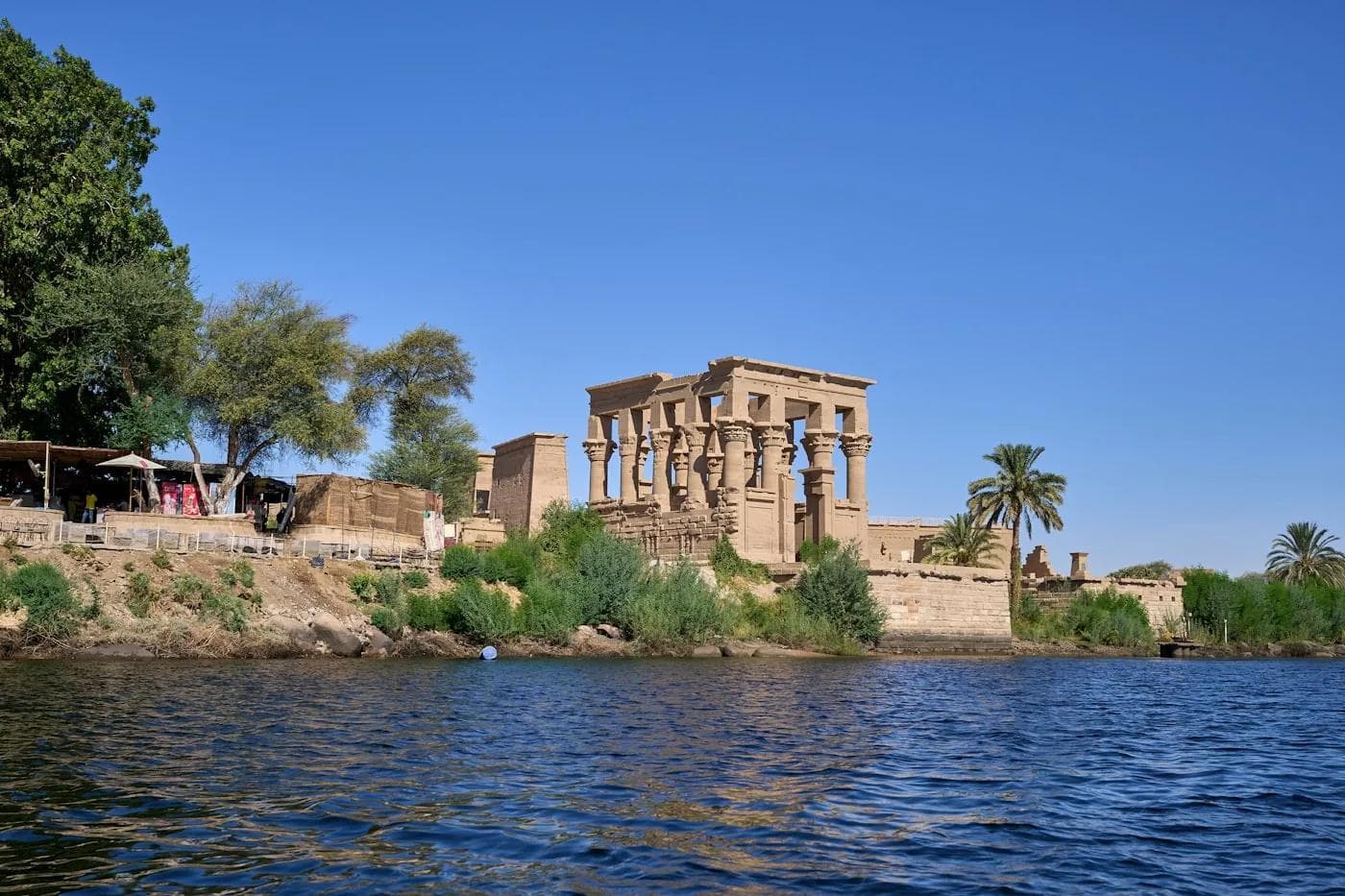
Aswan is visited as much on the water as on land, and that is exactly what makes it the counterpoint to Luxor. The temple of Philae, dedicated to Isis, is reached by motorboat on its island. Facing the town lie Elephantine island and its Nubian villages of coloured houses, the mausoleum of the Aga Khan on the west bank, and further south the high dam and the unfinished obelisk, still lying in its granite quarry.
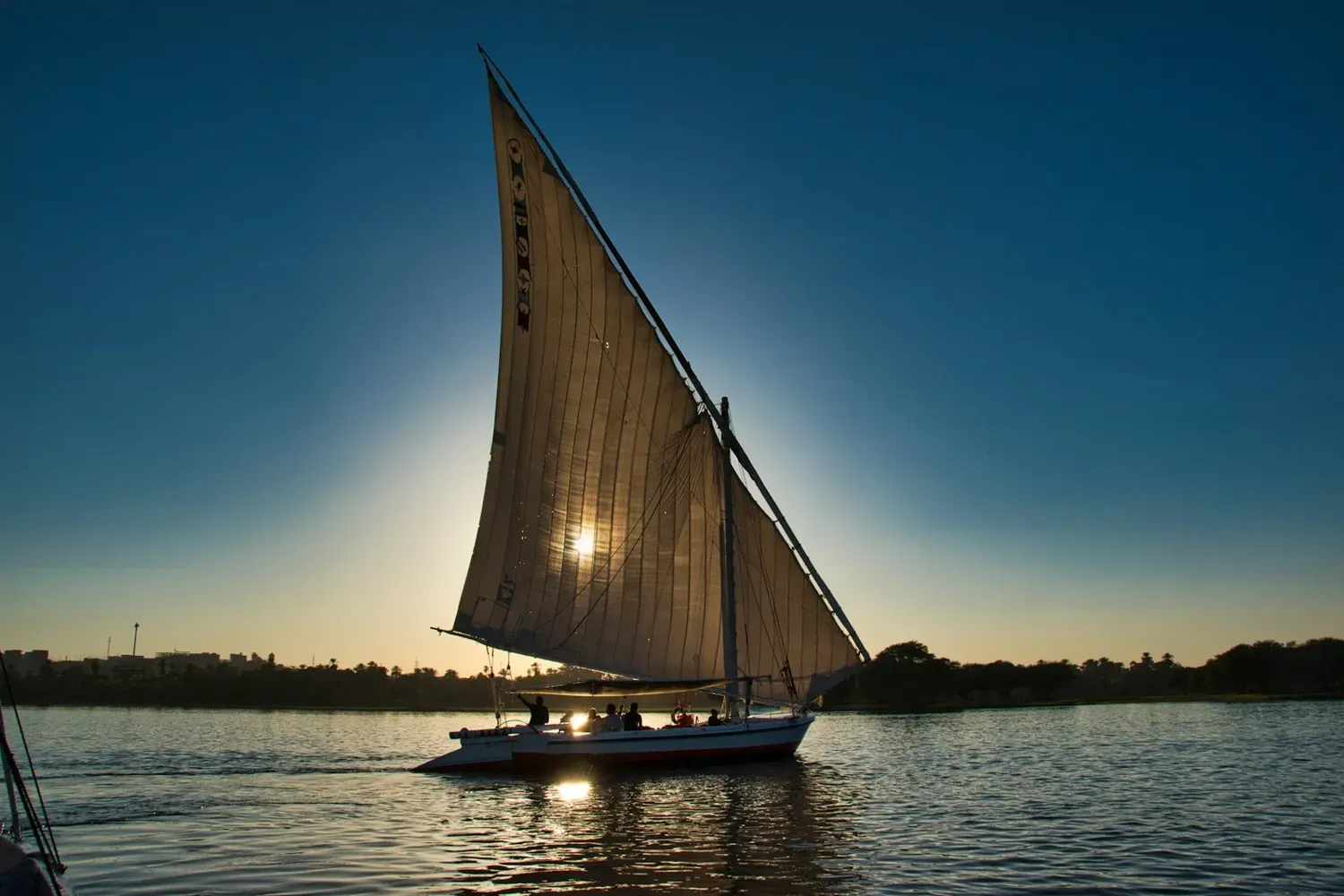
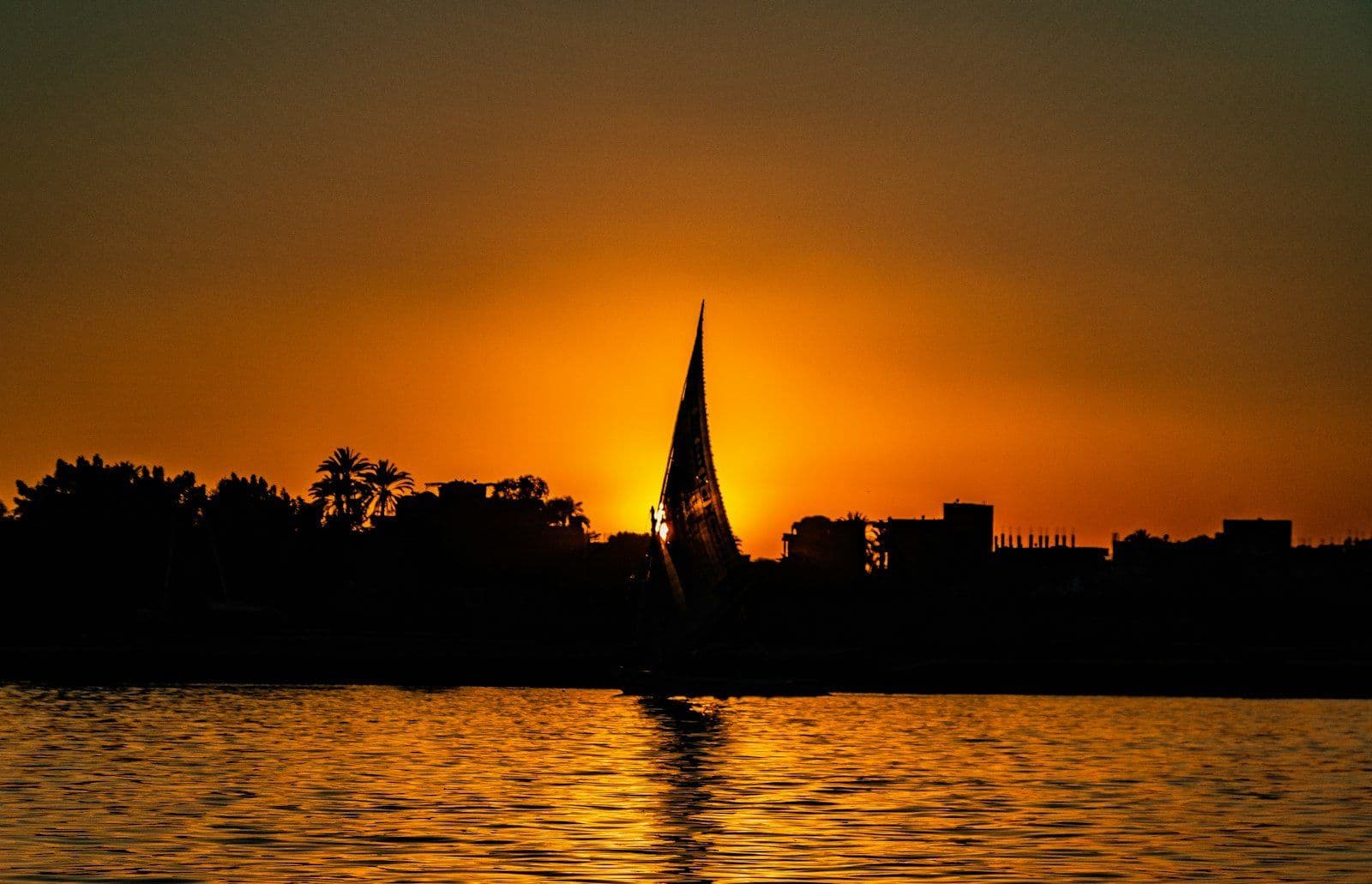
The real moment in Aswan remains the felucca at the end of the afternoon. The river widens between granite boulders and islands, the wind drops, and you suddenly understand why Egyptians have always seen this town as the gateway to Nubia. It is also here that the trip changes pace: after the density of Thebes, Aswan is visited slowly, almost without a programme.
Aswan is finally the departure point for Abu Simbel, about three hours away by road or a short hour by plane. That excursion should be treated as a full day, with a pre-dawn start if you go by road: it deserves to be decided at booking rather than improvised once you are there.
- The temple of Philae, on its island, reached by boat
- Elephantine island and the Nubian villages of coloured houses
- The Aga Khan mausoleum, the high dam, the unfinished obelisk
- The felucca in the late afternoon, the highlight of the town
- The departure for Abu Simbel, three hours by road or an hour by plane
How many nights should you allow in each city?
Allow two to three nights in Luxor and one to two nights in Aswan, on top of the nights spent on board. That imbalance is not arbitrary: Luxor calls for two well-filled half days of sightseeing, Aswan for a single one, and the rest of the time there is free time rather than programme. A classic four to five day cruise already covers part of those nights, since the ship stays moored at the start and at the end of the route.
Add a night in Aswan if you are going to Abu Simbel: the day is long and it is better not to stack it against a return flight. Add a night in Luxor if you want the balloon, which takes off before sunrise and therefore requires sleeping there the night before. Those are the only two adjustments that come up systematically in our programmes.
- Luxor: 2 to 3 nights, one per bank plus a margin
- Aswan: 1 to 2 nights, more free time than programme
- One extra night in Aswan if you add Abu Simbel
- One extra night in Luxor if you want the balloon flight
- The cruise absorbs part of those nights, including nights moored
If you could only choose one, which should it be?
Luxor, for a first trip. The city alone gathers more major monuments than the rest of the country outside Cairo, and you can spend three days there without exhausting the subject. If your stay is short and you have to decide, Luxor is the one that will leave you feeling you have seen pharaonic Egypt.
Aswan becomes the better choice in two cases. If you are returning to Egypt and have already done Thebes, Nubia will offer you a different country, slower and more African. And if what you are after is rest above all, with light days, a felucca and sunsets over granite, Aswan delivers on that promise far better than Luxor.
- First trip and short stay: Luxor without hesitation
- Second trip to Egypt: Aswan and Nubia
- Priority on rest and light days: Aswan
- Priority on monuments and tombs: Luxor
How do you travel between Luxor and Aswan without a cruise?
Three options exist. The road first: three to four hours with a driver, which lets you stop at Edfu and Kom Ombo on the way, exactly as a boat would. Then the train, including the night train from Cairo, cheap and comfortable in first class. And finally the plane, since both cities have an airport connected to Cairo by daily domestic flights.
That said, the cruise keeps an advantage the road cannot match: it removes the suitcases, the hotel changes and the back and forth to the temples, and it drops its passengers at the foot of the sites while the coaches queue at the entrance. That is why our shortest itineraries always keep it, even when something else has to be sacrificed.
- Road: 3 to 4 hours, with possible stops at Edfu and Kom Ombo
- Train, including the night service from Cairo
- Daily domestic flights from Cairo to both cities
- The cruise remains the format that removes suitcases and queues
Can you sail between Luxor and Aswan by felucca?
Yes, but rarely over the whole distance, and almost always heading north from Aswan. A felucca is a small sailing boat with no engine and no cabin: you sleep on deck, on mattresses, under the stars. Multi-day trips leave from Aswan and usually stop around Kom Ombo or Edfu, from where a car takes you on to Luxor. The full journey depends too much on the wind to keep to a schedule.
For most travellers the right formula is still a felucca in Aswan, an hour or two at sunset around Elephantine Island, combined with a cruise or a dahabeya for the journey itself. The dahabeya keeps the spirit of sailing with proper cabins and a bathroom: it is the compromise we suggest to those who dream of sailing without giving up comfort.
- Felucca: sailing boat with no engine or cabin, nights on deck
- Departure from Aswan, usually ending around Kom Ombo or Edfu
- The rest of the way to Luxor by car
- Comfortable alternative: the dahabeya, sails and proper cabins
What do our Egyptologists advise?
Do not choose between Luxor and Aswan, choose the order. In practice, a trip to Upper Egypt that left one of the two cities out would forfeit either the monuments or the breathing space. The cruise exists precisely to avoid that trade-off, and that is why it remains the backbone of almost all our itineraries.
Two field tips to finish. Keep a half day with nothing planned in Aswan, the only city in Egypt where doing nothing counts as a visit in its own right. And in Luxor, split the two banks across two different mornings rather than running them back to back: the west bank is walked in full sun, and the temptation to cram everything into a single day almost always spoils the second half.
If you are still hesitating over the direction, just send us your dates and your flights: it is usually the arrival time in Cairo that settles the question for you, and we build the rest around it.
- Do not choose between the two cities, choose the order
- A half day with nothing planned in Aswan
- The two banks of Luxor across two separate mornings
- It is your flights that settle the direction, most of the time
Related tours
Our trips that match this theme.
Also worth exploring
Égypte
Got a trip in mind?
Tell us what you're after: we'll craft a tailor-made itinerary and reply within 24h, no commitment.
Request a quote