Sites
Giza pyramids and the Grand Egyptian Museum: a visitor's guide
What you see on the plateau, what it feels like inside a pyramid, what the Grand Egyptian Museum changes and how to avoid the crowds: our Egyptologists' visiting guide to the most anticipated day of the trip.
By Ali Mahjoub, Spanish-speaking guidePublished on Updated on
In brief
The Giza plateau and the Grand Egyptian Museum are now visited together: the two sites are about two kilometres apart and answer each other, one showing the monuments, the other what was taken out of them. Allow a full day for both, and above all set off at opening time.
- Three pyramids: Khufu, Khafre and Menkaure, plus the Sphinx
- Khufu, the only one of the seven wonders of the ancient world still standing
- Going inside a pyramid: separate ticket, low corridor, bare chambers
- The Grand Egyptian Museum brings together the complete treasure of Tutankhamun
- Museum booking online at tickets.gem.eg, its only official site
- Duration: half a day on the plateau, half a day at the museum
- Site prices in Egyptian pounds, official amounts on egymonuments.gov.eg
- No shade on the plateau: hat, water and an early morning visit
What exactly is there to see on the Giza plateau?
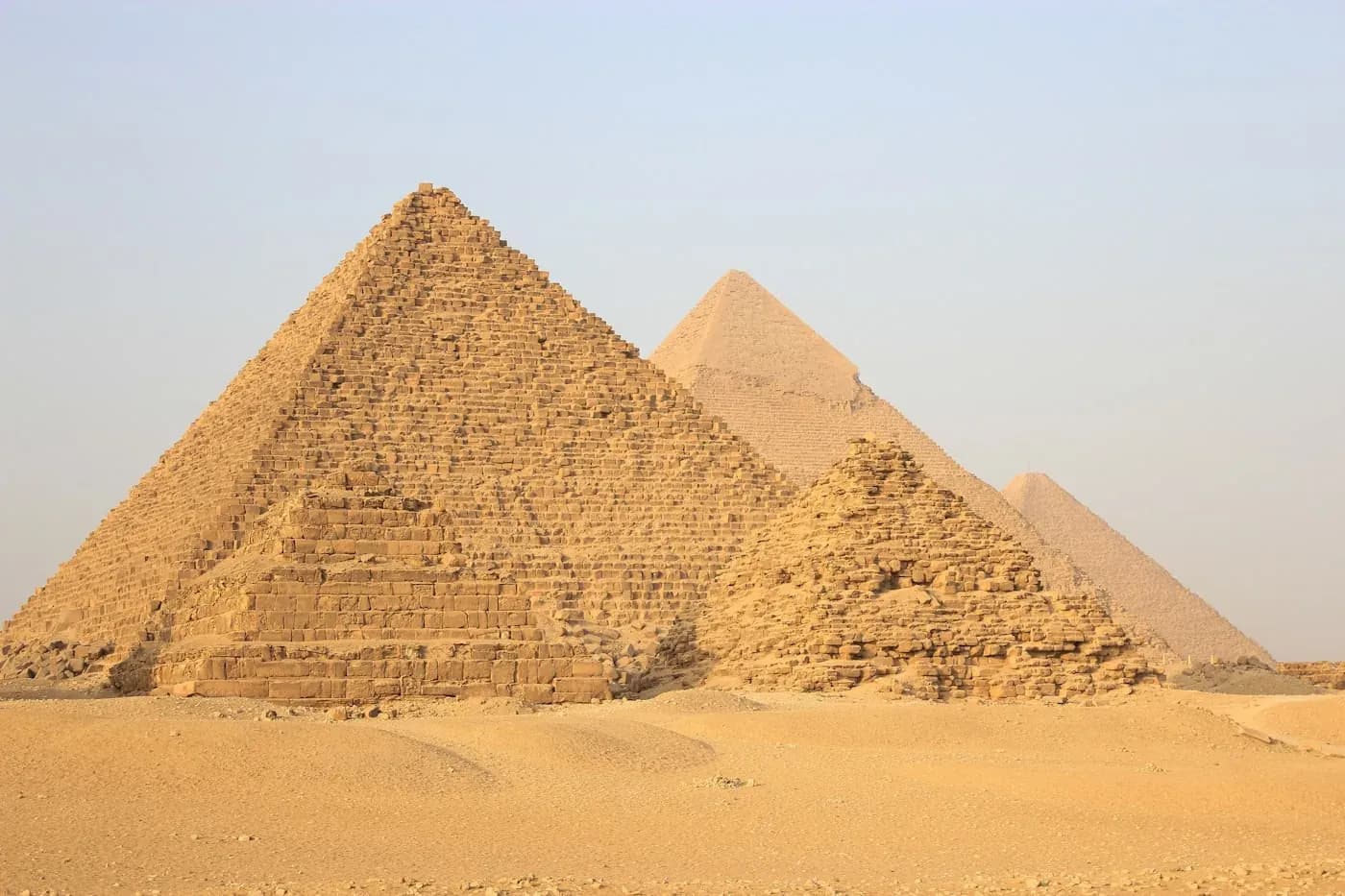
Three great pyramids, a sphinx and a whole funerary landscape around them. The pyramid of Khufu, the oldest of the three, once rose to about one hundred and forty-six metres and stands slightly lower today, its outer casing having disappeared over the centuries. It remains the only one of the seven wonders of the ancient world still standing.
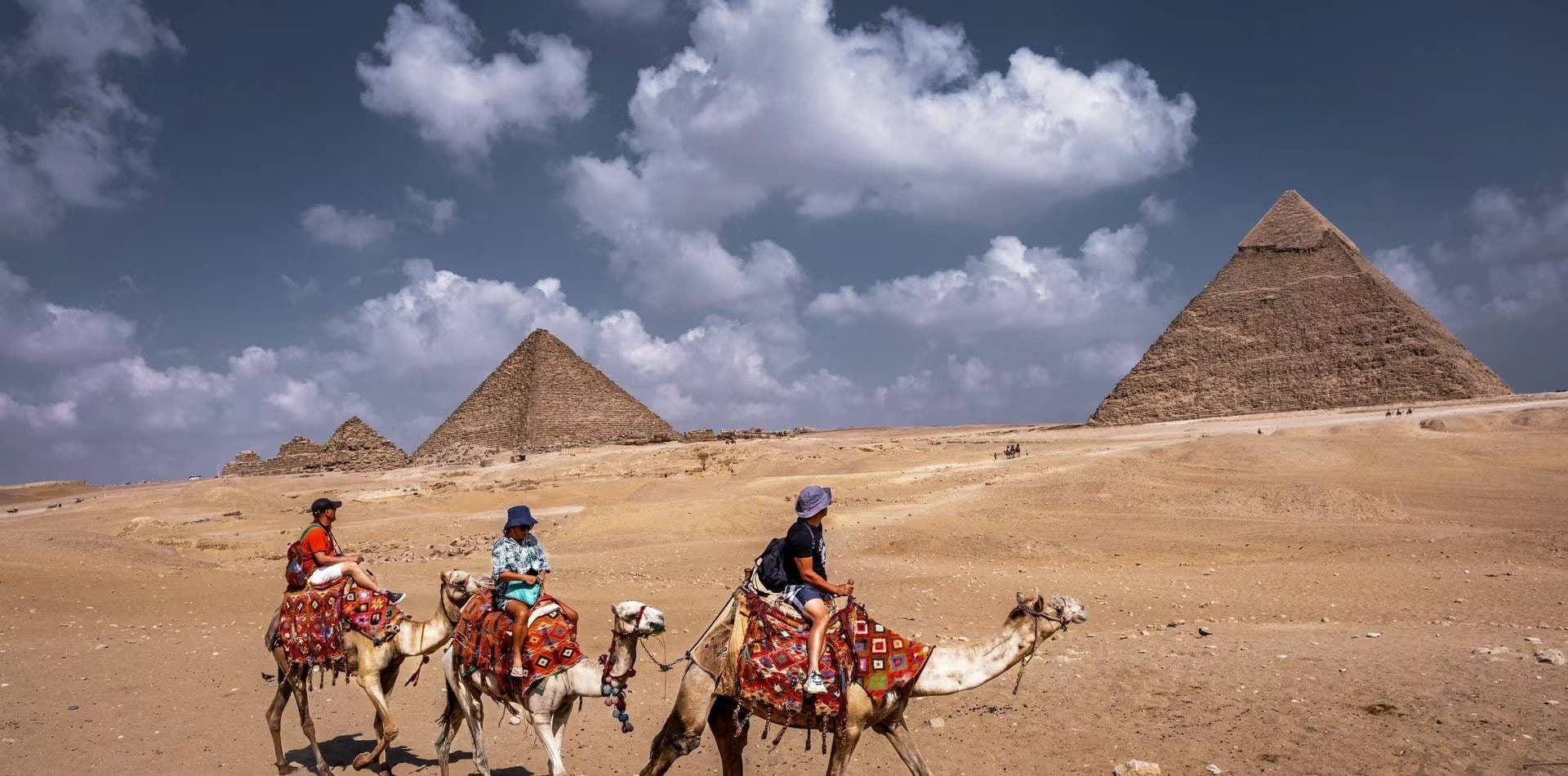
The pyramid of Khafre, right next to it, often looks taller although it is not: it is built on a higher point of the plateau and keeps, at its top, a cap of its original limestone casing. It is the best visual clue on the site, the one that lets you understand what the three monuments looked like when they were smooth and white. Menkaure, the third, is markedly smaller.
Around them lie the small queens' pyramids, fields of mastabas, the granite valley temple and the Sphinx, carved directly out of the plateau rock. One detail few visitors anticipate: the solar boat of Khufu, long displayed in a pavilion at the foot of the pyramid, has been moved to the Grand Egyptian Museum. It can no longer be seen on the plateau.
- Khufu, Khafre and Menkaure, the three royal pyramids
- The cap of original casing at the top of Khafre
- The Sphinx and the valley temple, lower down
- The queens' pyramids and the fields of mastabas
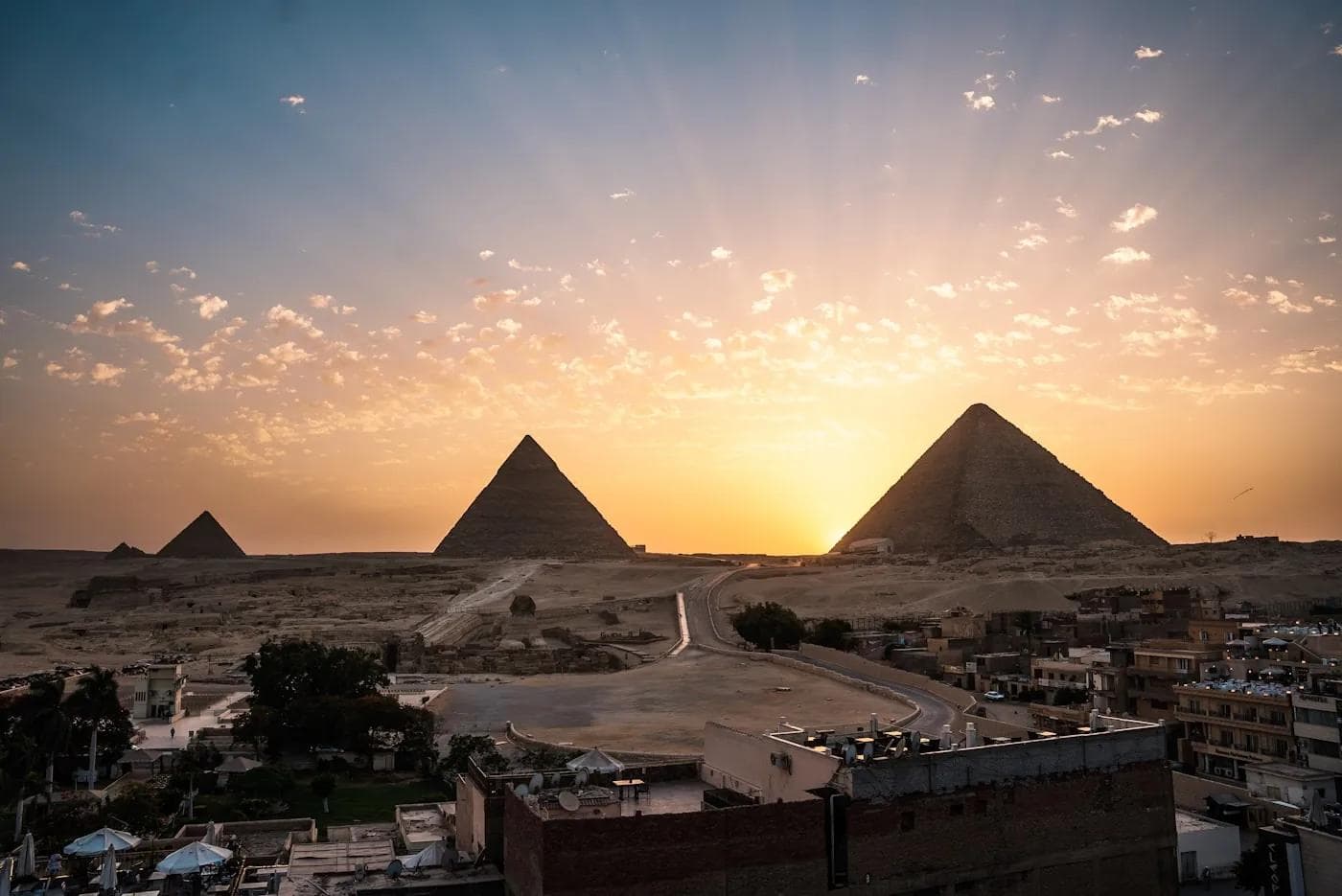
- The panoramic viewpoint where the three pyramids line up
- Khufu's solar boat, now displayed at the Grand Egyptian Museum
Can you go inside a pyramid?
Yes, with a ticket separate from the plateau one, and the number of daily entries into the pyramid of Khufu is capped. So you have to buy it on arrival, not in the late morning. The pyramids of Khafre and Menkaure can also be visited, for a lower price and often with far fewer people: that is frequently the best compromise.
You need to know what to expect. You move along a low corridor, bent over for tens of metres, in hot, dry, enclosed air, before reaching burial chambers that are entirely bare. No paintings, no hieroglyphs: this is not a decorated tomb like those in the Valley of the Kings. The emotion comes from the architecture and from the idea of being inside, not from what you see there.
We clearly advise against it in cases of claustrophobia, back or knee problems, and in high heat. On the other hand, if you are comfortable with it, do it at the very start of your visit: the corridor becomes far more unpleasant as the day goes on and the queue builds up in both directions.
- A ticket separate from the plateau one, daily cap for Khufu
- Khafre and Menkaure: cheaper and often less crowded
- A low corridor where you walk bent over, hot enclosed air
- Bare burial chambers, with no paintings or hieroglyphs
- To avoid in case of claustrophobia or back trouble
Is the Grand Egyptian Museum worth it?
It is now the most striking visit in Cairo, on a par with the plateau itself. Fully open since November 2025, two kilometres from the pyramids, it presents the treasure of Tutankhamun brought together in full for the first time since its discovery, when only a selection used to be on show. That room alone justifies the trip.
The building is visited almost like a monument in its own right. You enter through an atrium where the colossus of Ramesses II stands, then climb the grand staircase lined with royal statues, which ends at a glass wall opening directly onto the pyramids. It is a remarkable piece of staging: the museum shows you the objects, then shows you the landscape they came from.
Two practical tips. Book online at tickets.gem.eg, its only official site: that saves you the queue and the resellers who add their own margin. And allow at least three hours, half a day if you want to take your time. The museum is huge, and the temptation to see it all in ninety minutes mostly produces fatigue.
- Fully open since November 2025, 2 km from the pyramids
- Tutankhamun's treasure brought together in full for the first time
- The colossus of Ramesses II in the entrance atrium
- The grand staircase and its glass wall opening onto the plateau
- Book online at tickets.gem.eg, never through a reseller
- Three hours minimum, half a day to do it properly
Is the Egyptian Museum on Tahrir Square still worth visiting?
Yes, but second, and only if your schedule allows. The historic museum on Tahrir Square is still open and holds a significant share of the national collections, in an old, dense display style, with its wooden cases and crowded rooms. Many visitors find in it a charm that the Grand Egyptian Museum, more spectacular, does not have.
One point to know before building your day: the royal mummies are no longer there. They have moved to the National Museum of Egyptian Civilisation, at Fustat, into a space designed for them. If seeing the mummies is one of your priorities, that is where you need to go, and it calls for a separate visit.
- The Tahrir Square museum is still open, with its old-style display
- The royal mummies are at the National Museum of Egyptian Civilisation, at Fustat
- To be placed second, after the plateau and the Grand Egyptian Museum
- Each museum calls for its own visit, not an hour in passing
How much time should you allow for Giza and the museum?
A full day for both, or better still, two mornings. The plateau takes about three hours, including going inside a pyramid, and the Grand Egyptian Museum at least as long. Doing them back to back in one day is possible and very common, but it means leaving the museum before you have covered it, which is a little frustrating.
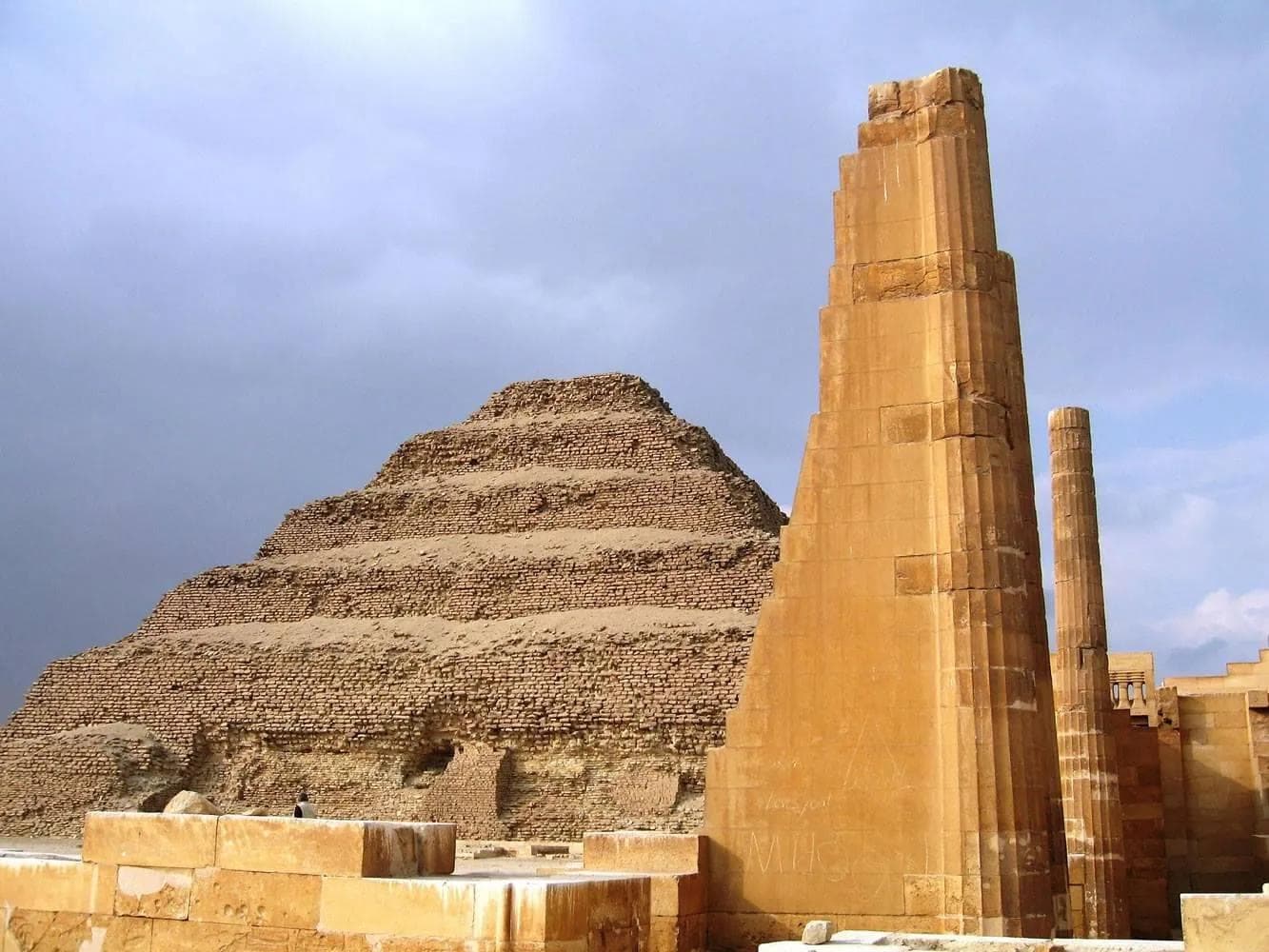
If you have two days in Cairo, the best split is to devote the first morning to the plateau and the museum, and the second to Saqqara and Dahshur, home to the step pyramid of Djoser and the bent pyramid. There you understand the history in the right order: the trial and error first, the perfection of Giza afterwards. It is the best possible addition for anyone with the time.
- Giza plateau: about three hours, including going inside a pyramid
- Grand Egyptian Museum: three hours minimum, ideally half a day
- Two mornings are better than one packed day
- Second day: Saqqara and Dahshur, the pyramids that came before Giza
How do you avoid the crowds and the heat on the plateau?
By arriving at opening time, without exception. The plateau fills up from mid-morning, when the excursion coaches arrive, and the light turns harsh at the same moment. One hour ahead of that wave completely changes the experience: the same monuments, with almost nobody in front of your lens.
The plateau is a desert: there is virtually no shade, and the sand throws the heat back at you. Hat, sunglasses, sunscreen and a bottle of water per person are not a comfort, they are the minimum, even in winter. From May to September the visit happens early in the morning and nothing else holds up, as everywhere else in Egypt at that time of year.
Two alternatives work well. Late afternoon offers superb light and a crowd that thins out, provided you keep an eye on closing time. And the evening sound and light show, very traditional in its writing, lets you see the Sphinx lit up in a coolness that simply does not exist during the day.
- Arrive at opening, before the mid-morning coaches
- No shade on the plateau: hat, sunglasses, sunscreen, water
- From May to September, visit early in the morning only
- Late afternoon: fine light and a crowd that thins out
- The sound and light show to see the Sphinx lit up in the evening
Which scams should you avoid at the pyramids?
The Giza plateau is where solicitation in Egypt is at its most insistent, and it always follows the same patterns. The most common one involves camels and carriages: a very low price quoted at the start, then a completely different amount demanded once you are in the saddle, far from the entrance. Fix the price before getting on, in figures and out loud, and for the full ride, return included.
Two other classics are worth knowing. A man tells you the main entrance is closed and offers to take you to another one: it is untrue, and it always ends at a stable or a shop. And someone introduces themselves as an official guide without being one, walks with you for three minutes, then demands a tip. Tickets are bought only at the official counter or online, never from an intermediary in the car park.
None of this is dangerous, it is insistent selling rather than a safety issue. A polite refusal, stated once and without justification, is perfectly understood. And these situations disappear almost entirely when you are accompanied: that is in fact the first concrete benefit of a private guide at this particular site.
- Camel or carriage: price agreed before getting on, both ways included
- Nobody can tell you that the main entrance is closed
- Fake guides: a three-minute escort then a tip demanded
- Tickets at the official counter or online, never in the car park
- A polite refusal, said once, is almost always enough
What do our Egyptologists advise for Giza?
Start with the museum and finish with the plateau, if you have to do everything in one day. It is the reverse of the order most programmes follow, and it works better: you enter the Grand Egyptian Museum at opening time, in the cool, then head to the plateau in the late afternoon, when the light turns beautiful and the crowd withdraws. You see the objects before the monuments, which gives the day its meaning.
Take your time at the panoramic viewpoint, set back from the three pyramids, the one from which you see them lined up. It is the only spot on the plateau that conveys the real scale of the ensemble, and almost nobody stays there more than five minutes. Sit down, let a moment pass: that is where the visit turns from a box ticked into a memory.
One last tip, valid for all our itineraries that pass through Cairo: keep an hour of slack in that day's programme. Between the traffic of the capital, the queue to enter a pyramid and the urge to stay longer at the museum, this is the day that overruns most often. We would rather plan for it than rush.
- Museum in the morning, plateau late afternoon, if it all fits in one day
- Actually stop at the panoramic viewpoint
- An hour of slack in that day's programme
- A private guide makes most of the soliciting disappear
Related tours
Our trips that match this theme.
Also worth exploring
Égypte
Got a trip in mind?
Tell us what you're after: we'll craft a tailor-made itinerary and reply within 24h, no commitment.
Request a quote