
With children
Egypt with children: how to plan a family trip
Age, heat, pace, cruising, health: our Egyptologists set out what really changes when you travel to Egypt with children, and the ten-day itinerary we build most often for families.
By Ahmed El Eayeb, English- & Russian-speaking guidePublished on Updated on
In brief
Egypt works very well as a family trip, provided you accept two constraints: the heat, which dictates your timings, and the pace of sightseeing, which has to be halved as soon as there are children in the group. Here are the benchmarks that come up most often in our conversations with families.
- Recommended age: from 5 or 6 for the temples, any age on the Red Sea
- Best season for families: November to February, around 22 to 25 °C in the Nile valley
- Ideal length: ten days, with a proper beach break at the end
- Simplest format: a Nile cruise, a single suitcase to unpack for four nights
- One visa per traveller, children and babies included, there is no family visa
- Routine vaccinations up to date, bottled water only, never swim in the Nile
- Two visits a day at most, the first one before eight in the morning
- Child discounts are common on entry tickets, accommodation and domestic flights
- A private guide in your own language: the real comfort when travelling with children
Is Egypt a good country to travel to with children?
Yes, and it is even one of the rare destinations where children recognise what they are looking at before they arrive. Pyramids, mummies, hieroglyphs and Tutankhamun have been part of their school imagination for years. European families sail up the Nile every week, often with young children, and the tourism infrastructure of the valley has been geared to that for decades.
The second reason is more cultural: children are welcomed everywhere with a warmth that often surprises parents. In Egypt a child is never a problem in a restaurant, a hotel lobby or on a boat. People talk to them, carry them, hand them a drawing on a sheet of papyrus. That kindness does not change the programme, but it makes long days far easier to get through.
So the real difficulty is neither safety nor hospitality, it is the pace. A classic itinerary strings together early starts, transfers and two or three sites a day. That programme, manageable as a couple, exhausts a family in three days. Everything about a successful trip with children comes down to one decision, taken before departure: accepting that you will see less.
- A civilisation children already know from school and from books
- A warm welcome everywhere, babies included
- No particular difficulty with accommodation or getting around in tourist areas
- Only one hour of time difference from western Europe
- The real issue is the pace of sightseeing, not the country itself
From what age can you take a child to Egypt?
There is no age restriction for entering Egypt or for visiting the sites, and we regularly host families with babies. Our rule of thumb is simple: from the age of five or six, a child genuinely enjoys the temples, because they follow the story being told. Below that age the trip is still perfectly possible and pleasant, but it is built around the Red Sea, the boat and the pool rather than around archaeology.
Between two and five, favour a short stay, a fixed base and plenty of free time. Between six and eleven you are in the golden age of an Egyptian trip: children have stamina, curiosity and a real appetite for stories of kings and gods. From twelve onwards a teenager follows a full itinerary with no special adjustment, tombs in the Valley of the Kings included, and often a sunrise balloon flight in Luxor, whose minimum age varies from one operator to another.
Two practical limits matter more than age itself. The tombs in the Valley of the Kings are reached by sloping ramps, in hot dry air, and are hard to visit with a child in your arms. Pushchairs are almost never usable: sand, steps and uneven ground dominate at nearly every site. A sling or a hiking child carrier is infinitely more useful.
- No regulatory minimum age, infants included
- Under 5: Red Sea, pool, felucca, short stay and a fixed base
- From 6 to 11: the ideal age for a full itinerary, Cairo and the Nile
- From 12: the adult programme works with no adjustment
- Child carrier rather than pushchair, unusable on sand and steps
When should you go to Egypt as a family?
November to February, without hesitation. It is the only period when the Nile valley stays around 22 to 25 °C during the day, which lets you visit Karnak or the Valley of the Kings mid-morning without putting children under strain. October and March also work very well, with fewer people at the sites and gentler prices.
Summer is the real question. From June to September, Luxor and Aswan often exceed 40 °C, and that dry heat is harder on a child than on an adult: they dehydrate faster and say so less clearly. If your dates are set by the school calendar, two arrangements work: concentrating visits between six and ten in the morning, or dropping Upper Egypt altogether and staying on the Red Sea, where the sea breeze makes summer entirely bearable.
One last calendar point: the end-of-year and February school holidays fall in the middle of high season. Allow four to six months to book, especially for connecting cabins on the cruise ships and for domestic flights, where the seats at convenient times go first.
- November to February: the best window, mild days and cool nights
- October and March: almost as pleasant, fewer people and lower prices
- June to September: over 40 °C in Upper Egypt, keep it for the Red Sea
- The Red Sea is swimmable all year, 21 to 24 °C even in winter
- Winter school holidays: book four to six months ahead
Which itinerary should you choose for a first family trip?
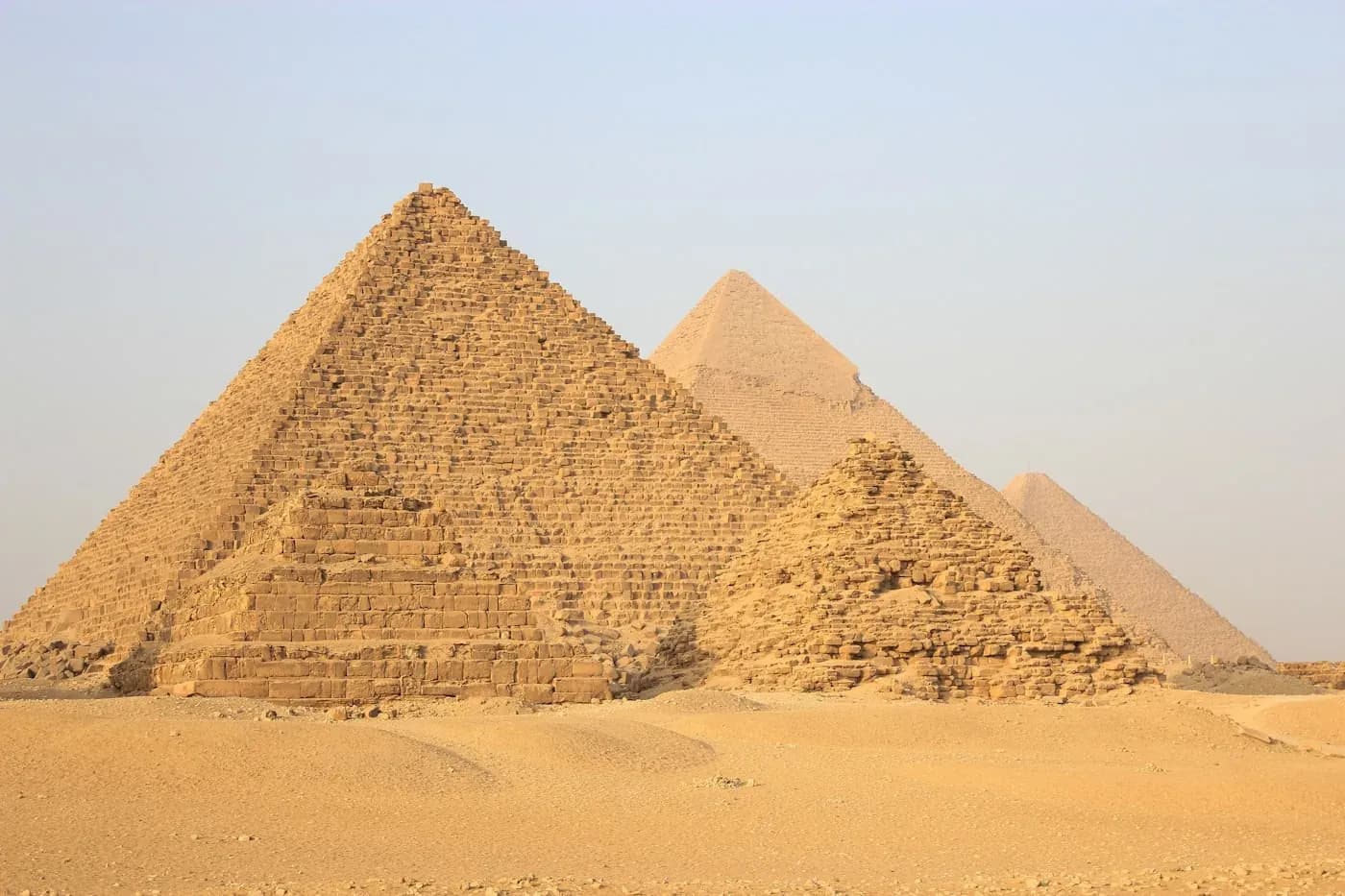
The best family format runs over ten days and three blocks: two nights in Cairo for the Giza plateau and the Grand Egyptian Museum, four nights cruising between Luxor and Aswan, then three nights on the Red Sea. You keep the full backbone of ancient Egypt, you unpack only three times, and you finish with days that need no early alarm, which changes everything about the journey home.
Over seven days, keep Cairo and the cruise and drop the Red Sea rather than compressing everything. Over fifteen days, the most useful addition is not another site but time: a full day in Aswan, a felucca at the end of the afternoon, a morning with nothing planned. That emptiness is what separates a trip everyone remembers fondly from a trip children mainly remember as being hot.
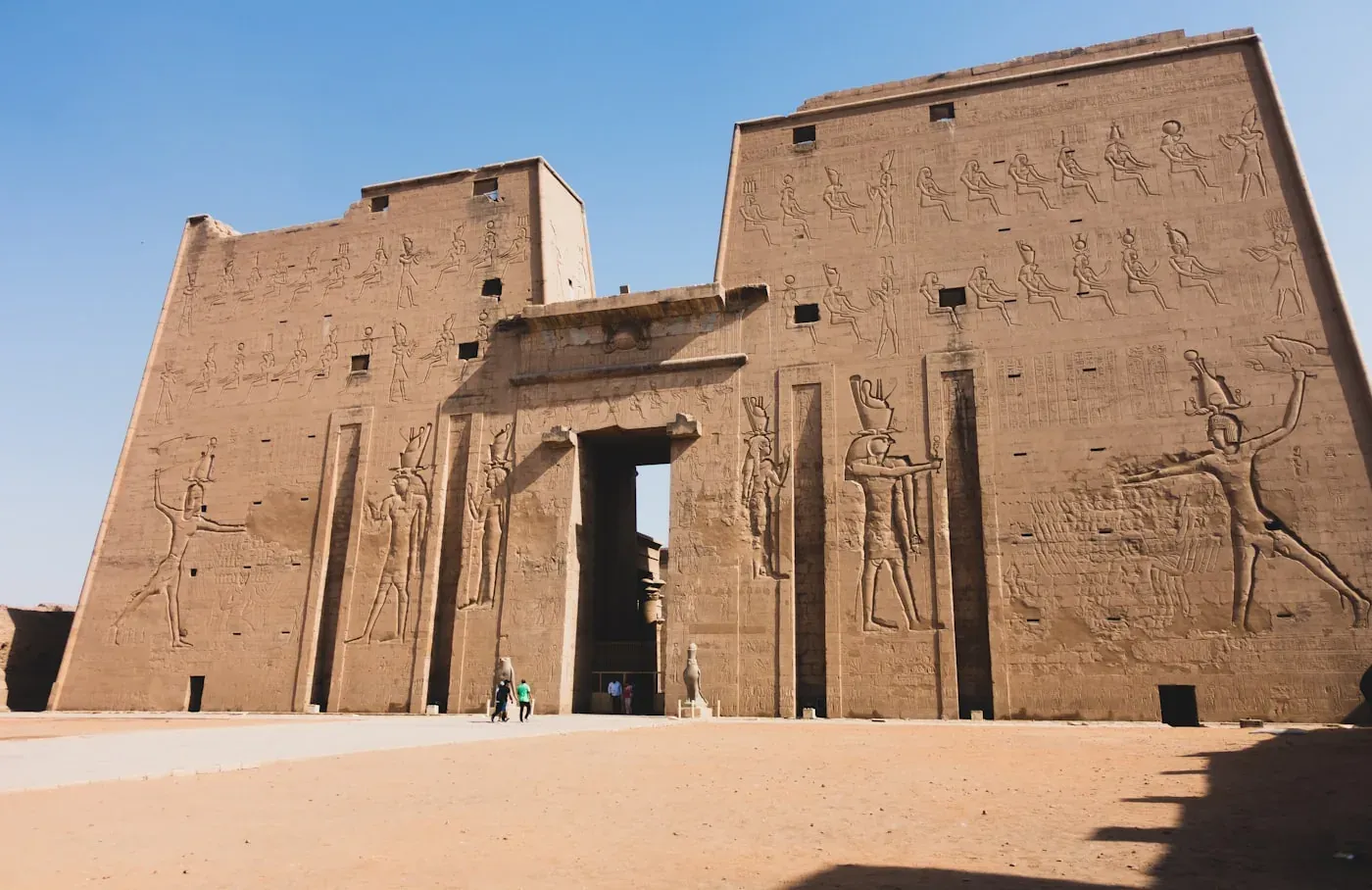
What we clearly advise against with a family: long road days added for one more site, and two domestic flights within forty-eight hours. Abu Simbel is the perfect example. The site is extraordinary, it is easily reached by plane from Aswan, but it demands a start before dawn. With young children we would rather leave it out than force it, and keep it for a future trip.
- The benchmark format: 2 nights in Cairo, 4 cruising, 3 on the Red Sea
- Seven days: Cairo and the cruise, without the Red Sea
- Fifteen days: add free time rather than extra sites
- Two visits a day at most, the first before eight
- Avoid long road transfers added for a single site
- Abu Simbel: superb, but a pre-dawn start, to weigh up with young children
Is a Nile cruise suitable for children?
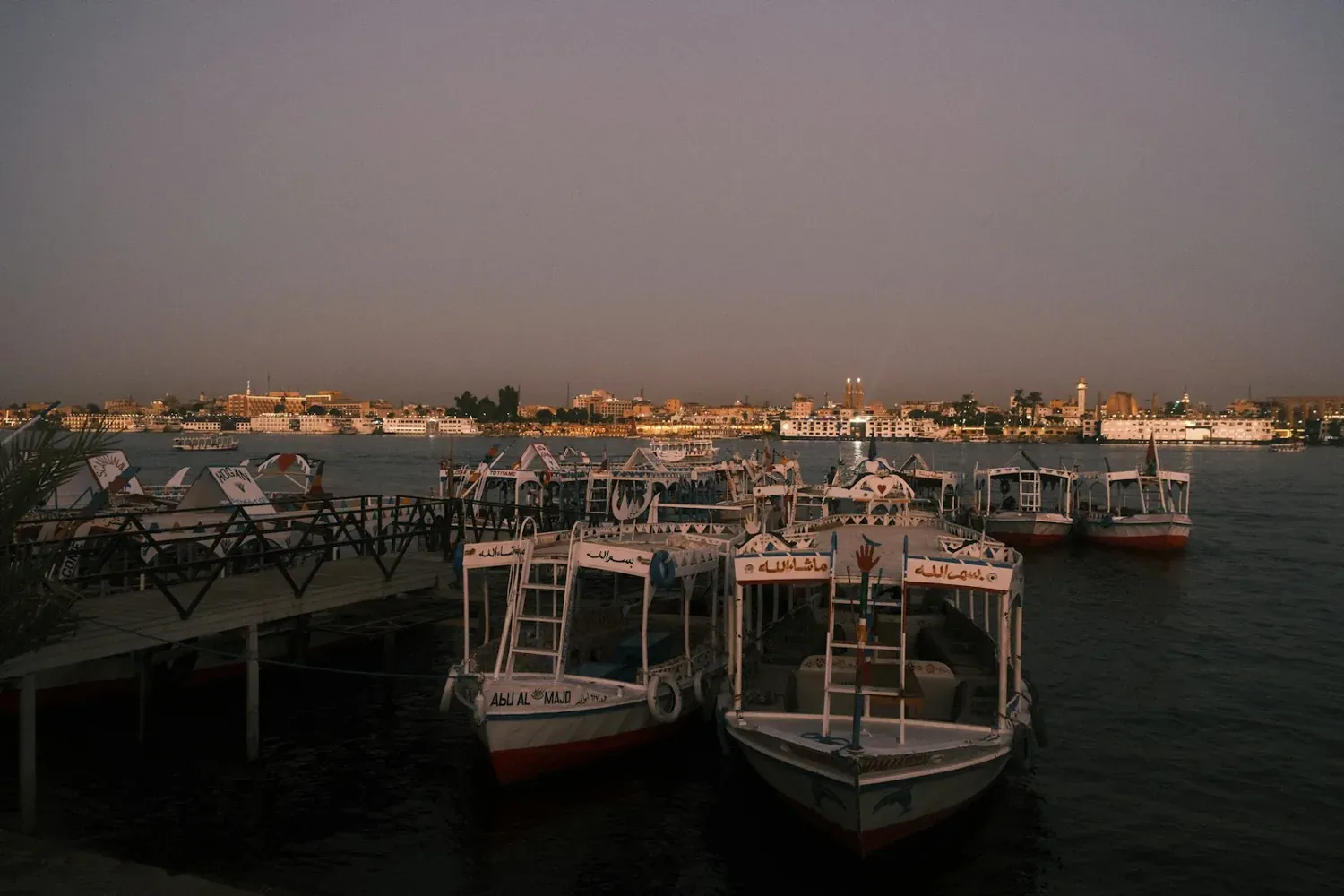
This is the format we recommend most often to families, for a very practical reason: a single room to unpack for four nights, while the temples come to you. Between two visits the ship offers a pool, a deck, meals at fixed times and an enclosed space where a child can move around alone without anyone worrying. It is the exact opposite of a coach tour with a new hotel every evening.
Classic five-star ships have connecting cabins and can add an extra bed, to be requested when booking as the number is limited on each deck. The dahabeya, that small sailing boat with a handful of cabins, is magnificent but more demanding with a family: less room to play, rarely a pool, and a slow rhythm children appreciate very unevenly depending on their age.
One operator tip, often decisive for sleep quality: ask for a cabin away from the stern, where engine noise is strongest, and close to the restaurant deck so you avoid stairs with a tired child. Finally, keep the top deck pool in mind: it has no lifeguard and depends entirely on parental supervision, as in most hotels in the country.
- A single room for four nights, the temples come to you
- Pool, deck and meals at fixed times between visits
- Connecting cabins and extra bed to request when booking
- Classic ship rather than dahabeya with young children
- Cabin away from the stern: less engine noise at night
- The pool has no lifeguard: supervision stays with the parents
What do children actually enjoy on the ground?
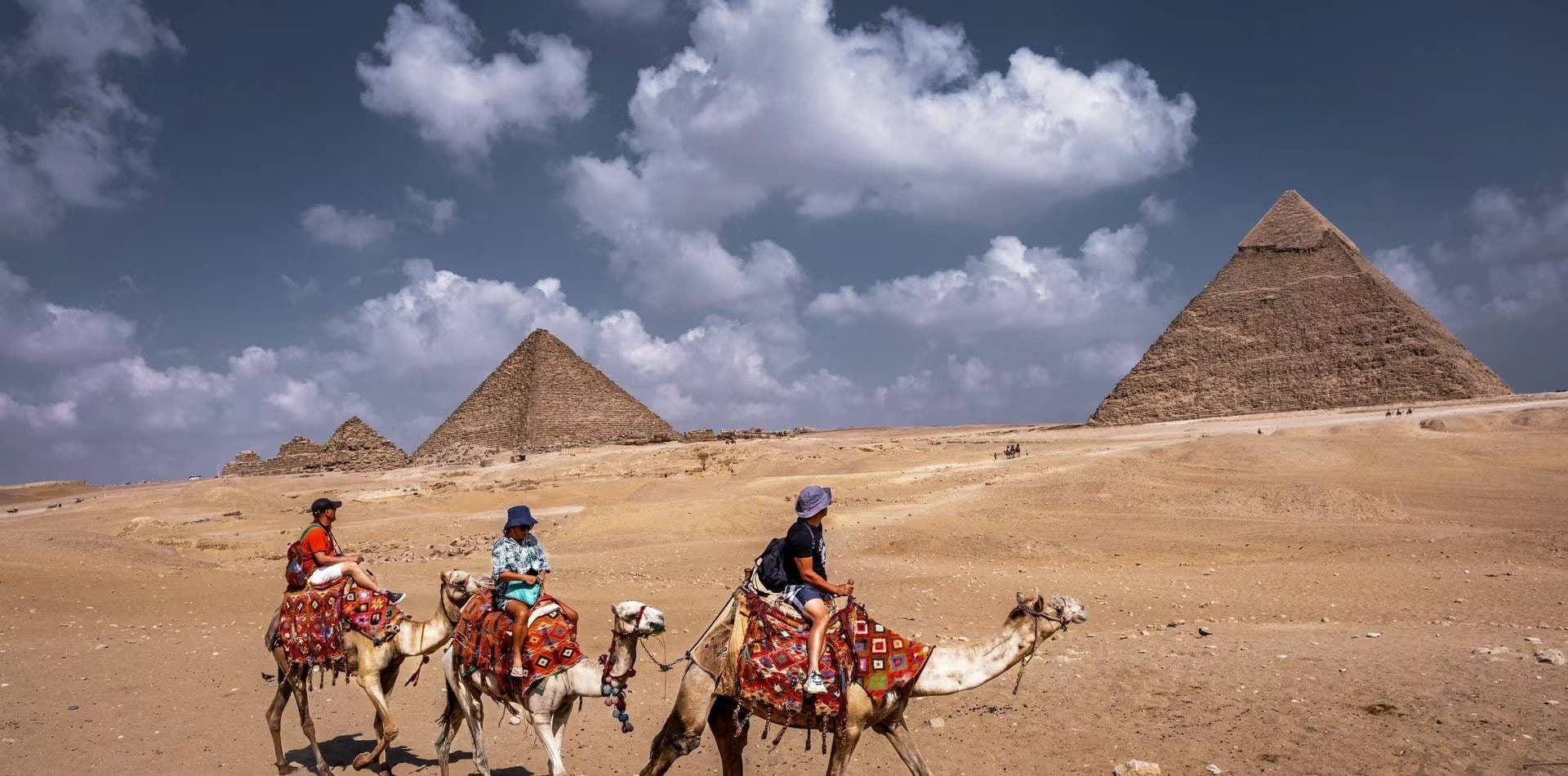
Rarely what parents expect. Children remember the camel in front of the pyramids, the motorboat crossing to Philae, the fish seen through a mask on the Red Sea and the night spent on a boat. Temples stay with them when they are told as stories rather than described as architecture, which is exactly what an Egyptologist guide does once you have told them children are coming.
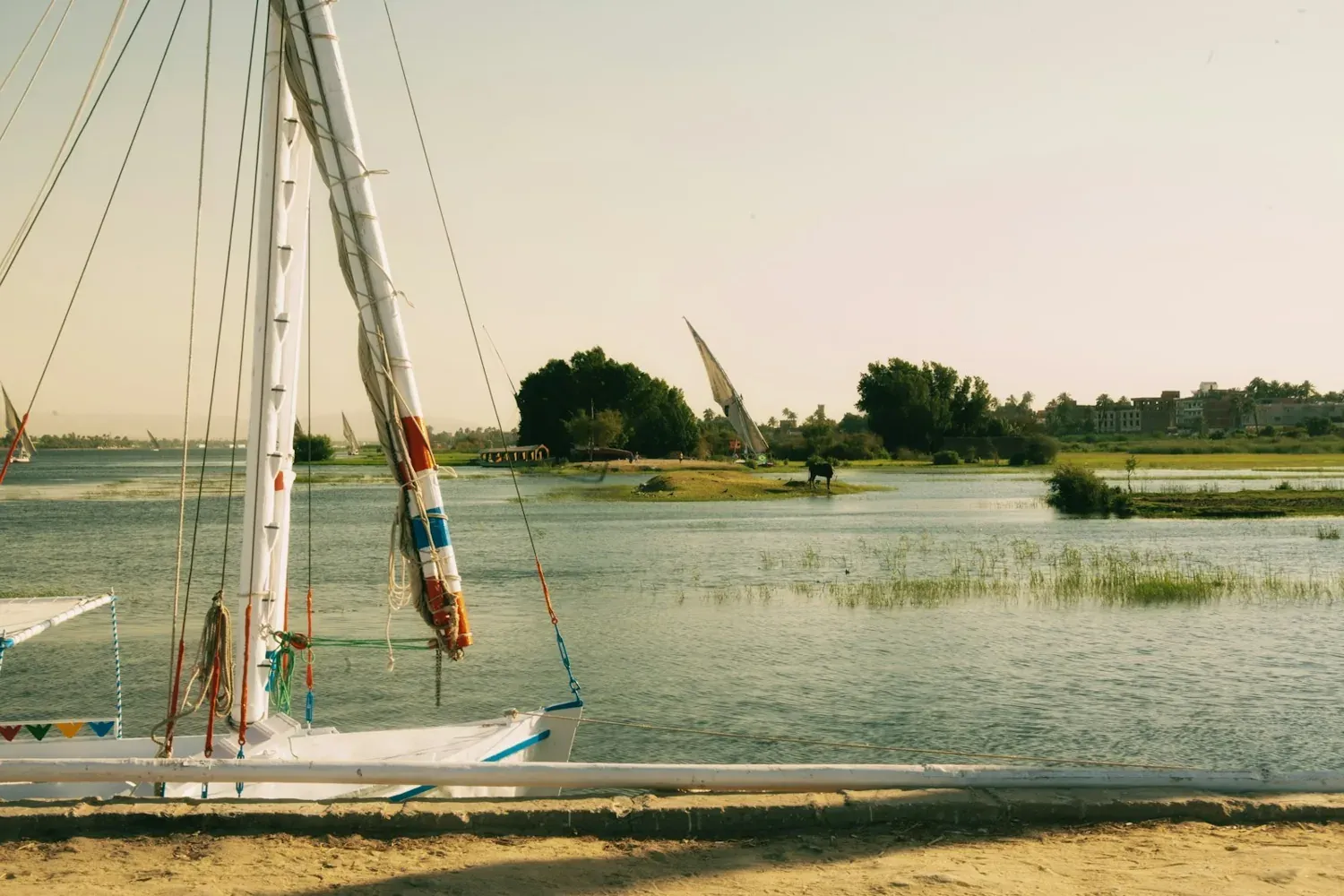
Three moments work almost every time. Going down into a tomb in the Valley of the Kings, because you step underground and the colours are still intact. The treasure of Tutankhamun at the Grand Egyptian Museum, as long as you target two rooms rather than the whole museum. And the felucca at sunset in Aswan, engineless, where children usually end up learning three words of Arabic from the sailor.
Two classics, on the other hand, go down badly with children: long museum galleries with nothing to latch onto, and the papyrus or perfume shop stops that many itineraries build into the programme. Flag it to your agency in advance: on a private tour those stops are easily removed and give you back an hour of free time.
- The camel or the horse-drawn carriage at the Giza plateau
- A tomb in the Valley of the Kings, underground and still coloured
- Mask and snorkel over the Red Sea reefs
- The felucca under sail at sunset in Aswan
- Tutankhamun's treasure at the Grand Egyptian Museum, targeting two rooms
- A guide who tells stories rather than an architecture lecture
Paperwork, health and safety: what should you plan for children?
On paperwork the rule is the same for everyone: each traveller needs their own travel document and their own visa, children and babies included. There is no family visa. A child travelling with only one parent, or with a third party, must also be able to produce the documents required by their country of residence, including a parental authorisation to leave the territory where that applies. Check this with your own authorities several weeks before departure, as the rules differ from one country to the next.
On health, no vaccination is required to enter Egypt from Europe, but routine vaccinations must be up to date, measles included. Depending on the conditions of your stay, hepatitis A and typhoid are often advised. For a child the advice depends on their age and vaccination record: book an appointment with your doctor or a travel health clinic around six weeks before departure, and rely on the NHS Fit for Travel and TravelHealthPro pages, or the CDC travel health notices if you are travelling from the United States.
Three simple rules then cover most of daily life. Sealed bottled water only, including for brushing teeth, and no ice cubes outside the large hotels. No swimming or playing in the waters of the Nile or the canals, because of bilharzia. And serious sun protection: hat, sunglasses, UV shirt at sea and a water bottle that is always full. Insurance covering medical costs and repatriation for every member of the family remains essential, as no embassy will pay for treatment.
- One visa per traveller, children and babies included, no family visa
- Extra documents to check if the child is not travelling with both parents
- Routine vaccinations up to date, medical advice six weeks before departure
- Sealed bottled water only, brushing teeth included
- No swimming in the Nile or the canals, risk of bilharzia
- Medical and repatriation insurance for every member of the family
How much does a family trip to Egypt cost?
A family trip costs less per person than a trip for two, because the room, the vehicle and the guide are shared. The items that really scale with the number of travellers are flights and site entry tickets, while accommodation and guiding get diluted. On our tours prices are quoted individually according to the season, the number of participants and the ages of the children: we do not publish a fixed grid, it would be wrong three months later.
Three practical levers, however. Child discounts exist almost everywhere, on site tickets, domestic flights and the third bed in a room, but their age thresholds vary between suppliers and are confirmed when we quote. Site prices are set in Egyptian pounds and revised several times a year: the only amount that counts is the one shown on the official portal egymonuments.gov.eg. Finally, the major sites have moved to card payment, so bring a card accepted internationally.
The item families most often underestimate is tipping. It is part of local culture and concerns the driver, the guide and the boat crew: keep small notes and ask your agency what is already included in the price. The Grand Egyptian Museum is booked online at tickets.gem.eg, its only official site, which saves you the queue and the resellers who add their own margin.
- The cost per person drops as soon as room and guide are shared
- Child discounts are common, age thresholds confirmed in the quote
- Site tickets priced in Egyptian pounds, official rates on egymonuments.gov.eg
- Grand Egyptian Museum to be booked online at tickets.gem.eg
- An internationally accepted bank card for the major sites
- Budget for tips: driver, guide and boat crew
What do our Egyptologists advise families?
Halve the programme, then stick to it. That is the advice that comes back in every debrief of a family trip. Two visits a day, the first before eight in the morning, and a free afternoon every other day: this lighter programme consistently produces better memories than a full itinerary run at speed. You just have to decide it when the trip is being built, not once you are there and it is too late to reorganise.
Take a private guide rather than a group departure. With a family that is not a luxury, it is what lets you cut a visit short when a child is flagging, push a departure back by an hour and drop the shopping stops. A guide who knows there will be children in front of them also tells the story differently: they pick scenes, animals, tales of kings and rivalries rather than dates and dynasties.
And keep the sea for the end. Three nights on the Red Sea after the Nile valley transform the journey home: the children come back rested, and the parents have finally had two days when nobody watches the clock. If you would like us to build that trip around the ages of your children, just tell us your dates and the number of travellers, and we will take care of the rest.
- Two visits a day at most, the first before eight
- A free afternoon every other day, planned in from the start
- Private guide rather than a group, so you can shorten or reschedule
- Red Sea at the end of the trip, never at the start
- The programme is built around the children's ages, not the other way round
Related tours
Our trips that match this theme.

Also worth exploring
Égypte
Got a trip in mind?
Tell us what you're after: we'll craft a tailor-made itinerary and reply within 24h, no commitment.
Request a quote