Safety
Is it safe to travel to Egypt in 2026?
Sharm el-Sheikh, Hurghada, Cairo, Siwa: areas to avoid, the real risks on the ground and the UK, US, Australian and Canadian advice.
By Ahmed El Eayeb, English- & Russian-speaking guidePublished on Updated on
In brief
Egypt is now one of the busiest destinations in the Mediterranean, with 19 million visitors in 2025, an all time record. The areas where trips actually take place, Cairo, the Nile valley, Luxor, Aswan and the Red Sea resorts, carry no travel restriction from the UK, US, Australian or Canadian governments. All four do warn against specific border and desert areas, none of which appear on a tourist itinerary. And once you are there, the highest risk is neither terrorism nor crime: it is the road.
- No restriction from the UK, US, Australia or Canada on Cairo, Luxor, Aswan or the Nile valley
- Red Sea resorts: Sharm el-Sheikh, Hurghada and Marsa Alam are treated as low risk
- Advised against: North Sinai, the Libyan border area, the Sudan border, Hala'ib and Bir Tawil
- Western Desert: the US advises going only with a professionally licensed tour company
- Roads: one of the world's highest accident rates, avoid driving at night outside cities
- Crimes of opportunity: purse snatching and pickpocketing, plus harassment of women
- Health: bottled or boiled water only, polio vaccine up to date, medical evacuation cover
- Useful numbers on the ground: police 122, ambulance 123, tourist police 126
Is Egypt dangerous in 2026?
No, not in the areas where trips take place. Neither the FCDO, the US State Department, Smartraveller nor Global Affairs Canada advises against Cairo, Luxor, Aswan, a Nile cruise or the Red Sea resorts. What all four flag are specific border and desert areas that appear on no tourist itinerary. That distinction has held for several years, and it is the first thing to take away.
The clearest indicator may simply be visitor numbers. The Egyptian Ministry of Tourism and Antiquities reported 19 million visitors in 2025, up 21 percent on 2024, and 18.6 million entries at cultural sites. The country is targeting 30 million visitors by 2028 and expects a further rise of 5 to 7 percent in 2026. Travellers from Britain, North America and Australia, families among them and often with young children, sail up the Nile every week without incident.
Does that mean the risk of an attack can be dismissed? No, and we will not pretend otherwise. The FCDO states that terrorists are likely to try to carry out attacks in Egypt, and Washington keeps the country at level 2, exercise increased caution, noting that Egyptian authorities generally offer effective security protection at potential targets. Australia and Canada use their own scales and land in the same place, a high degree of caution overall with far stricter levels in a handful of areas. Sites and hotels are screened at the entrance, metal detectors and bag checks included, which often takes first time visitors by surprise. An isolated attack can never be entirely ruled out, in Egypt as anywhere else.
One habit is worth adopting before you book: read your own country's advisory rather than a summary of it, because the four English speaking sources use different scales and different distances. Around the Libyan border, London advises against all travel within 20 kilometres, Canberra within 40 and Ottawa within 50. Washington rules out the Western Desert altogether unless you travel with a professionally licensed tour company. None of that contradicts the others, it simply reflects four separate risk methodologies. Sign up for FCDO email alerts, enrol in the US State Department's STEP programme, subscribe to Smartraveller updates or register with Registration of Canadians Abroad, depending on your passport.
Which areas should you avoid in Egypt?
The four advisories agree on the core and differ only on the edges. All of them rule out North Sinai, and all of them rule out the immediate Libyan border area, though London says within 20 kilometres except the town of El Salloum, Canberra says 40 and Ottawa says 50. Washington goes further and puts the whole Western Desert at level 4, do not travel, unless you are with a professionally licensed tour company. For all but essential travel, the FCDO lists northern South Sinai beyond the Saint Catherine to Nuweiba road, Ismailiyah east of the Suez Canal, most of the Western Desert and the Hala'ib triangle, while Australia adds the Bir Tawil trapezoid and the area within 20 kilometres of the Sudanese border.
Sinai deserves a clarification, because the name causes confusion. North Sinai, where security operations are under way, should be ruled out entirely, and the US extends that to the middle of the peninsula. The southern coast is treated very differently: the FCDO calls Sharm el-Sheikh, Hurghada and Marsa Alam generally low risk, and Australia keeps the southern coastal area of Sharm el Sheikh at its ordinary caution level while asking travellers to reconsider the rest of South Sinai. In other words, a beach holiday in Sharm el-Sheikh and North Sinai have nothing in common, even though they share the name of the same peninsula.
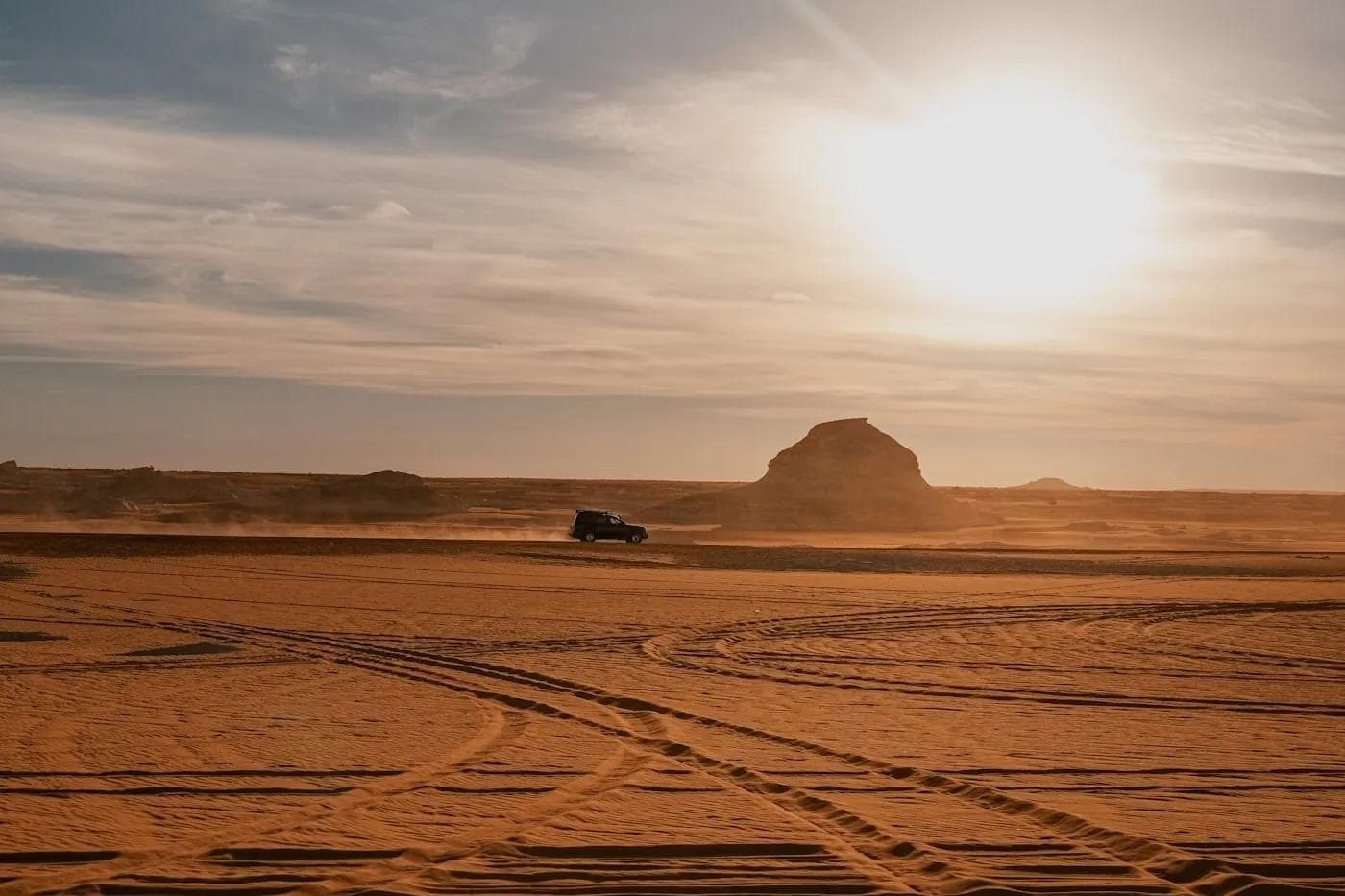
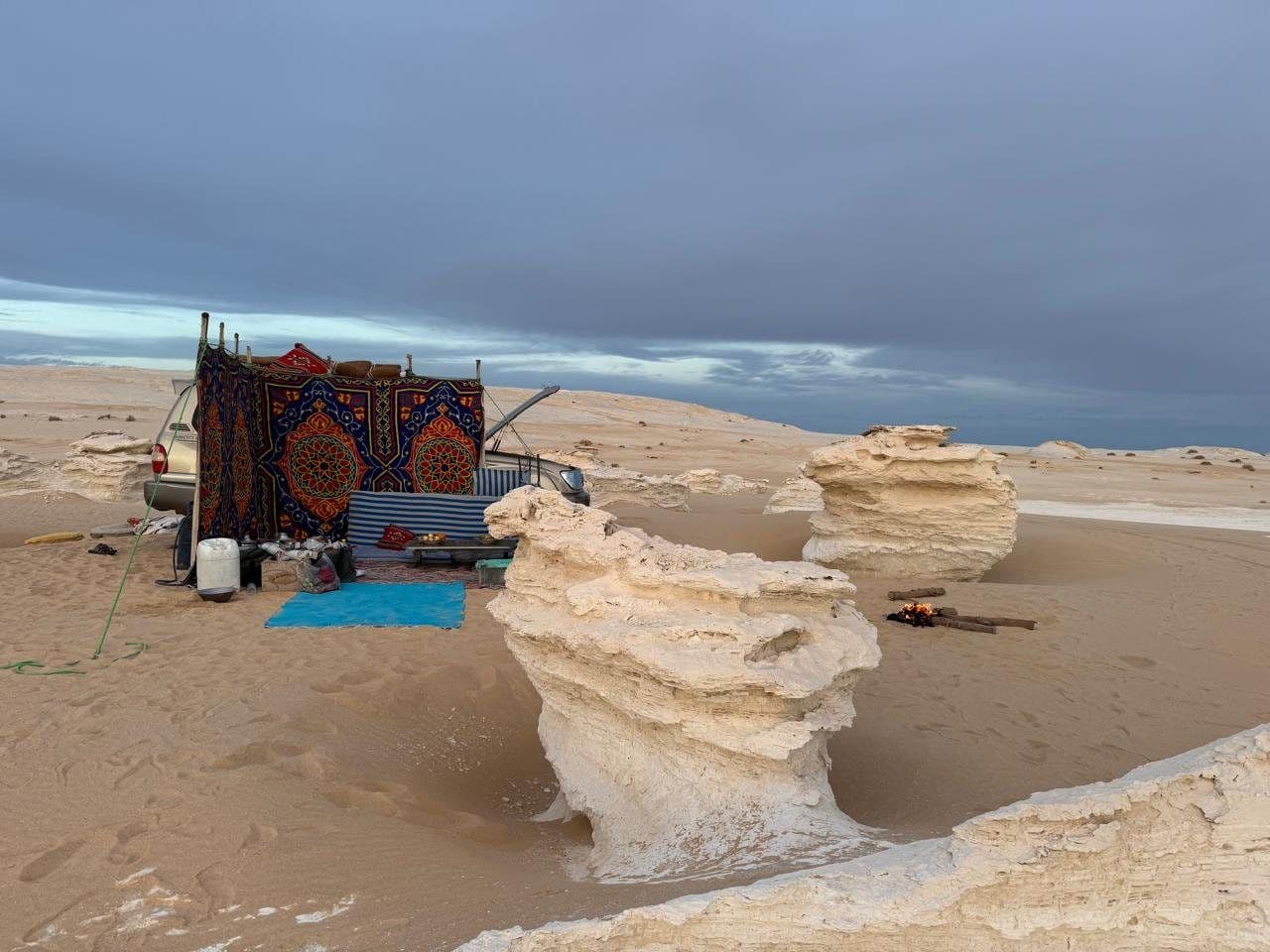
West of the Nile the logic changes: the problem is not a human threat, it is the terrain. Australia is blunt about it, there are landmines in some coastal and desert areas, get advice from local authorities and do not travel off marked paths or roads. The US position is the practical version of the same warning: the Western Desert only with a professionally licensed tour company. Smartraveller does keep the Marsa Matrouh to Siwa road and the Giza to Farafra road, including Bahariya, the Black Desert and the White Desert, at its ordinary caution level. So a trip to Siwa or the White Desert is fine on a declared route with a licensed operator, and never improvised off track.
- All travel advised against: North Sinai, and the Middle Sinai peninsula for the US
- Libyan border: 20 km for the UK except El Salloum, 40 km for Australia, 50 km for Canada
- Western Desert: level 4 for the US unless travelling with a licensed tour company
- All but essential travel: northern South Sinai beyond the Saint Catherine to Nuweiba road
- All but essential travel: Ismailiyah east of the Suez Canal and most of the Western Desert
- All but essential travel: the Hala'ib triangle, the Bir Tawil trapezoid, 20 km of the Sudan border
- No restriction: Cairo, Luxor, Aswan, the Valley of the Kings, Abu Simbel and the Nile valley
- Desert and coast: landmines off marked roads, never leave the authorised route
Are Sharm el-Sheikh, Hurghada and Cairo safe?
Yes, in the terms the official advisories use. The FCDO describes Sharm el-Sheikh, Hurghada and Marsa Alam as generally low risk, and Australia keeps the southern coastal area of Sharm el Sheikh at its ordinary caution level while asking travellers to reconsider the rest of South Sinai. What is advised against is North Sinai and, for the FCDO, the part of South Sinai north of the Saint Catherine to Nuweiba road, which has nothing to do with a beach holiday.
Cairo, Luxor and Aswan carry no specific restriction in the UK, US, Australian or Canadian advice. The real risks there are those of any big destination: pickpocketing in crowds, pushy sales pitches around the sites and, above all, the roads. The one firm rule worth keeping is to avoid driving at night outside cities, where most serious accidents happen.
Siwa lies in the Western Desert, which Washington places at level 4 unless you travel with a professionally licensed tour company. Smartraveller keeps the Marsa Matrouh to Siwa road and the Giza to Farafra road, including the Black and White Deserts, at its ordinary caution level. In practice, Siwa and the White Desert are fine with a licensed operator on a declared route, never off track.
- Sharm el-Sheikh, Hurghada, Marsa Alam: generally low risk for the FCDO
- Rest of South Sinai: reconsider for Australia, advised against north of the Saint Catherine to Nuweiba road for the FCDO
- Cairo, Luxor, Aswan: no specific restriction, ordinary city caution
- Siwa and the White Desert: with a licensed operator on a declared route
- Roads: avoid driving at night outside cities
- North Sinai: advised against by all four advisories
What is the real risk once you are there?
The road, without hesitation. Canada puts it plainly, Egypt has one of the highest accident rates in the world, and the FCDO explains why: variable road conditions, dangerous driving and poor enforcement of traffic law. Bus and train crashes have also caused deaths. That is where the real safety of a trip to Egypt is decided, a long way from the scenarios people fear before they leave.
Three rules bring that risk down to almost nothing. Do not drive yourself: self drive hire makes little sense here, everything is done with a driver for a very small extra cost. Do not travel by road at night outside cities and resorts, which every one of the four advisories recommends. And avoid long overnight intercity bus journeys, where the most serious accidents are concentrated.
Violent crime, by contrast, remains rare. The FCDO describes the crime rate as generally low, and Washington notes that most crimes against foreigners are crimes of opportunity, purse snatching and pickpocketing, along with overcharging and scams in tourist areas. Canada adds that petty crime, historically low, is rising. A closed bag worn in front of you, your passport left in the hotel safe and a copy on your phone deal with most of it.
Can a woman travel safely in Egypt?
Yes, and thousands of women travel there every year, including on their own, with a higher level of attention than on a trip in Europe. All four advisories address it, and none of them softens it. The FCDO reports sexual assaults, notably in Red Sea resorts and at times involving hotel staff. The State Department calls harassment of women a problem, listing vulgar comments, gestures, indecent exposure and unwanted physical contact. Smartraveller notes that women, particularly foreigners, are frequently subject to unwelcome male attention, and Canada adds that the risk rises during public holidays.
We would rather tell you plainly than sell you a smoothed over Egypt. In practice the precautions that work are simple, well known, and they are enough in the vast majority of cases.
- Avoid moving around alone at night, especially on foot
- In a taxi, prefer the back seat and a car booked through the hotel
- Do not let a member of hotel staff into your room unaccompanied
- Do not give your room number or your itinerary to a stranger
- Shoulders and legs covered in town and at religious sites, dress as you like by the pool
- Answer with a firm no and keep walking, without starting a conversation
- Saying that a husband or a group is waiting for you puts an end to most persistence
- Favour guides, drivers and hotels booked in advance
Which scams should you know about?
None of them is dangerous, all of them are irritating, and the State Department lists them among the things to expect in tourist areas, alongside overcharging. The mechanism is always the same: a service rendered without you asking for it, then a price demanded afterwards. Once you have spotted the pattern you see them coming ten metres away and they almost turn into a game.
Three habits are enough. Agree the price beforehand, in figures and out loud, even for a five minute ride. Keep small notes for tips, which are part of the local culture and not a scam: a porter, a site guardian or a driver expects them, and that is fair. And learn to say no once, calmly, without justifying yourself. A polite, smiling no is perfectly well understood, here as anywhere.
- One price quoted to get onto a camel, then another price to get back down
- An improvised guide who walks with you for three minutes then demands a tip
- A guardian offering to open a closed chamber or to take your photo in exchange for baksheesh
- A horse carriage or taxi with no price agreed at the start, renegotiated on arrival
- A papyrus or perfume shop you are dropped at without having asked
- Changing money in the street, to be avoided in favour of a bank or an ATM
- A fake official website for a visa, a train ticket or a site entry ticket
- The claim that your hotel is full or closed, so another one can be offered to you
What health precautions should you take?
Water and sun ruin more days than everything else combined. Canada sums the rule up better than anyone: boil it, cook it, peel it, or leave it. Only drink bottled or boiled water, skip ice cubes in small establishments, avoid raw vegetables rinsed under the tap, unpasteurised milk and raw shellfish. Australia adds one that surprises people: do not swim in fresh water, including the Nile, because of bilharzia.
No vaccination is required to enter Egypt unless you arrive from a yellow fever area, but routine vaccinations should be up to date. The State Department singles out polio, because poliovirus is circulating in Egypt, so check your booster against the CDC recommendations. Canada also advises hepatitis A and typhoid, and Australia notes that hepatitis, rabies, dengue and malaria are present. Ask your doctor or a travel health clinic about six weeks before departure.
Two things are often forgotten. Heat first: from May to September the sites of Upper Egypt are visited early in the morning, with a hat and water within reach and a break in the shade in the middle of the day. That is not comfort advice. Insurance next, and here the State Department is unusually direct: emergency and intensive care facilities are limited, ambulances are rare and poorly equipped, so get comprehensive medical insurance that includes medical evacuation. If you dive in the Red Sea, check where the nearest hyperbaric chamber is before you get in the water.
Where can you check your own country's official advice?
On your own government's source, and nowhere else, least of all on a page like this one. We do not copy alert levels, because they change and a frozen page becomes wrong. We give you the addresses instead, and they are up to date by definition. Take five minutes to open them before booking, then again a few days before departure.
Information checked on 30 July 2026 against the FCDO advisory updated on 28 March 2026, the US State Department advisory at level 2, Smartraveller updated on 17 June 2026, the Canadian advisory current on 29 July 2026 and the figures published by the Egyptian Ministry of Tourism and Antiquities. The four scales are not interchangeable, so read the one that matches your passport. This page is reviewed whenever something significant changes.
- United Kingdom: gov.uk, foreign travel advice Egypt, with email alerts on updates
- United States: travel.state.gov, with enrolment in the STEP programme
- Australia: smartraveller.gov.au, with subscription to advisory updates
- Canada: travel.gc.ca, with Registration of Canadians Abroad
- Ireland: ireland.ie, Department of Foreign Affairs travel advice
- New Zealand: safetravel.govt.nz
- France: diplomatie.gouv.fr, Conseils aux voyageurs
- Italy: viaggiaresicuri.it, and Spain: exteriores.gob.es
Does travelling with a guide make a difference?
Yes, and two of the four advisories say so themselves. Washington rules out the Western Desert unless you travel with a professionally licensed tour company, and Canada tells you to use reputable operators on the road. Beyond those specific cases, having a team with you does not protect you from an exceptional event, it removes the dozens of small decisions you would otherwise make every day in a place you do not know. Which taxi, which price, which road after dark, which restaurant, which bottle of water, which guide to accept at the entrance to a site.
In practice, our travellers move around with our own drivers and vehicles, on declared routes, never at night on secondary roads. An Egyptologist from the team is with you at the sites, which settles the question of fake guides and improvised baksheesh in one go. And we stay reachable around the clock during the trip, which most of the time is used to answer questions far more mundane than safety.
We will never tell you that Egypt is risk free, no destination is. What we will tell you is that the risks here are known, localised and easy to work around, and that working around them has been our job for twenty years.
Related tours
Our trips that match this theme.
Also worth exploring
Égypte
Got a trip in mind?
Tell us what you're after: we'll craft a tailor-made itinerary and reply within 24h, no commitment.
Request a quote