
Itineraries
How many days in Egypt? Itineraries for 7, 10 and 15 days
Seven days for the essentials, ten to breathe, fifteen to get off the beaten track: our Egyptologists set out what you actually see for each length of trip, and the most common pacing mistakes.
By Ali Jalal, Spanish- & Italian-speaking guidePublished on
In brief
Seven days on the ground are enough to see the essentials of pharaonic Egypt, provided you accept a brisk pace and do not add the Red Sea. Ten days is the format we recommend most often: the same programme, but with Abu Simbel, a genuine rest day and time to wander. Fifteen days open the door to the desert, the oases and Alexandria. Below five days you have to pick one region, and it should be the Nile valley.
- 5 to 6 days: the Nile valley alone, a Luxor to Aswan cruise, without Cairo
- 7 days: Cairo and the cruise, the essentials at a brisk pace
- 8 to 10 days: the same programme plus Abu Simbel, or plus the Red Sea
- 15 days: adding the desert, the oases, Alexandria or a proper beach stay
- The cruise is not a comfort option: it is the most efficient way to travel between the temples
- Allow half a day of travel every time you change region
- Best season for longer trips: October to April, when the heat no longer dictates the programme
- The most common mistake: trying to do everything in a week and really looking at nothing
How many days do you need to visit Egypt?
Seven days on the ground, excluding international flights, is the real entry threshold. Below that you will only see one region; above it, each extra day buys comfort rather than distance. The number comes from the geography: touristic Egypt is concentrated in two hubs 700 kilometres apart, Cairo in the north and the Nile valley in the south, and moving between them costs half a day of travel.
So the question to ask is not how many days it takes to see everything, because nobody sees everything, but how many sites a day you can absorb. Our answer, after twenty years in the field: two major sites a day, three at most, and never two consecutive days at that pace without a quieter morning. Beyond that the temples blur into one another, the photographs merge and the trip turns into a checklist.
What do you see in 7 days?
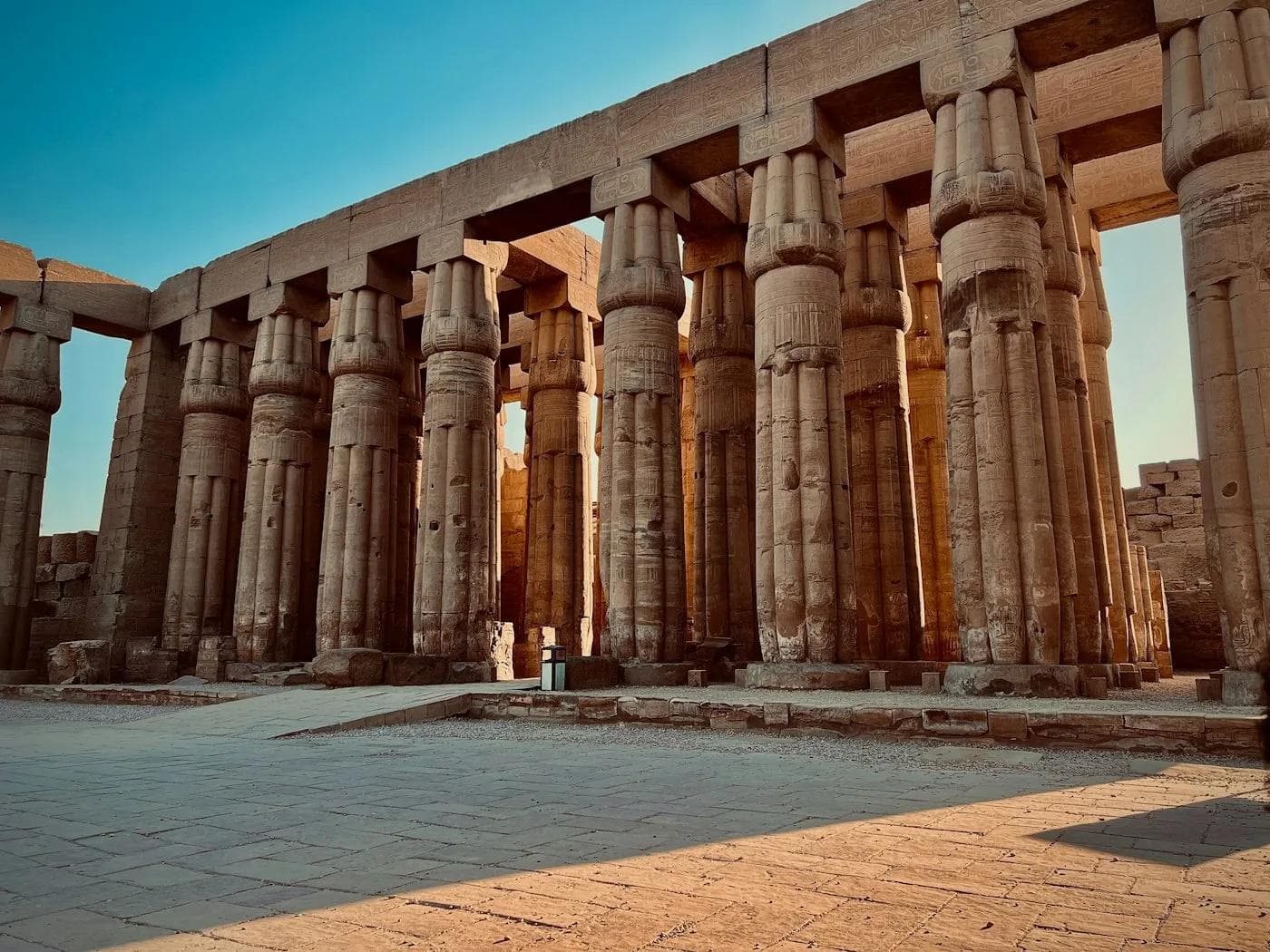
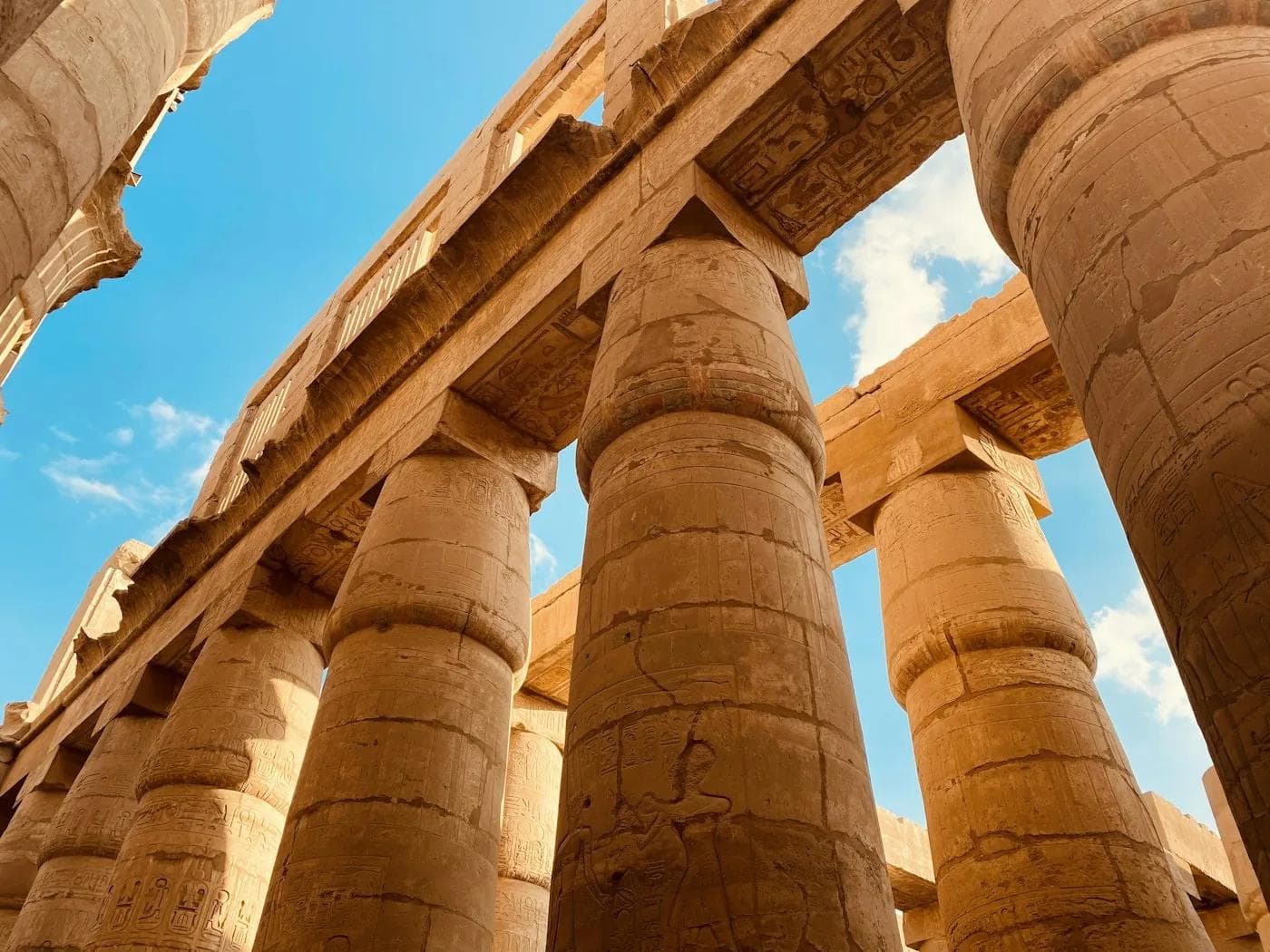
The essentials, with nothing superfluous and no dead time. A well built week comes in three blocks: two days in Cairo for the Giza plateau and the Grand Egyptian Museum, a flight or night train to Luxor, then four days cruising to Aswan visiting the temples along the way. You come home with the pyramids, the Valley of the Kings, Karnak, Edfu, Kom Ombo and Philae, which is already the full backbone of ancient Egypt.
What seven days will not allow, and it is better to know before booking: Abu Simbel without sacrificing something else, the Red Sea, the desert, Alexandria, and above all the day with nothing planned. It is a fine trip, but a dense one, with early starts almost every morning to stay ahead of the heat and the crowds.
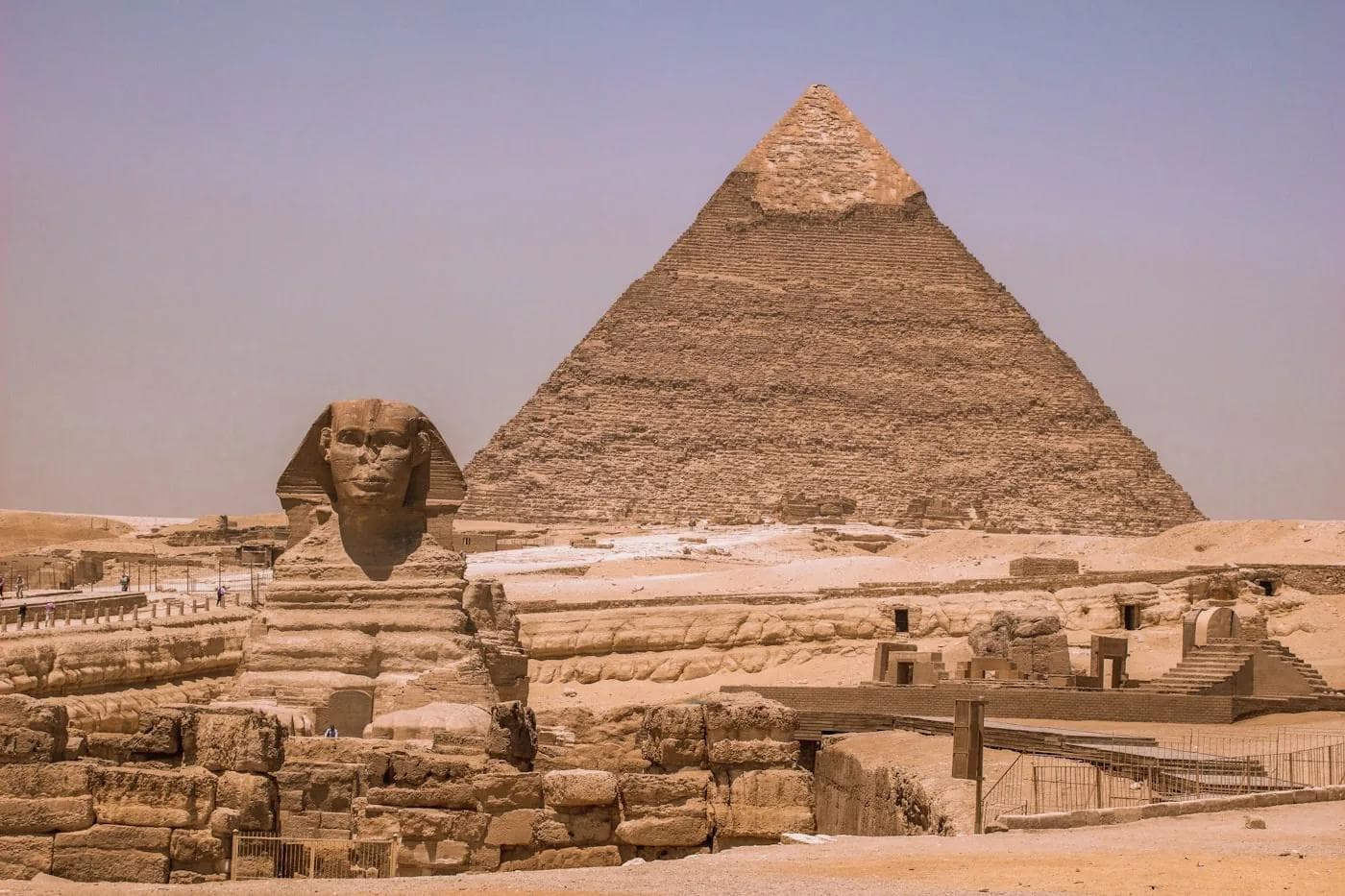
- Days 1 and 2, Cairo: Giza plateau, the Sphinx, the Grand Egyptian Museum
- Day 3: flight or night train to Luxor, Karnak in the late afternoon
- Day 4: Luxor west bank, Valley of the Kings and Hatshepsut temple, boarding
- Day 5: sailing, Edfu temple early in the morning, Kom Ombo in the late afternoon
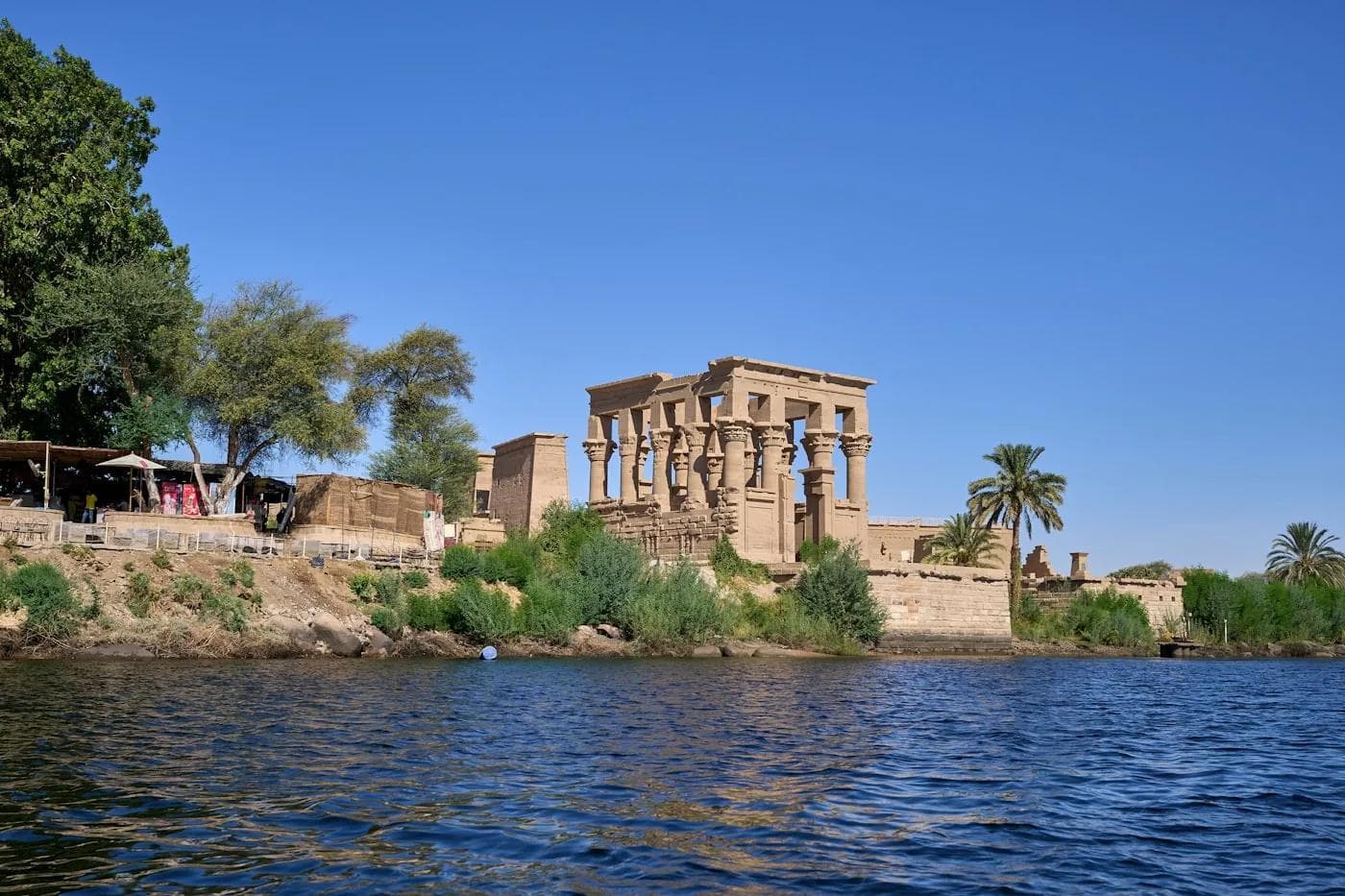
- Day 6: Aswan, Philae temple, felucca around the islands at sunset
- Day 7: back to Cairo or an international flight out of Aswan
What changes with 10 days?
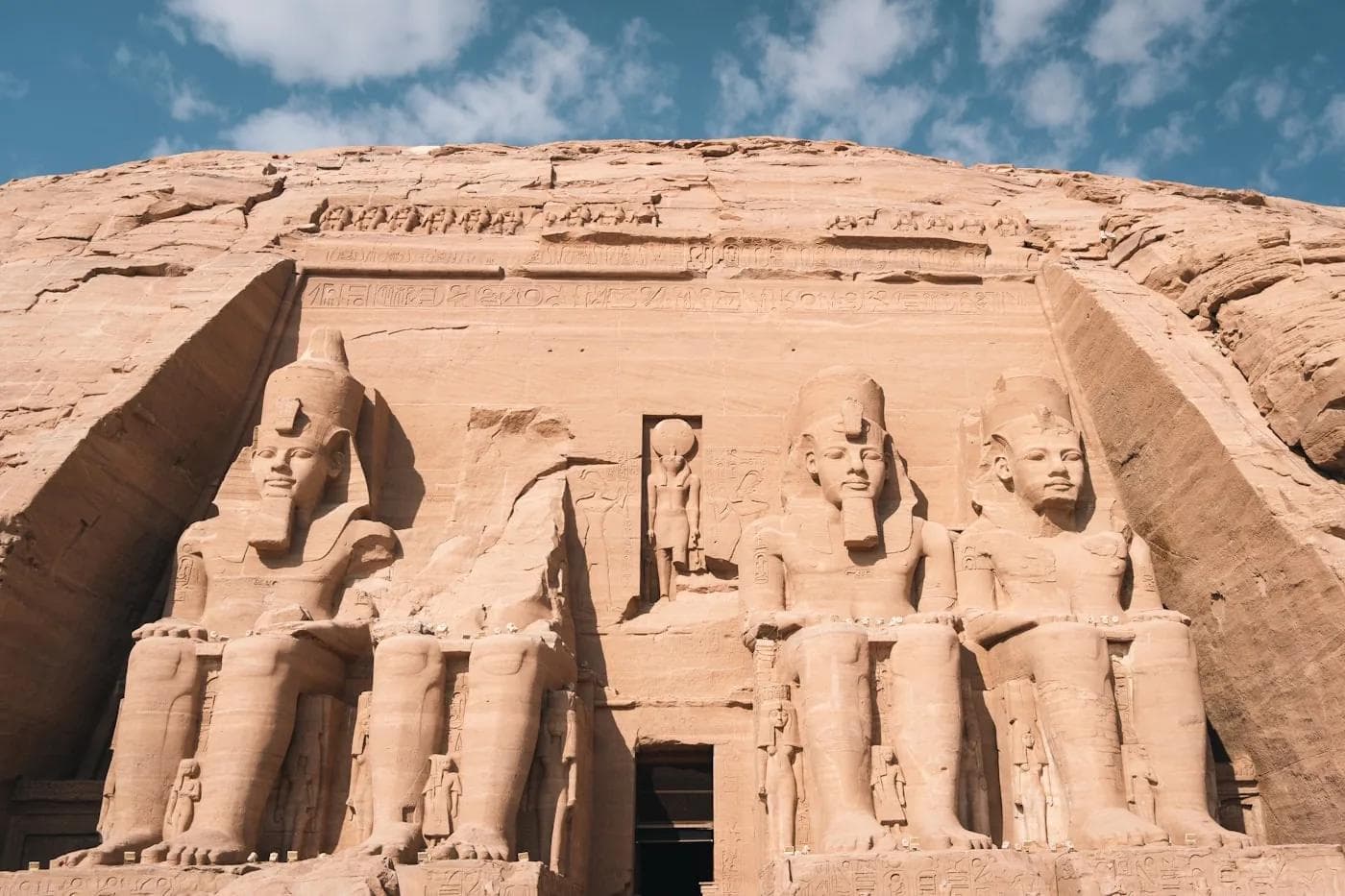
Three extra days are not for adding three more sites, but for repairing what a week forces you to sacrifice. This is the format we recommend most often, by a wide margin. The first extra day goes to Abu Simbel, which deserves to be seen early in the morning rather than rushed. The second goes to Cairo, for Coptic Cairo, the citadel and the Khan el-Khalili souk, which seven days always leave out. The third goes nowhere at all, and it is the best of the three.
The equally valid alternative is to keep the seven day programme and add three nights on the Red Sea, at Hurghada or Marsa Alam. You lose Abu Simbel but gain a real break, which matters a great deal on a honeymoon, with young children, or simply after six mornings of five o'clock alarms.
What does a 15 day trip make possible?
It lets you step outside the Nile corridor, which absorbs almost every trip. With fifteen days the valley and Cairo fit comfortably into ten, leaving five days to pick a second Egypt, completely different from the first. Three directions stand out, and you should choose only one: the desert and the oases, the Red Sea, or the Mediterranean.
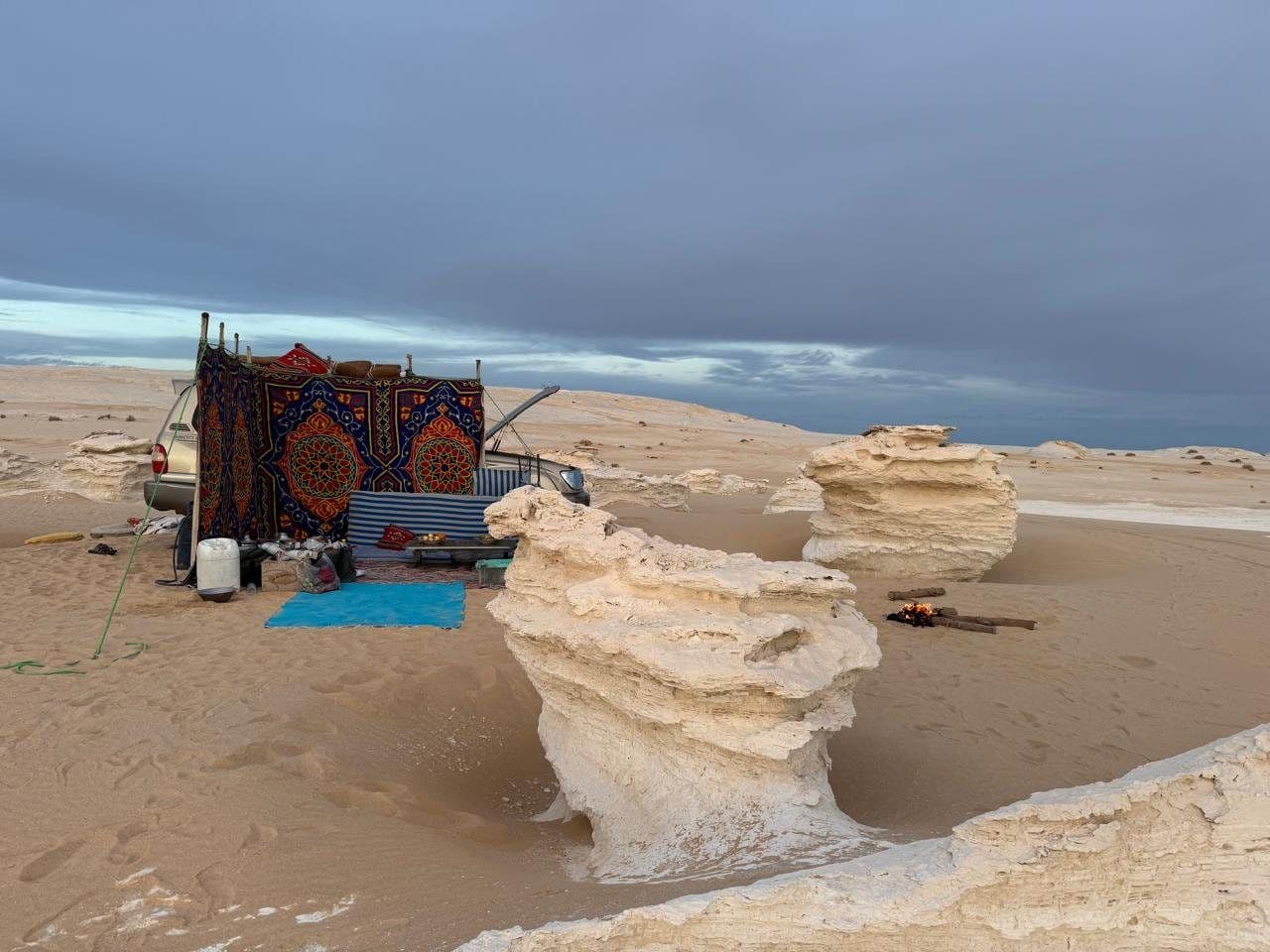
Our own preference is the desert, because it is the sharpest contrast and the experience our travellers talk about longest afterwards. Siwa oasis, the White Desert and the Black Desert require road time and an authorised operator on a declared route, but they offer something the temples cannot: silence.
- Desert option: Siwa, the White Desert and the Black Desert, the sharpest contrast with the valley
- Red Sea option: Hurghada or Marsa Alam, diving and reef, complete rest
- Mediterranean option: Alexandria, Greek and Ottoman Egypt, two days are enough
- Slow option: stay on the Nile and sail by dahabeya, ten passengers instead of a hundred
- To avoid: stringing two of these options together in five days, the travel eats the benefit
- To plan for: a buffer day before the flight home, domestic flights do shift
Do you really need to do a cruise?
Yes, and not for the reason people assume. The cruise is not a comfort extra bolted onto the trip: it is the most efficient way to travel between the temples of Upper Egypt. Edfu and Kom Ombo sit on the bank, hours apart by road but only a few hours apart by water. While you have dinner or sleep, the boat moves, and you wake at the gate of the next site.
The gain is measured in days. The same route by road means return trips out of Luxor or Aswan, hours of minibus in the heat and arrivals at peak crowding. On a seven day trip the cruise saves the equivalent of a day and a half of sightseeing. It is also why our shortest itineraries always keep it, even at the cost of something else.
Can you combine the Nile and the Red Sea?
Yes, and it is the most requested combination, but it has a threshold: nine days minimum. Below that, the journey between the valley and the coast eats half the benefit and you spend more time moving than enjoying either. From nine or ten days, though, the sequence works remarkably well because the two halves complement rather than compete with each other.
The order matters more than people think. Do the temples first, the sea afterwards, never the other way round. Nobody wants to get up at five in the morning for the Valley of the Kings after four days on a sun lounger, whereas the reverse makes the best kind of holiday memory: the diving arrives as a reward, exactly when your legs are starting to give out.
Which pacing mistakes should you avoid?
We see the same ones every season, and they never come from poor preparation. On the contrary, they come from highly motivated travellers who want to fit everything in, forget that the Egyptian day is decided before eleven in the morning, and discover on day three that they no longer have the energy to look at a bas relief.
- Planning three major sites a day for several days running, with no recovery morning
- Putting the Red Sea before the temples: going back to early starts never really happens
- Counting arrival day as a sightseeing day: it never is one
- Forgetting the buffer day before the flight home, when domestic flights do shift
- Visiting Upper Egypt in the afternoon between May and September rather than at first light
- Adding one more region three days before departure, thinking it saves time
Which length fits your plans?
If this is your first trip to Egypt and you have a week, take the Cairo and cruise format without hesitating: it is dense but it gives you the whole of Egypt. If you have ten days, add Abu Simbel and one unplanned day, the best discovery to tiredness ratio we know. If you are travelling as a couple on a honeymoon, keep the Red Sea for the end. And if you are returning to Egypt, skip the Nile valley and head for the desert.
One last remark, whatever the length. The question of how many days almost always hides another question, that of pace. Two ten day trips can be exhausting or restful depending on how the days are built, and that is exactly where an organiser earns their keep. Tell us your dates and what you want to see, and we will tell you honestly whether the length works, and what would have to come out if it does not.
Related tours
Our trips that match this theme.

Also worth exploring

Égypte
Got a trip in mind?
Tell us what you're after: we'll craft a tailor-made itinerary and reply within 24h, no commitment.
Request a quote