First trip
First trip to Egypt: where to start?
Visa, budget, season, safety, itinerary: our Egyptologists gather here everything you need to decide before a first trip to Egypt, in the order the questions actually come up.
By Mostafa Awad, French-speaking guidePublished on Updated on
In brief
A first trip to Egypt is decided in this order: the season, the length, the itinerary, and only then the budget and the paperwork. The combination that works almost every time for a first visit fits in one sentence: ten days between October and April, Cairo and a Nile cruise, in a small guided group. Every other decision follows from that one. Here are the markers we give our travellers before we even talk about dates.
- Best season for a first visit: October to April, at its most comfortable from November to February
- Ideal length: ten days on the ground, seven at the very least to see the essentials
- Benchmark itinerary: Cairo and Giza, then the Nile valley from Luxor to Aswan
- Budget for a week, flight included: €800 to €1,200 in the comfort bracket
- Visa required, $30 for a single entry, passport valid six months after your return
- No restriction in the French official travel advice on Cairo, Luxor, Aswan or the Nile valley
- The real risk on the ground is not safety but the roads and the heat
- The number one first-timer mistake: adding up sites instead of choosing a pace
Where do you start when planning a first trip to Egypt?
Start with the season, not the itinerary. In Egypt the time of year governs everything else: it decides what you can visit on foot in the middle of the day, what the flight costs and how many people stand ahead of you at the entrance to a tomb. Once the month is set, the length follows from what you want to see, the itinerary follows from the length, and the budget is worked out last. Doing it the other way round, picking a tour before settling on a season, is the source of nearly every disappointment we see.
In practice, four decisions are enough to frame a first trip: when, how long, which route and which format. Paperwork and budget are not decisions, they are consequences: the visa costs the same in January as in July, and the price of a week follows from the level of comfort you choose. The sections below take these questions in the order they actually arise.
When is the best time for a first visit to Egypt?
October to April, without hesitation, and November to February if you cope badly with heat. The Nile valley then sits around 22 to 25 °C during the day, with cool nights and clear skies: it is the only window in which you can do Giza in the morning and Saqqara in the afternoon without dragging your feet. October, March and April remain our favourite months for a first trip: almost the same comfort, slightly fewer people at the sites, gentler prices.
Summer is not off limits, but it changes the nature of the trip. In June, July and August the south of the country regularly passes 40 °C and visits retreat to the first hours of the morning. That season suits a Red Sea stay far better than a tour of the temples. If your dates are fixed by the summer school calendar, it is better to shorten the cultural part and lengthen the beach part than to endure Luxor at midday.
How many days should you plan for a first trip?
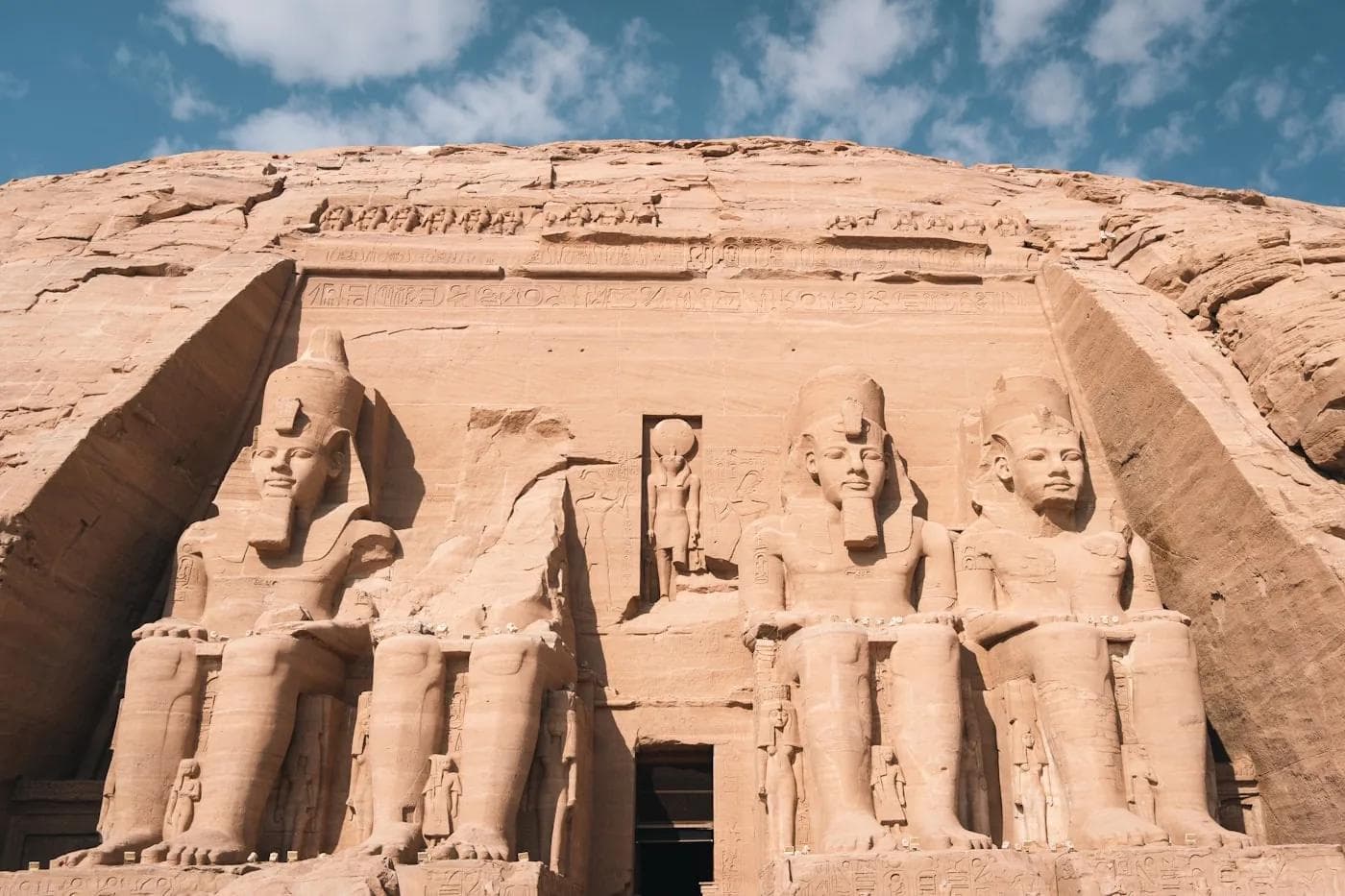
Seven days on the ground is the entry threshold, ten days the format we recommend most often for a first visit. Seven days are enough to see the essentials, Cairo and the cruise, provided you accept a brisk pace. Ten days add Abu Simbel, one genuine day without a five o'clock alarm, and the time to wander through a souk without checking your watch. Below five days you have to pick a single region, and for a first trip it should be the Nile valley.
There is no mystery to the arithmetic: touristic Egypt sits on two hubs 700 kilometres apart, Cairo in the north and the Nile valley in the south, and moving between them costs half a day of travel. Add to that a human limit that twenty years in the field have taught us: two major sites a day, three at most. Beyond that the temples blur into one another and the trip turns into a checklist.
Which itinerary should you choose for a first trip to Egypt?
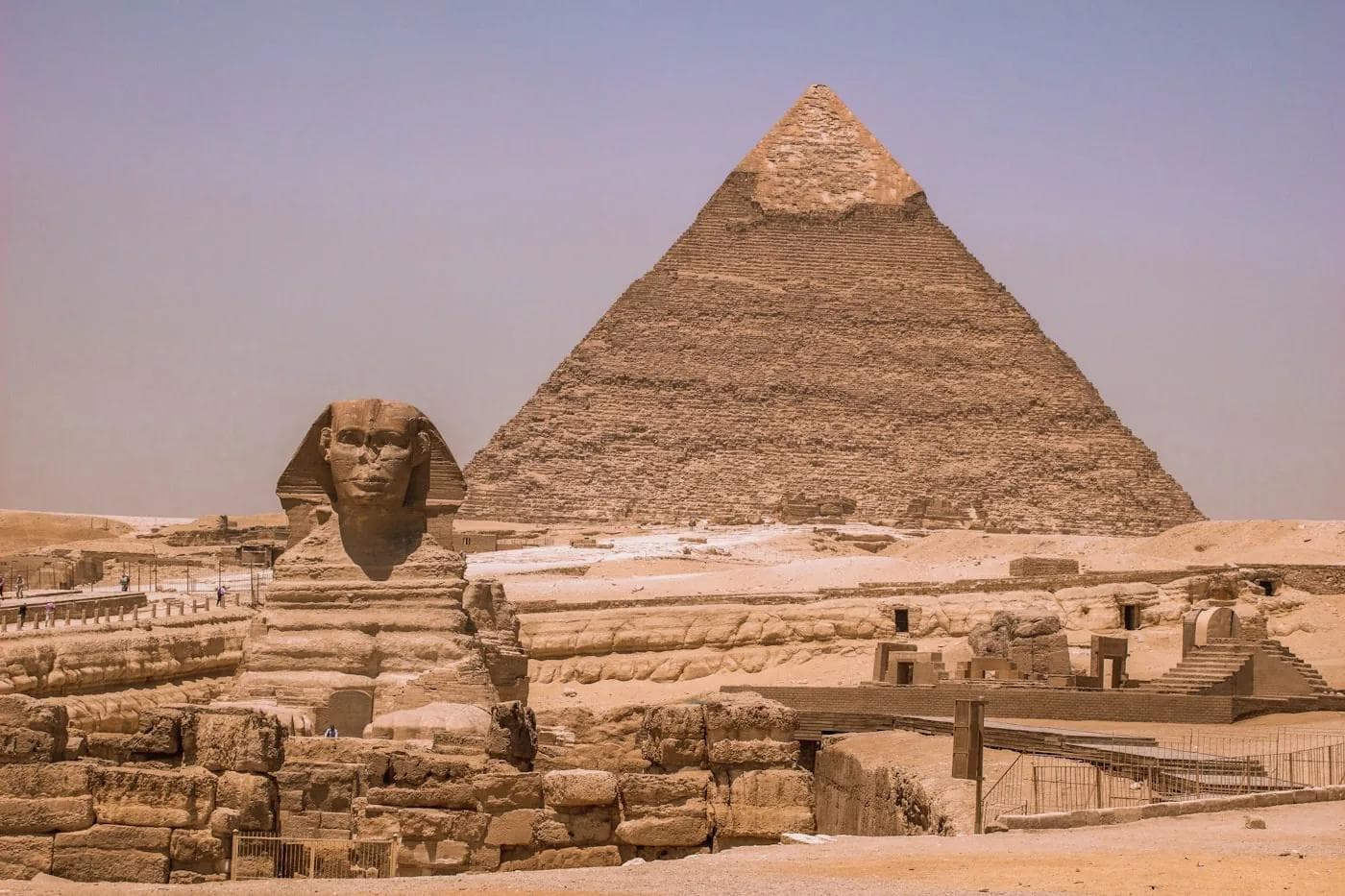
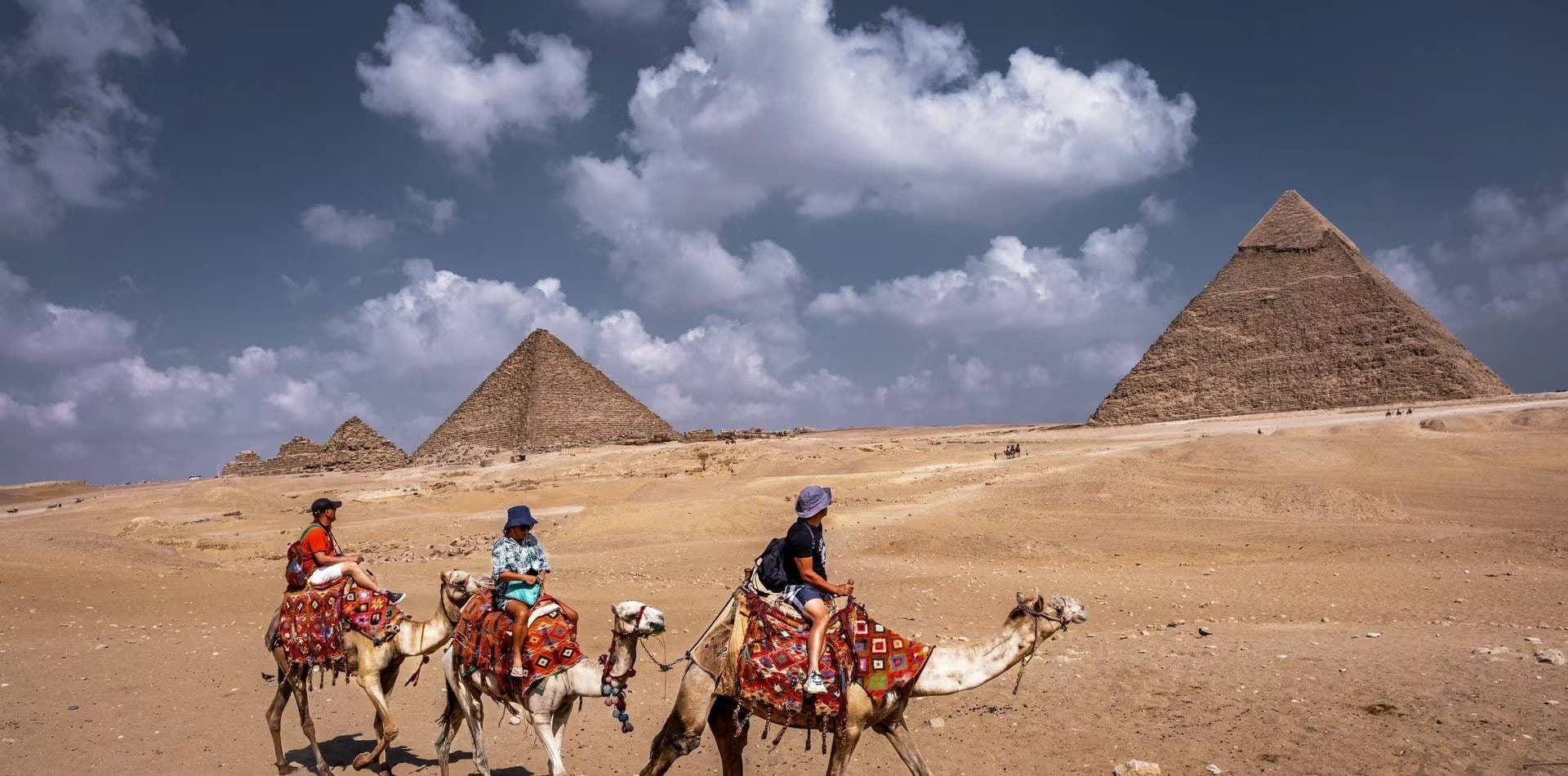
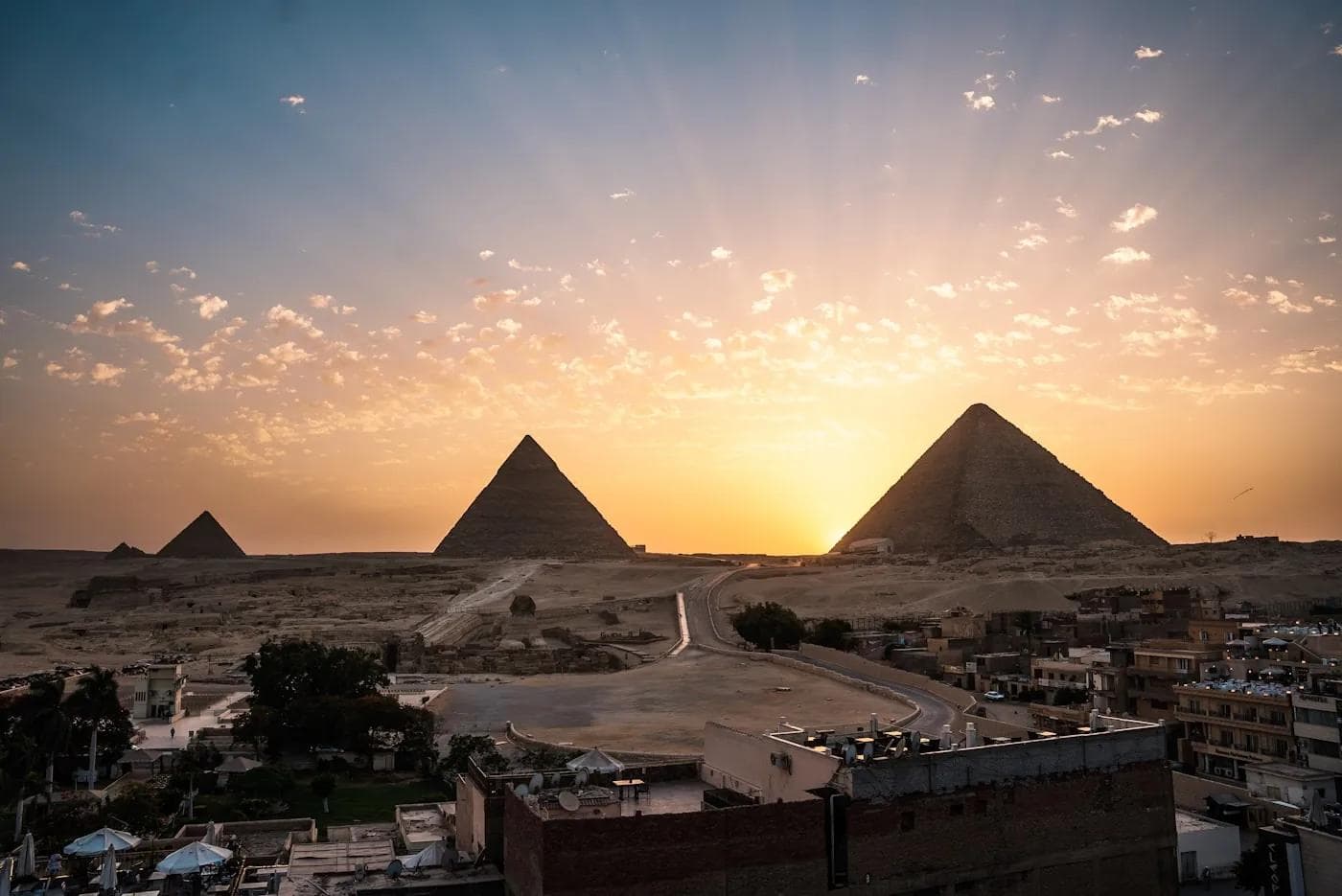
The benchmark itinerary, the one that suits nine first-timers out of ten, pairs Cairo with a Nile cruise between Luxor and Aswan. Two or three nights in the capital for Giza, Saqqara and the Grand Egyptian Museum, a domestic flight to Luxor, then three or four nights of sailing that set you down in front of a different temple each morning. It is the only arrangement that shows you both faces of the country, the civilisation of the pyramids and that of the temples, without spending your days on a coach.
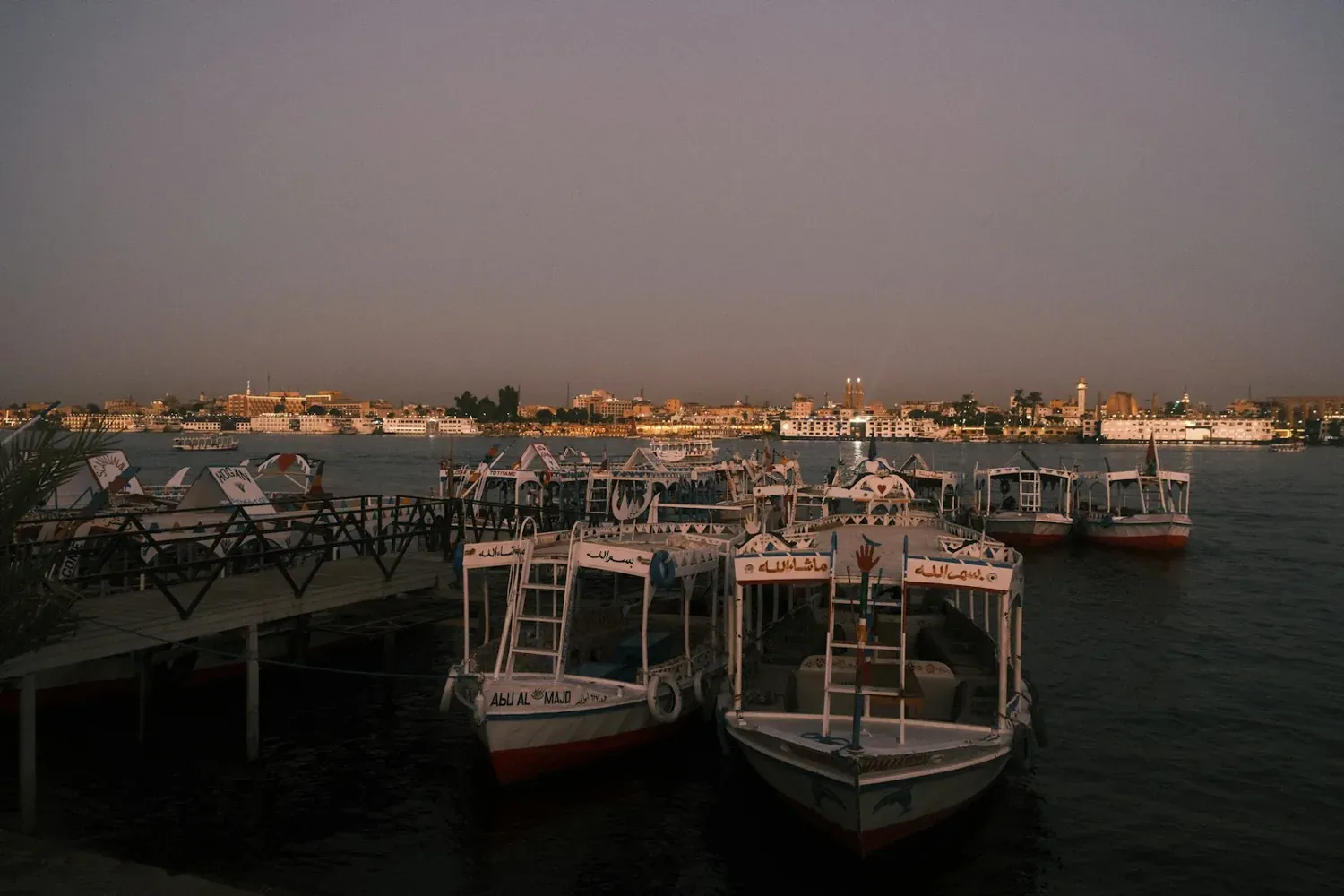
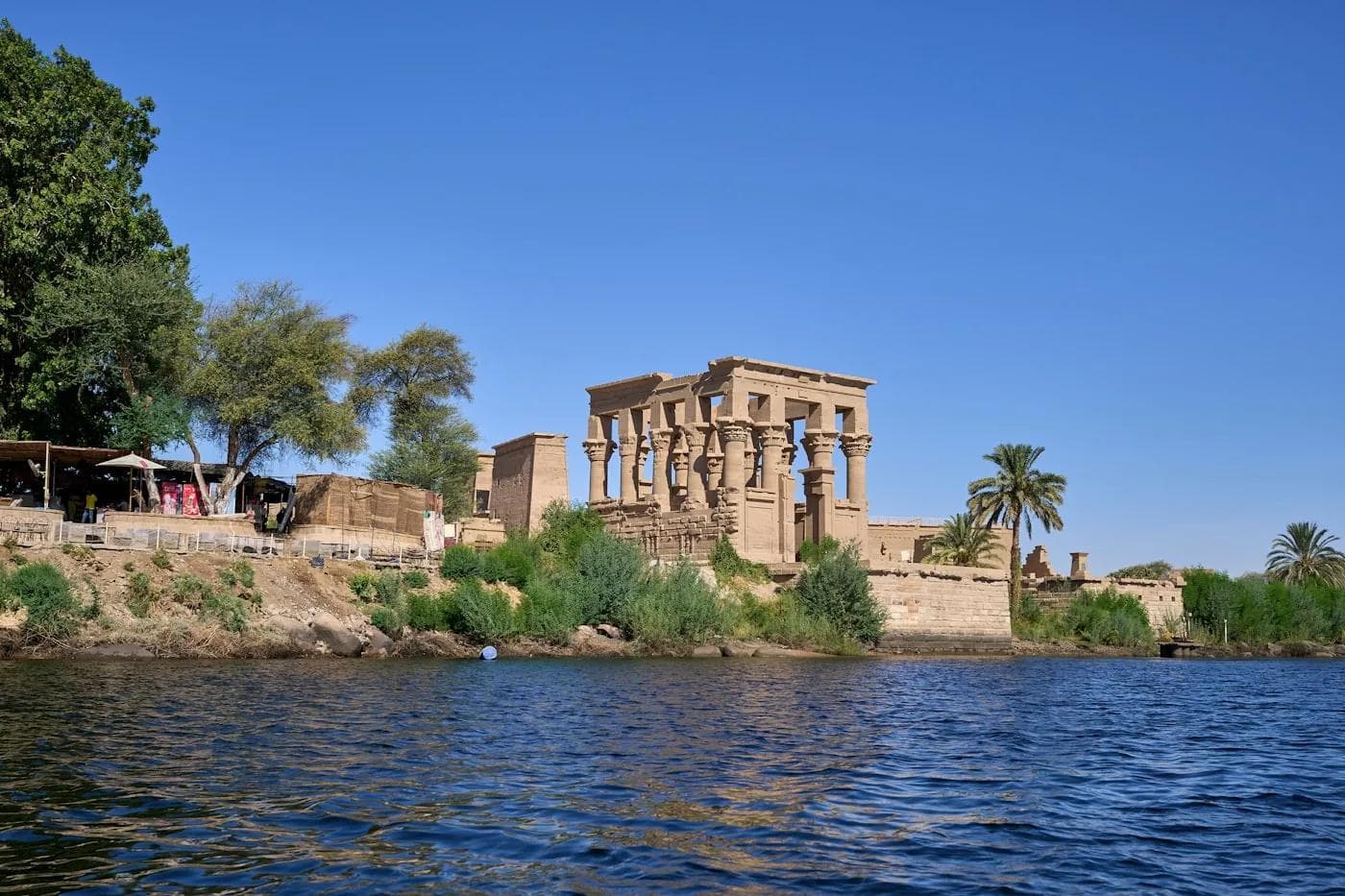
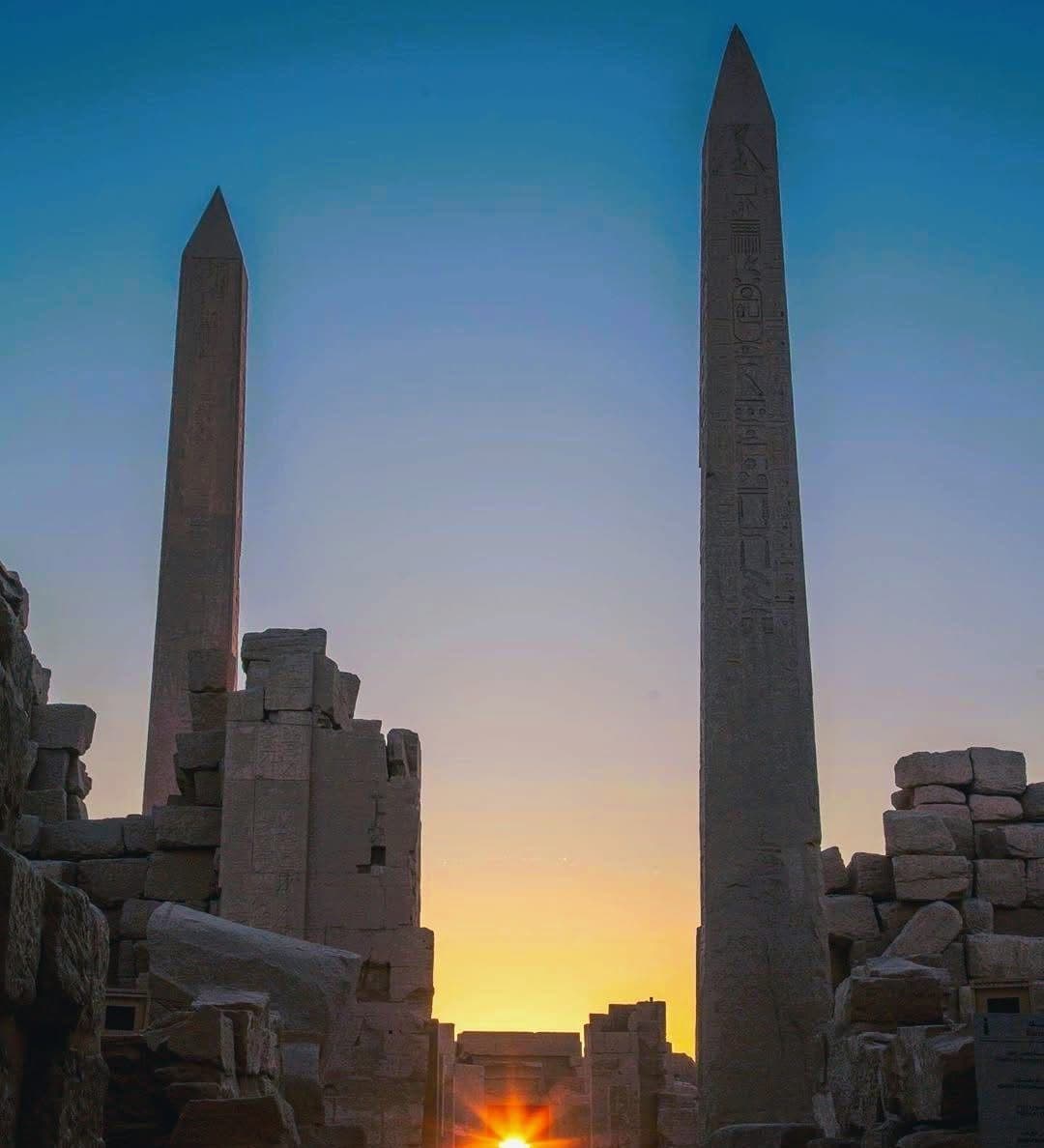
The cruise is not a luxury bolted onto the programme: it is the most efficient way to travel between Karnak, Edfu, Kom Ombo and Philae, all strung along the river. It settles the hotel question and the transport question at once. From nine or ten days two extensions stand out: Abu Simbel from Aswan, and a few nights on the Red Sea to finish on rest. The desert and the oases deserve a second trip of their own.
- Days 1 to 3: Cairo, the Giza plateau, Saqqara and the Grand Egyptian Museum
- Day 4: domestic flight to Luxor, Karnak and Luxor temple
- Days 5 to 7: sailing towards Aswan, with Edfu and Kom Ombo on the way
- Day 8: Aswan, the temple of Philae and an afternoon on a felucca
- Extension from nine days: Abu Simbel, then the Red Sea to finish
- Keep for a second trip: the White Desert, Siwa and Alexandria
Should you travel on an organised tour or independently?
For a first visit, a guided tour with an Egyptologist who speaks your language gives back more than it costs. Not for safety reasons, but because most of what you will be looking at is unreadable without someone to read it aloud: a cartouche, an offering scene, two reigns superimposed on the same wall. Travelling independently in Egypt is perfectly feasible, but it means accepting two things: a great deal of time spent on logistics, and beautiful stone looked at without understanding its story.
A tailor made trip is the right compromise once you know what you want: the same services and the same guides, but your own pace and your own dates. Whatever the format, two points are not negotiable in our view: a guide with a degree in Egyptology rather than a tour escort, and transfers arranged by the agency rather than taxis improvised outside the airport.
What paperwork do you need to sort out before leaving?
A visa is required for almost every traveller and costs $30 for a single entry, $65 for multiple entries since the increases of spring 2026. The online application is filed on the official site visa2egypt.gov.eg, at least seven days before departure. Your passport must remain valid for six months after your return date. France, Belgium and Italy are among the countries whose national identity card is accepted, with two photographs, though a passport remains simpler.
Two details save unpleasant surprises on arrival: the visa on arrival is paid in cash, $30 since 1 March 2026, and a stay confined to the south of Sinai qualifies for a free fifteen day stamp that does not allow you to travel on to the Nile valley. Our guide devoted to visas and entry formalities sets out the cases nationality by nationality, with dated official sources.
Is Egypt safe for a first trip?
Yes, for the regions where the trips actually take place. The French official travel advice applies no restriction to Cairo, Luxor, Aswan or the Nile valley, and the country welcomed 19 million visitors in 2025, an all time record. The areas advised against are specific and appear on no tourist programme: North Sinai, the border strips with Libya, Sudan and Israel, and the Western Desert away from authorised roads.
So the real subject for a first-timer is not the security risk but two more mundane things: the roads, where accidents remain frequent, and the heat, which floors more travellers than anything else. Add the usual city nuisances, pickpocketing and insistent sales pressure, harmless but tiring. Check your own country's official advice before leaving: our safety guide explains where to consult it and exactly what it says.
What budget should you plan for a first stay?
Allow €800 to €1,200 per person for a week in the comfort bracket, flight included, €400 to €650 travelling on a shoestring and €2,000 or more at the top end. The item almost every first-timer underestimates is neither the hotel nor the food, both of which stay inexpensive: it is site admissions, around €200 per person on a full Cairo, Luxor and Aswan itinerary. Those prices are set in Egyptian pounds and revised several times a year: check them on the official portal egymonuments.gov.eg before you leave.
Plan for cash in small notes for tips, a local custom and not a scam, and a bank card that works internationally: the ticket desks at the major archaeological sites have moved to cashless payment. Change money in Egypt, never at your departure airport. Our budget guide breaks down each item.
What do our Egyptologists advise for a first visit?
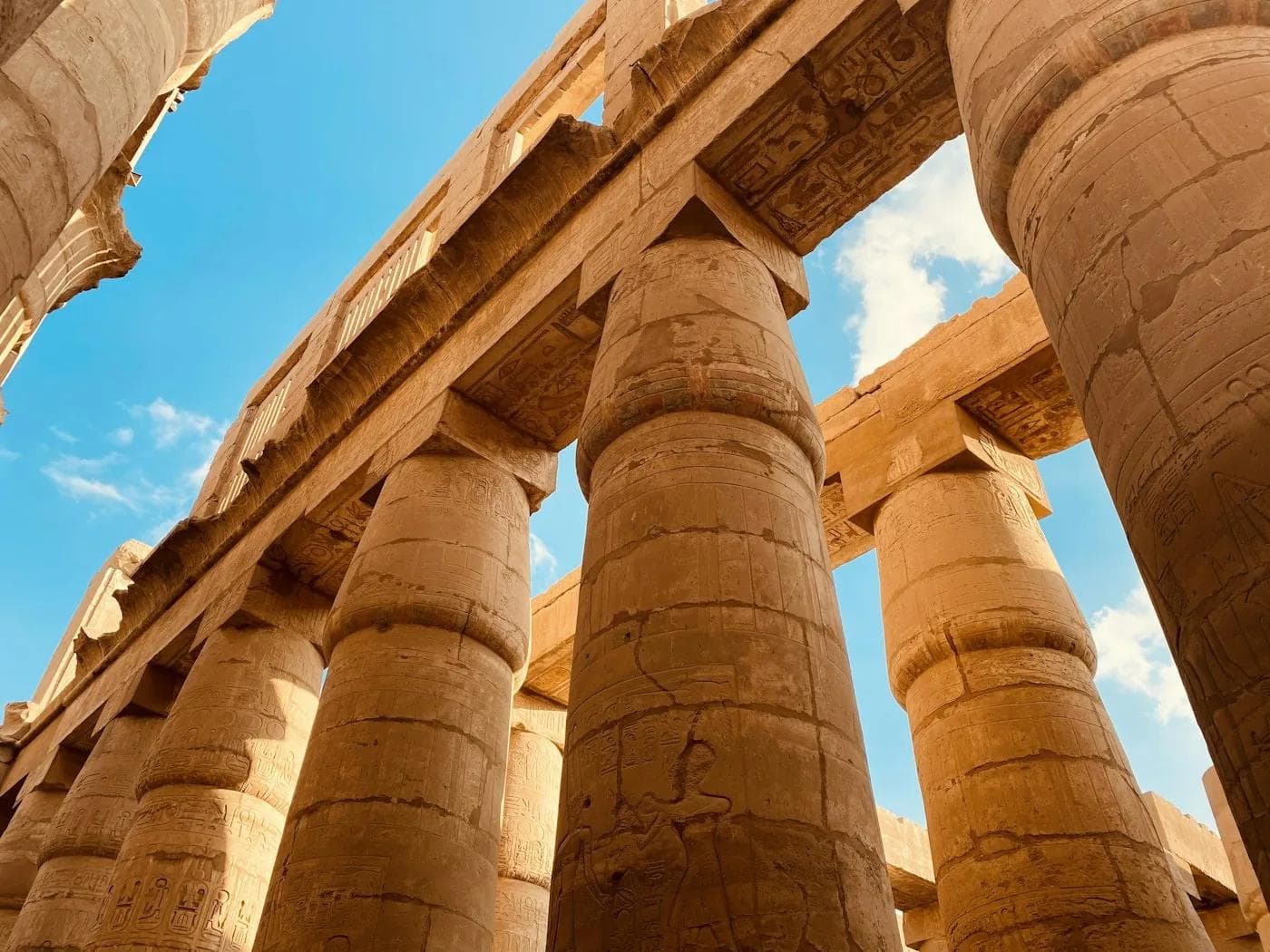
The advice we repeat most is also the hardest to follow: give up one site. A successful first trip is not the one that ticks the most boxes, it is the one where you stayed twenty minutes sitting in the hypostyle hall at Karnak instead of running to the next tomb. Keep half a day with no programme in a week long stay, two in a ten day stay.
Then three field reflexes: bottled water only, a torch for the tombs, and no driving at night outside towns, because road accidents remain the one genuine risk of the trip, far ahead of anything else. Finally, put the beach part at the end. Cairo and the temples take energy, the Red Sea takes none.
- Drop one site rather than rush: the most profitable advice we give
- Keep half a day with no programme for every week of travel
- Bottled water only, including for brushing your teeth
- A torch and closed shoes for the tombs and the temples
- No driving at night outside towns, the one genuine risk of the trip
- Put the Red Sea at the end of the stay, never at the start
Related tours
Our trips that match this theme.

Also worth exploring
Égypte
Got a trip in mind?
Tell us what you're after: we'll craft a tailor-made itinerary and reply within 24h, no commitment.
Request a quote