Luxor
Luxor Temple: what to see and when to visit
Twin of the Paris obelisk, Amenhotep III's colonnade, avenue of sphinxes, visiting at night: how to see Luxor Temple.
By Ahmed El Eayeb, English- & Russian-speaking guidePublished on
In brief
In the heart of the modern town, on the bank of the Nile, Luxor Temple is the most accessible of Egypt's great temples. More compact and easier to read than Karnak, it takes an hour to visit and takes on another dimension at nightfall, when it is lit up. Here is what you need to know.
- Length: one to one and a half hours with a guide
- Best time: late in the day, for the sunset and the lighting
- To see: the twin of the Paris obelisk, the colonnade, Amenhotep III's court
- Location: central Luxor, east bank, on foot from the corniche
- Linked to Karnak by the avenue of sphinxes, reopened to the public in 2021
- Prices revised several times a year: check on egymonuments.gov.eg
What was Luxor Temple used for?
Unlike Karnak, it was not Amun's main residence but the setting of a great annual festival, the Opet festival. Every year, during the flood, the statues of Amun, his wife Mut and their son Khonsu left Karnak in procession to reach Luxor, along the avenue of sphinxes or by boat on the Nile. The ritual renewed the king's divine power, so the temple is also a monument to kingship.
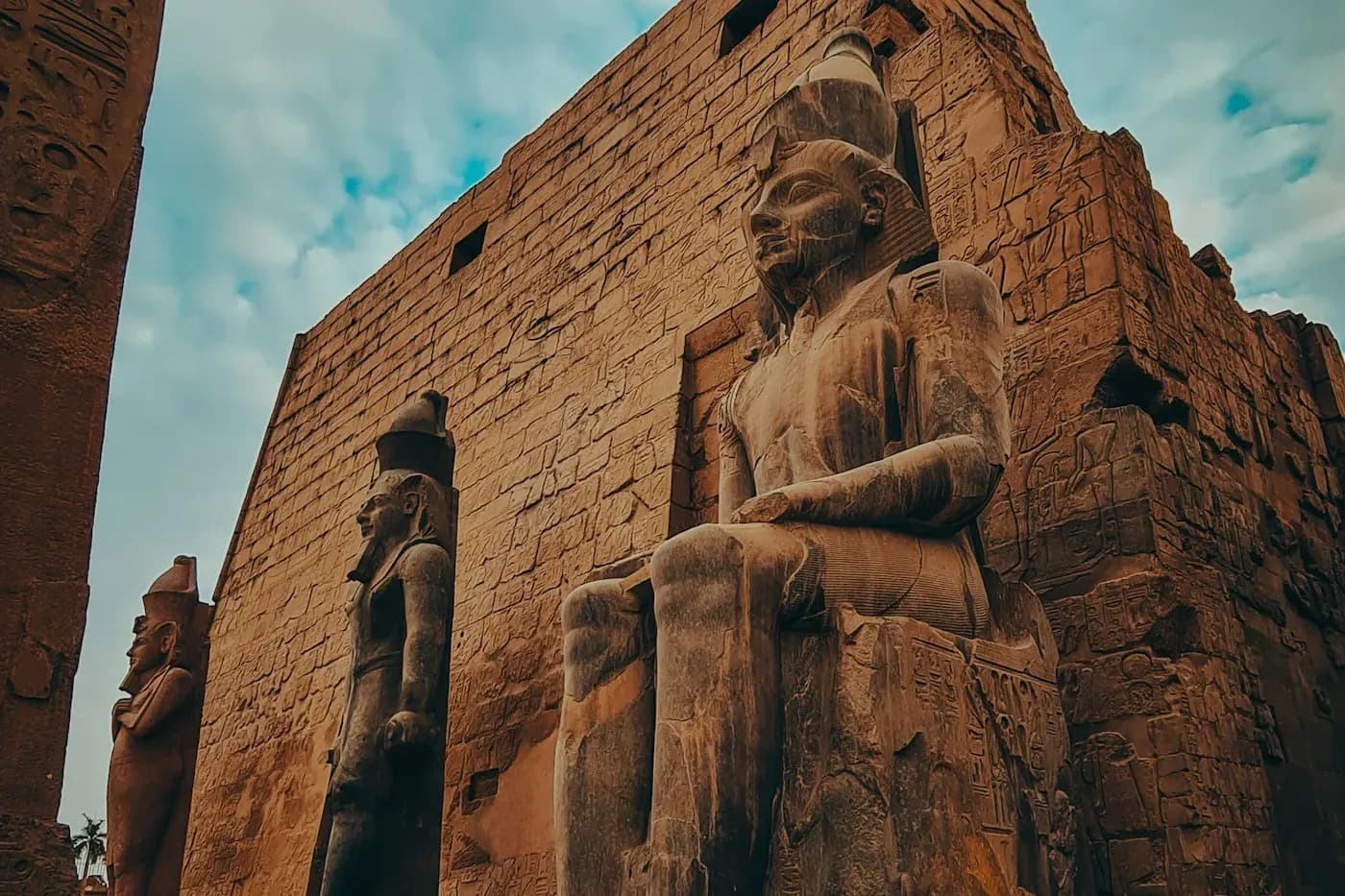
Two pharaohs built most of it: Amenhotep III, who raised the great colonnade and the court with papyrus columns, and Ramesses II, who added the first pylon, its colossi and its obelisks. Later periods left their mark too, down to Alexander the Great, shown as a pharaoh in a chapel of the sanctuary.
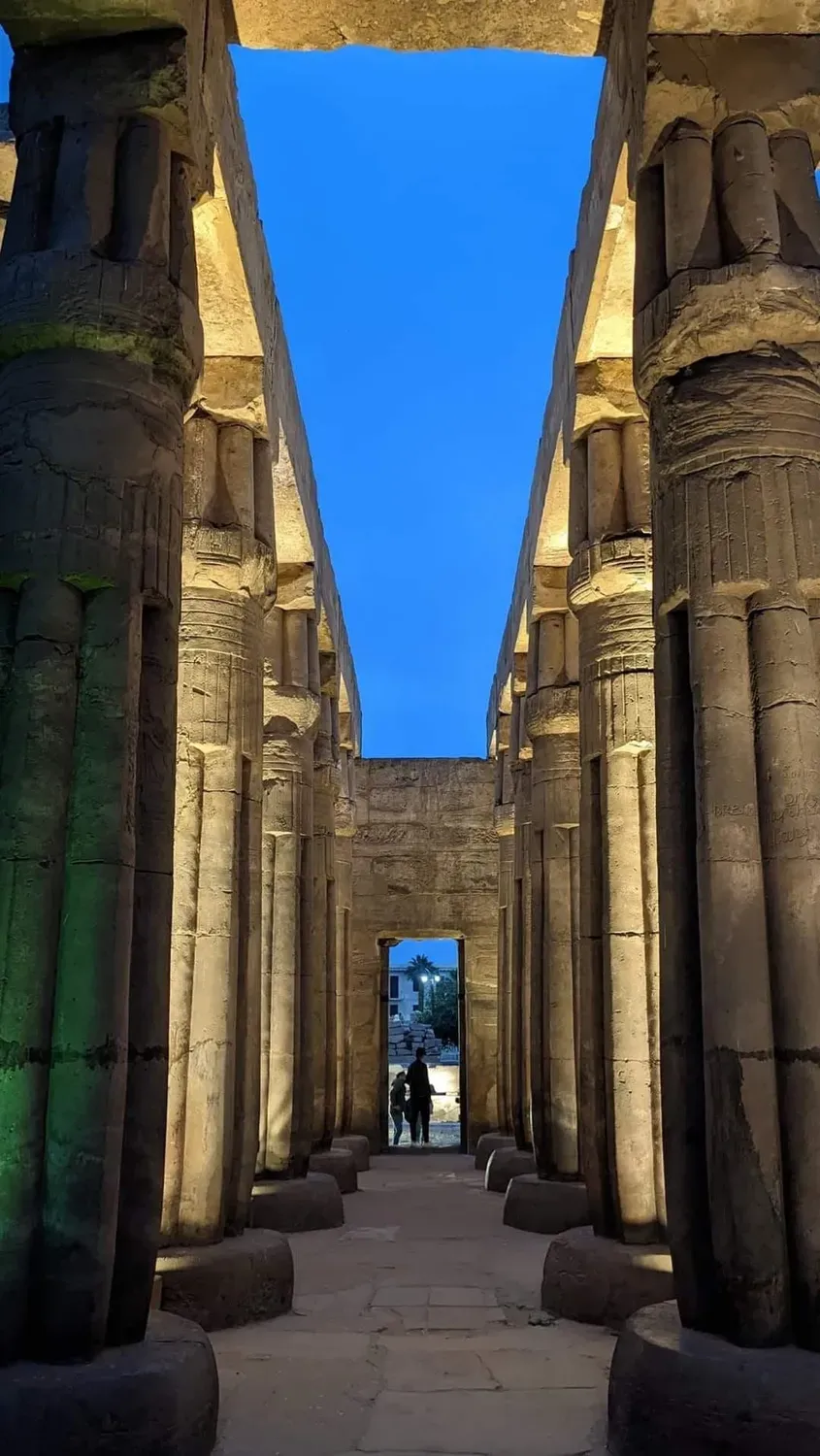
What should you see at Luxor Temple?
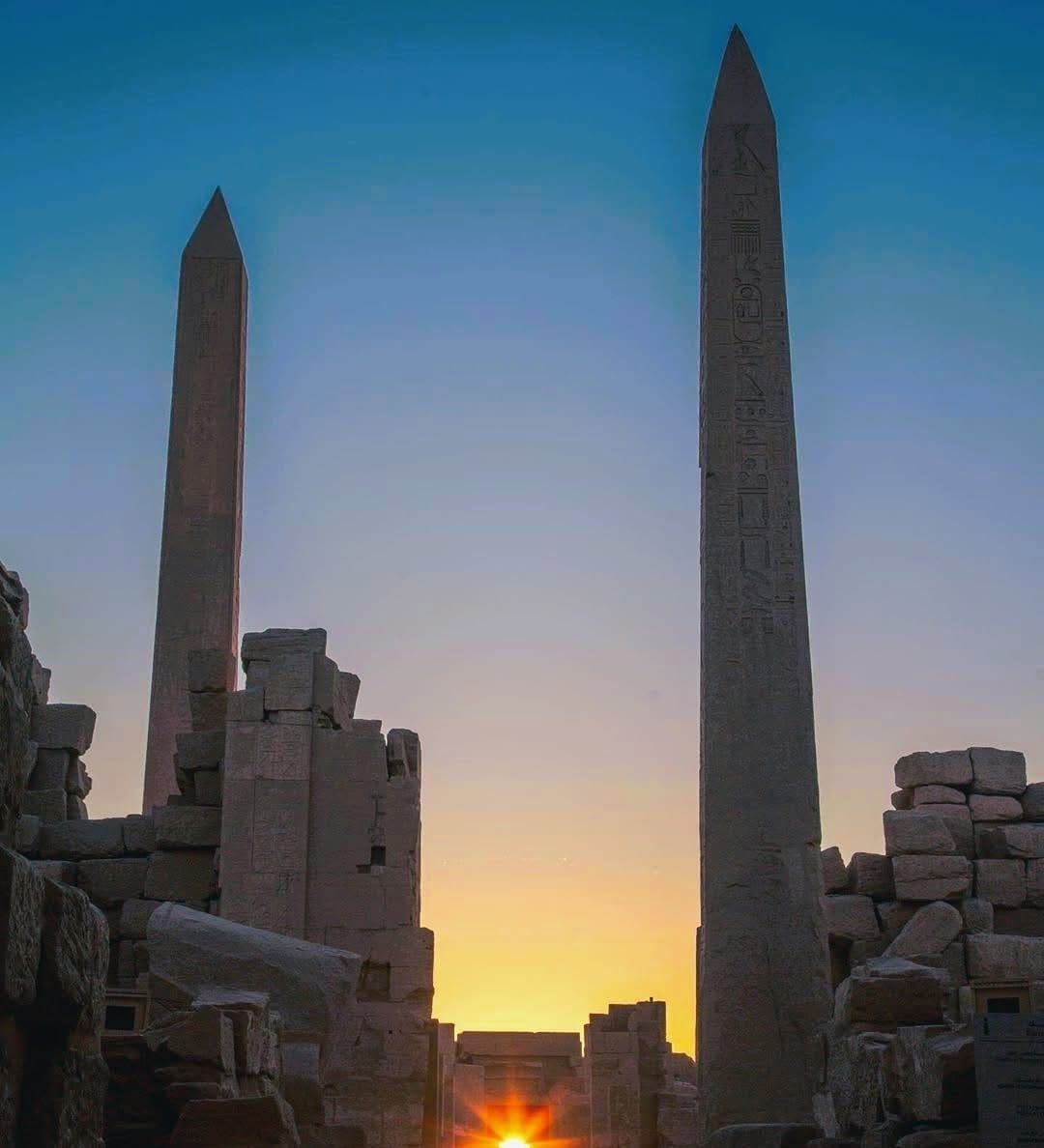
Right at the entrance, Ramesses II's obelisk stands alone in front of the pylon. Its twin has stood in Paris, on the Place de la Concorde, since 1836. Beyond the pylon, Ramesses II's court holds a surprise: a medieval mosque built on the ruins when they were still buried, still in use and perched several metres above the ancient ground.
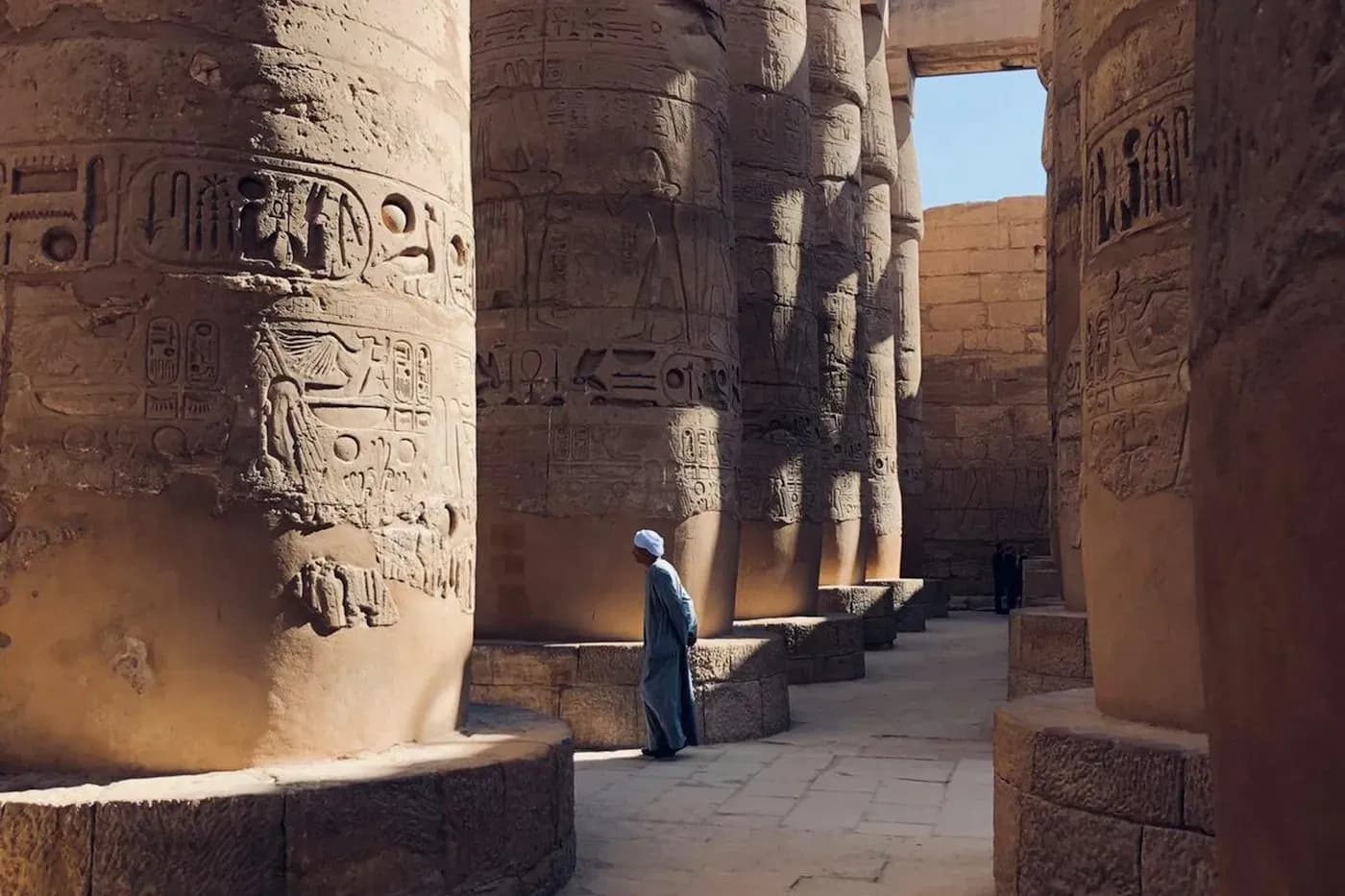
Next comes Amenhotep III's great colonnade, fourteen giant columns lined up like a processional way, then the same king's court, remarkably elegant with its clustered papyrus columns. At the back, a hall still holds Roman period frescoes, from when part of the temple served the imperial cult, along with the chapel of Alexander the Great.
- Ramesses II's obelisk, twin of the one on the Place de la Concorde
- Colossi of Ramesses II in front of the first pylon
- Medieval mosque perched in Ramesses II's court
- Amenhotep III's great colonnade and court
- Roman frescoes and the chapel of Alexander the Great
Should you visit Luxor Temple by day or by night?
Our advice: arrive an hour before sunset. You visit in the golden light of late afternoon, then watch the temple light up as night falls, which brings out every relief. It is one of the few major sites in Egypt open in the evening, a real asset when the day has been spent on the west bank. Just check that day's closing time, which varies with the season.
How do you combine Luxor Temple with Karnak?
The two east bank temples are easily visited on the same day: Karnak in the morning, at opening time, and Luxor in the late afternoon. In between, the avenue of sphinxes, cleared over nearly three kilometres, can partly be walked, or simply admired from the entrance of Luxor Temple. The west bank, with the Valley of the Kings, needs a separate day.
- Morning: Karnak at opening time
- Late afternoon: Luxor Temple until nightfall
- Another day: the west bank and the Valley of the Kings
What do our Egyptologists recommend for Luxor Temple?
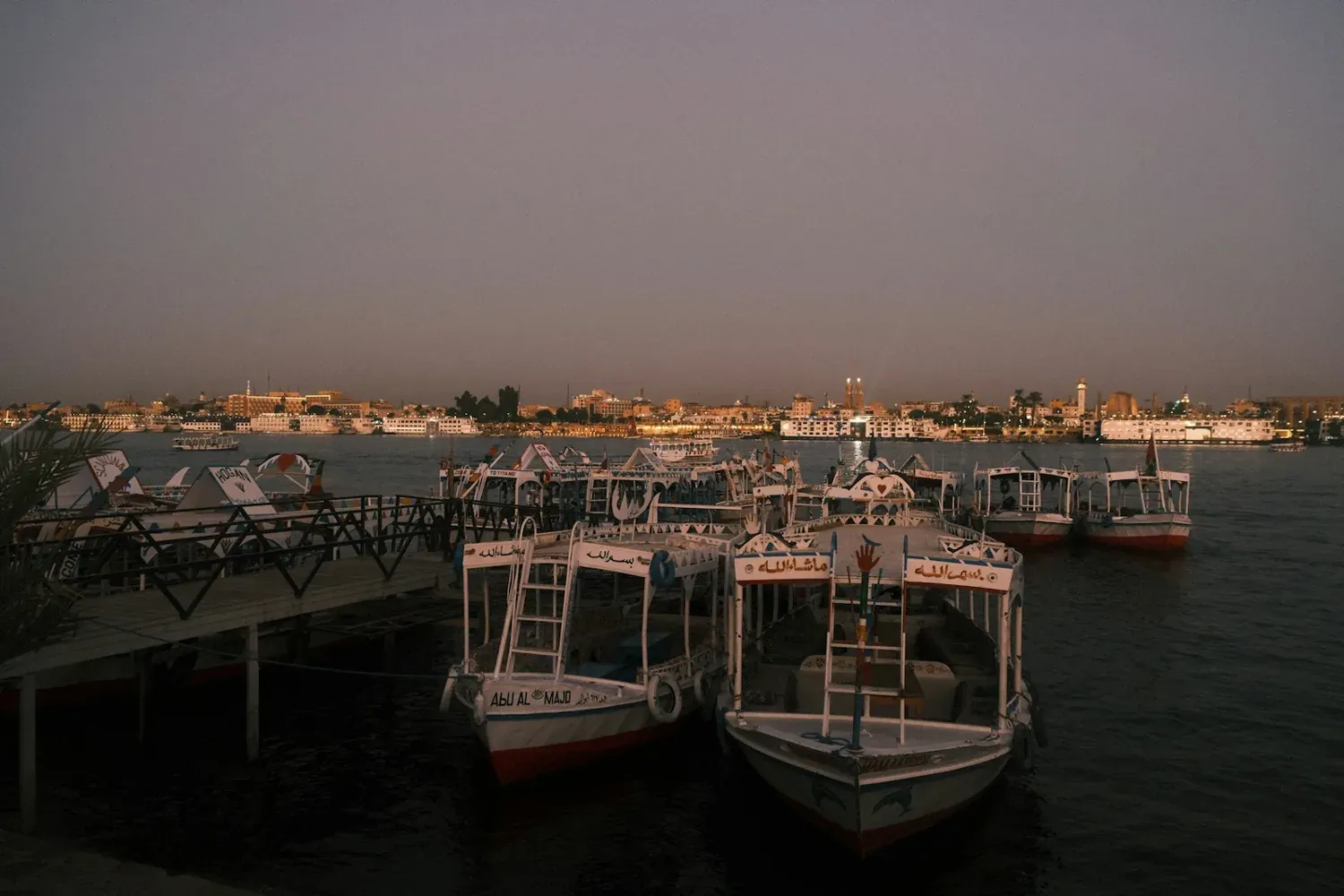
Keep this temple for the end of a busy day: it is the most restful visit. Take time to look for the Opet festival scenes on the colonnade walls, with musicians, priests and sacred boats in procession: they show exactly what the place celebrated. And for a final image, head out towards the Nile as the lights of the corniche come on.
Related tours
Our trips that match this theme.

Also worth exploring
Égypte
Got a trip in mind?
Tell us what you're after: we'll craft a tailor-made itinerary and reply within 24h, no commitment.
Request a quote