Edfu & Kom Ombo
Kom Ombo and Edfu: what to see between Luxor and Aswan
Horus's intact temple, Sobek's double temple, the crocodile museum: how to visit Edfu and Kom Ombo by cruise or by road.
By Ali Mahjoub, Spanish-speaking guidePublished on
In brief
Between Luxor and Aswan, two temples punctuate every Nile cruise: Edfu, the temple of Horus and the best preserved in Egypt, and Kom Ombo, a unique double temple set on the riverbank. Both date from the Ptolemaic period, the last centuries of pharaonic Egypt. Here is how to see them in good conditions.
- Location: Edfu about 110 km south of Luxor, Kom Ombo about 45 km north of Aswan
- Length: one to one and a half hours for Edfu, about an hour for Kom Ombo
- Best time: Edfu early in the morning, Kom Ombo late in the day
- Two stops included in our 6, 7 and 9 day cruises
- Not to be missed: Edfu's granite falcon and Kom Ombo's crocodile museum
- Prices revised several times a year: check on egymonuments.gov.eg
Why are Edfu and Kom Ombo worth the stop?
These two temples show an Egypt that Luxor does not: that of the Ptolemies, the kings of Greek origin who ruled after Alexander the Great. They built in the purest pharaonic style, with walls entirely covered in texts. For an Egyptologist, they are libraries in stone that describe rites, festivals and myths in detail.
They complement each other perfectly. Edfu impresses with its state of preservation: roof, sanctuary and enclosure walls are intact, giving an exact idea of what an Egyptian temple was like. Kom Ombo charms with its originality, its double plan and its setting, overlooking a bend of the Nile.
What should you see at the temple of Edfu?
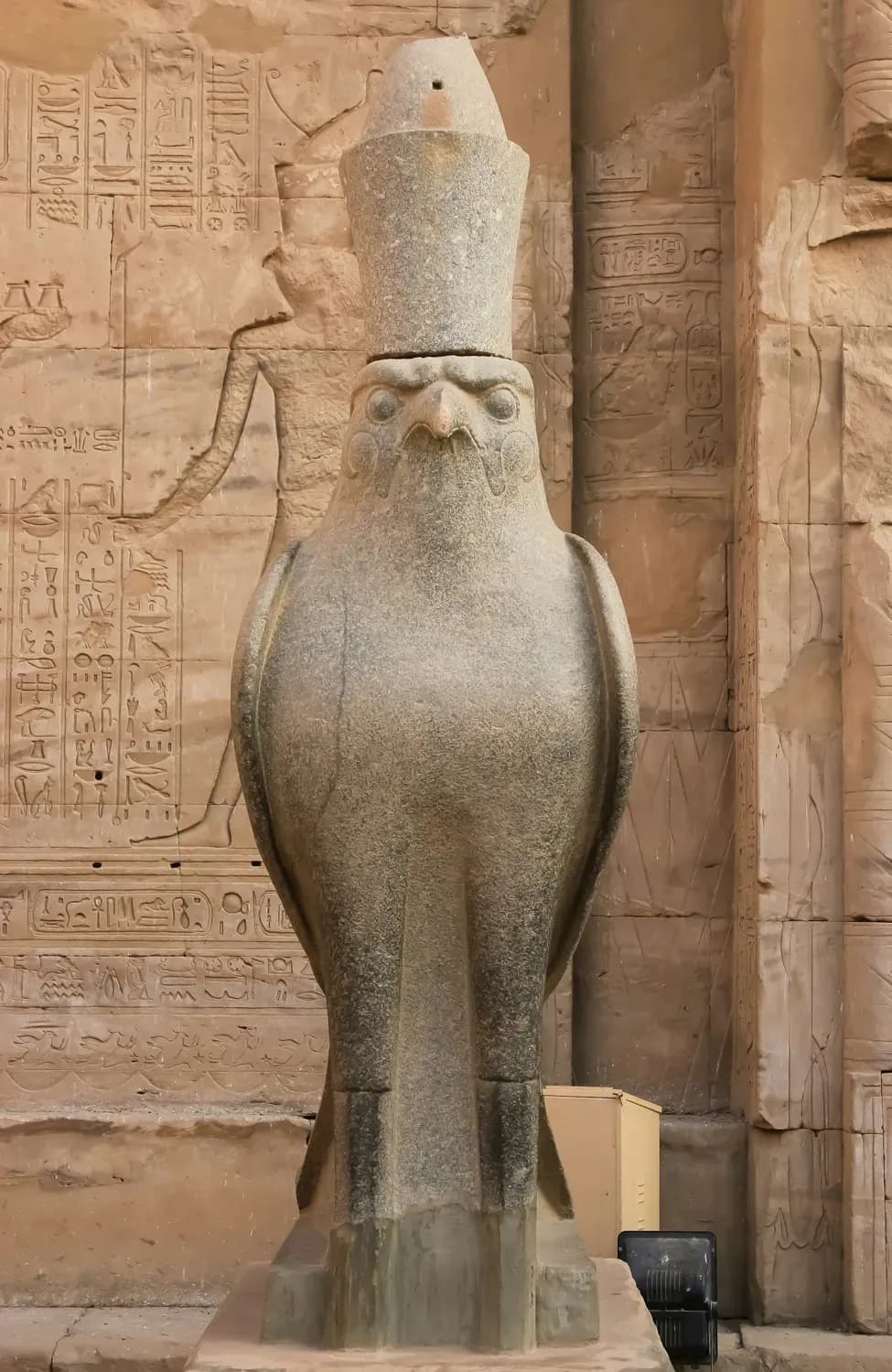
Dedicated to Horus, the falcon god, the temple was built between 237 and 57 BC. Long buried under sand and village houses, it was cleared by Auguste Mariette from 1860 onwards, which explains its exceptional preservation. You enter through a pylon about 36 metres high, where the king strikes down his enemies before Horus.
At the back, the sanctuary still holds its granite naos, older than the temple, and a replica of the sacred barque. Then walk round the outer corridor: its walls tell, like a comic strip, the fight between Horus and Seth, shown as a hippopotamus. Another festival is described there, the Beautiful Meeting, when the statue of Hathor came from Dendera to join Horus.
- The monumental pylon and its victory reliefs
- Horus's granite falcons in front of the hypostyle hall
- The sanctuary, its naos and the replica of the sacred barque
- The enclosure corridor and the myth of Horus against Seth
What should you see at the temple of Kom Ombo?
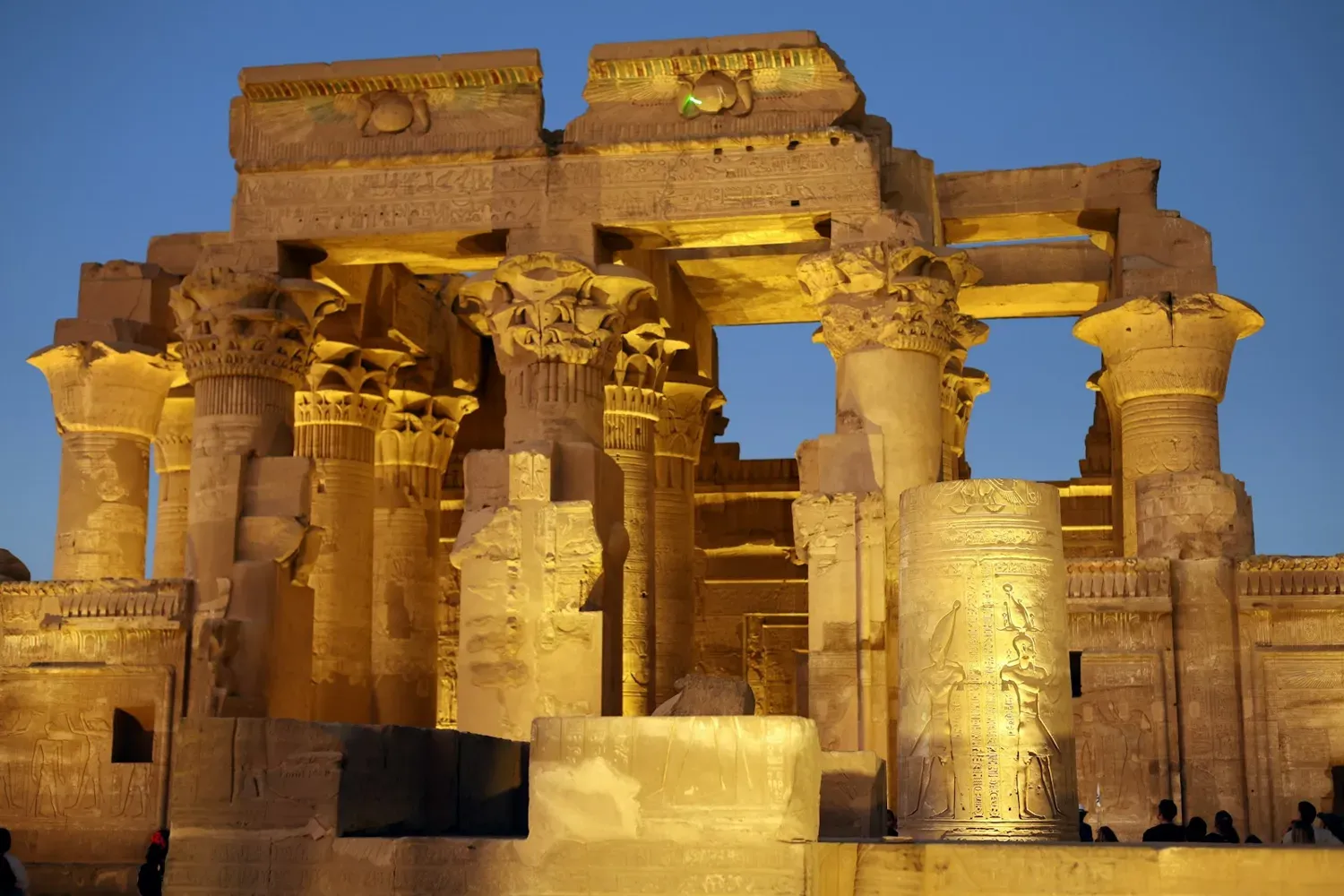
Kom Ombo is unique in Egypt: a double temple, perfectly symmetrical, with two entrances, two halls and two sanctuaries. The southern half honours Sobek, the crocodile god, the northern half Haroeris, a form of Horus. Begun under Ptolemy VI, in the second century BC, it was decorated until Roman times. Floods and earthquakes partly ruined it, but its columns keep fine colours.
In the rear corridor, a relief shows a series of instruments often presented as surgical, an interpretation specialists still debate. Do not miss the nilometer, a well that measured the flood, or the small crocodile museum, opened in 2012 next to the temple, which displays mummified crocodiles found in the area.
- The double plan, with its twin sanctuaries
- The columns with colours still visible
- The relief of the so-called surgical instruments
- The nilometer and the crocodile museum
How do you visit Edfu and Kom Ombo on a cruise?
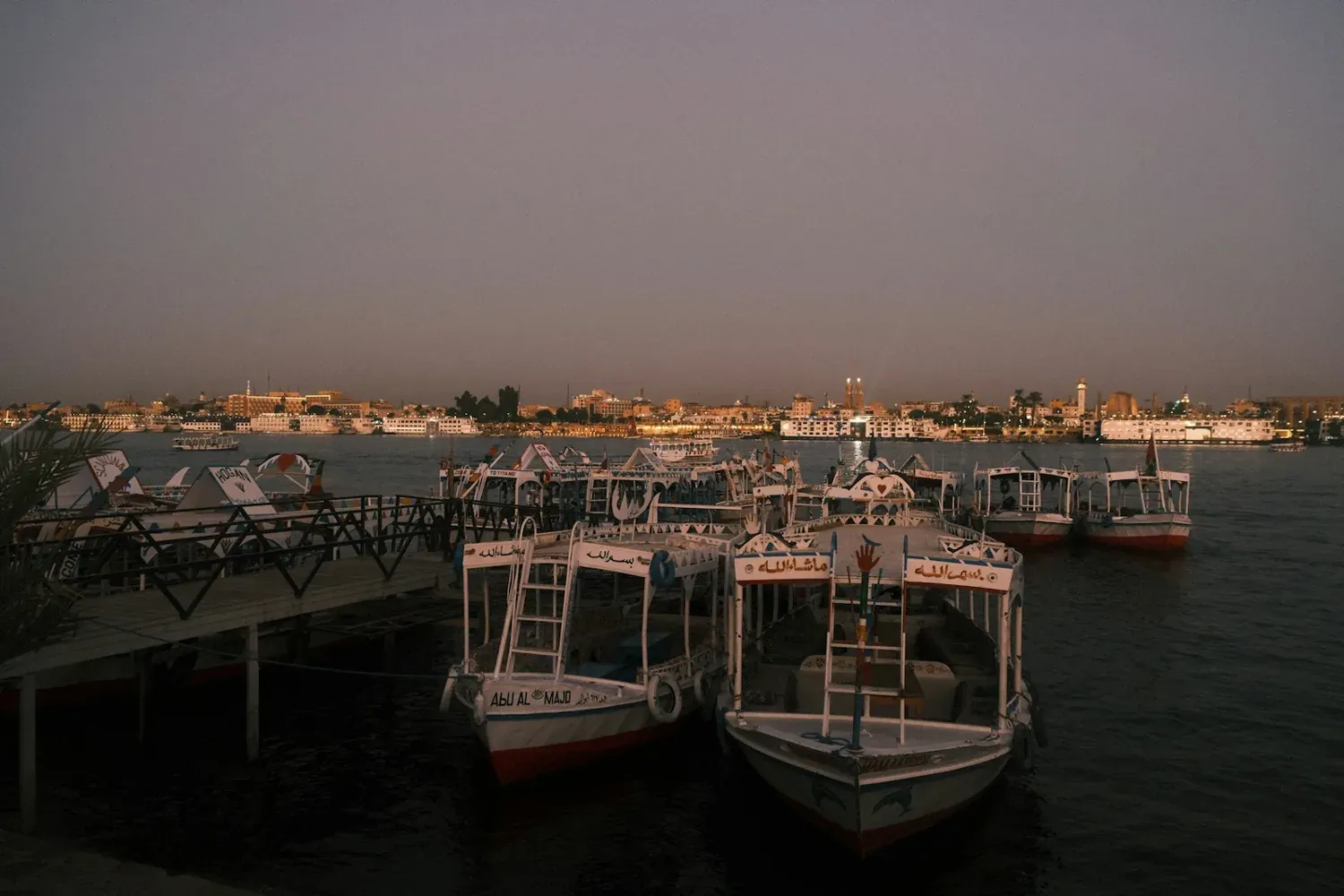
On a cruise, these two temples are stops on the route between Luxor and Aswan, with an Egyptologist. At Edfu, the boat moors in town and the temple is a few minutes away, often by horse carriage. It is best visited early in the morning, before the heat and the other groups arrive.
At Kom Ombo it is the opposite: boats moor at the very foot of the temple, which you reach on foot. It is best visited in the late afternoon, when the light turns the stone golden, then at dusk, when it lights up. Depending on the direction of the cruise, Kom Ombo comes before or after Edfu, which makes no difference to the visits.
Can you visit Edfu and Kom Ombo without a cruise?
Yes, by road. Both temples lie on the route linking Luxor to Aswan, a drive of about three and a half hours without stops. A private transfer with driver and guide lets you stop at Edfu then Kom Ombo in a single day, arriving at your destination in the evening. It is a good option for a trip without a cruise or when time is short.
What do our Egyptologists recommend for Edfu and Kom Ombo?
At Edfu, take a few minutes alone in the dark halls before the sanctuary: it is one of the few places where you can still feel the atmosphere of a temple closed to the ancient public. At Kom Ombo, keep half an hour for the crocodile museum, which helps you understand the cult of Sobek. And at both, bring water and a hat: shade is scarce.
Related tours
Our trips that match this theme.

Also worth exploring
Égypte
Got a trip in mind?
Tell us what you're after: we'll craft a tailor-made itinerary and reply within 24h, no commitment.
Request a quote